
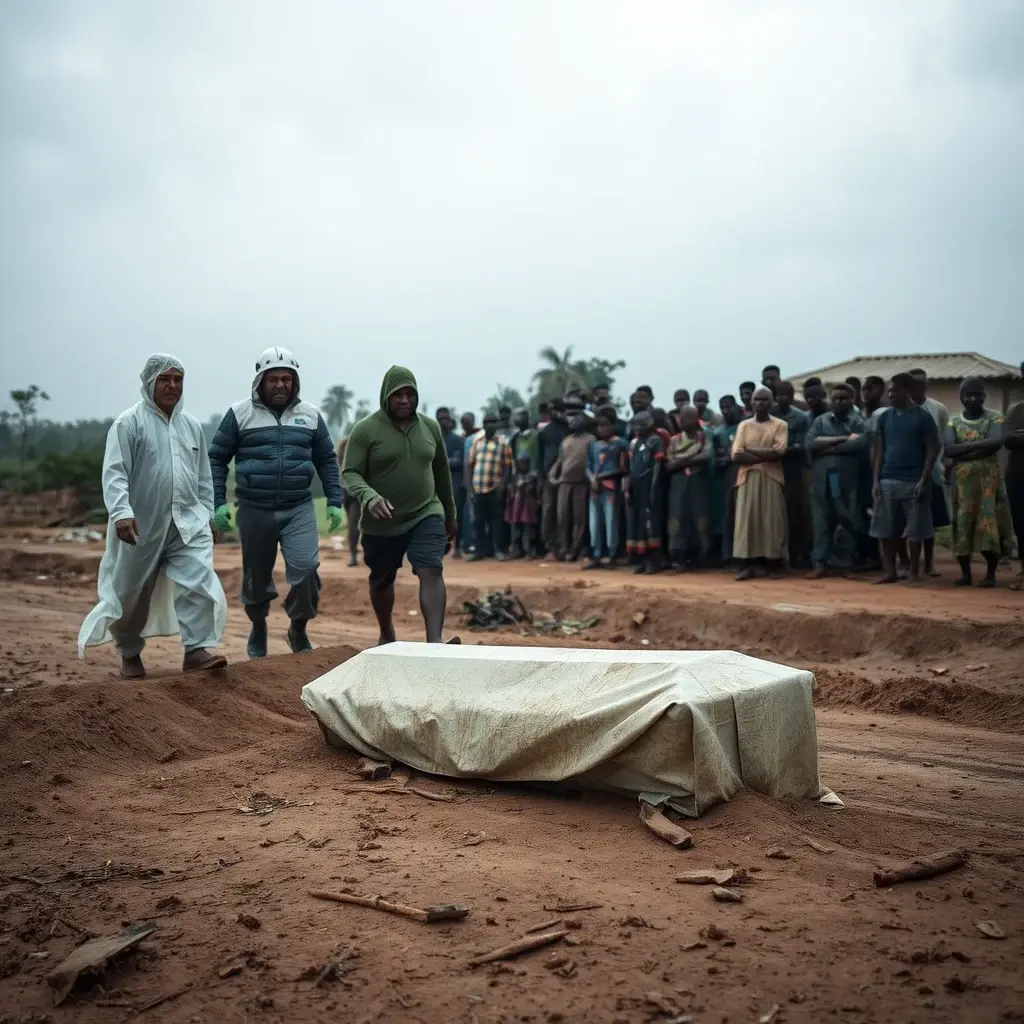
Residents attacked an Ebola burial team in eastern Democratic Republic of Congo’s South Kivu province this week, forcing responders to abandon a coffin and raising fears of further transmission, the health ministry said. The assault occurred on Monday in Katana, a town controlled by AFC/M23 rebels, approximately 30 km north of the provincial capital, Bukavu.
The incident targeted a specialized “safe and dignified burial team” trained to handle highly infectious bodies under strict protocols to prevent contagion. Following the attack, the body was handled by community members, a practice identified as high-risk for fueling new chains of infection, according to a health ministry situation report.
Context of Mistrust and Resistance
This attack underscores the persistent mistrust and resistance that continue to hamper response efforts in the ongoing battle against the Bundibugyo strain of Ebola. Health workers and burial teams have faced similar targeting in recent weeks, often from relatives of victims who question the cause of death.
In a parallel incident on the same Monday, residents assaulted a response team at a cemetery in Bunia, the capital of Ituri province where the first cases of the Bundibugyo strain were confirmed. This attack left at least four people injured, according to the situation report and a local aid worker.
Rising Case Numbers and Geographical Spread
As of the latest health ministry data, the Democratic Republic of Congo has recorded 363 confirmed Ebola cases and 62 deaths since the 17th outbreak was declared on May 15. The latest update reported 19 new confirmed cases, including two deaths, with infections now spread across 17 out of 36 health zones in Ituri province.
There has been a steady increase in infections in recent days. Cases have also been reported in seven health zones in North Kivu province and one health zone in South Kivu province, indicating a widening geographical spread of the virus.
International and Local Response Efforts
The International Organization for Migration (IOM) is actively working to establish 30 health control posts across the three affected provinces. These posts aim to monitor individuals’ health and prevent the movement of infected people, according to Frantz Celestin, the U.N. agency’s regional head, who spoke with Reuters.
Despite the challenges, some progress has been noted. The health ministry highlighted that 32 contact cases in Ituri’s Rwampara, who had been monitored for the standard 21-day incubation period, were determined not to have contracted Ebola. Additionally, officials in Goma, North Kivu, were preparing to discharge a recovered patient, who was subsequently reunited with her family, as confirmed by Freddy Kaniki, deputy coordinator for the AFC/M23 rebels.
International aid continues to arrive in eastern Congo. The International Federation of Red Cross and Red Crescent Societies reported on Thursday that enough kits for 300 safe and dignified burials arrived in Bunia on June 3, providing crucial resources for response teams.
Implications and Future Watch
The recurring attacks on essential response teams pose a significant threat to the containment of the current Ebola outbreak. The community’s mistrust and resistance, fueled by misinformation or fear, directly impede the implementation of critical public health measures like safe burials. This can lead to increased transmission rates and a prolonged outbreak.
The spread across multiple health zones in Ituri and the expansion into North and South Kivu provinces highlight the urgent need for strengthened community engagement strategies. Building trust and addressing local concerns are paramount to ensuring the cooperation of affected populations.
Moving forward, the effectiveness of the response will depend not only on the availability of medical supplies and trained personnel but also on the ability of authorities and international organizations to overcome societal barriers. The success of contact tracing, isolation, and safe burial practices hinges on community acceptance and participation. Observers will be watching closely to see if new approaches can mitigate the impact of resistance and if the rising case numbers can be brought under control before the virus spreads further.










Leave a Reply