
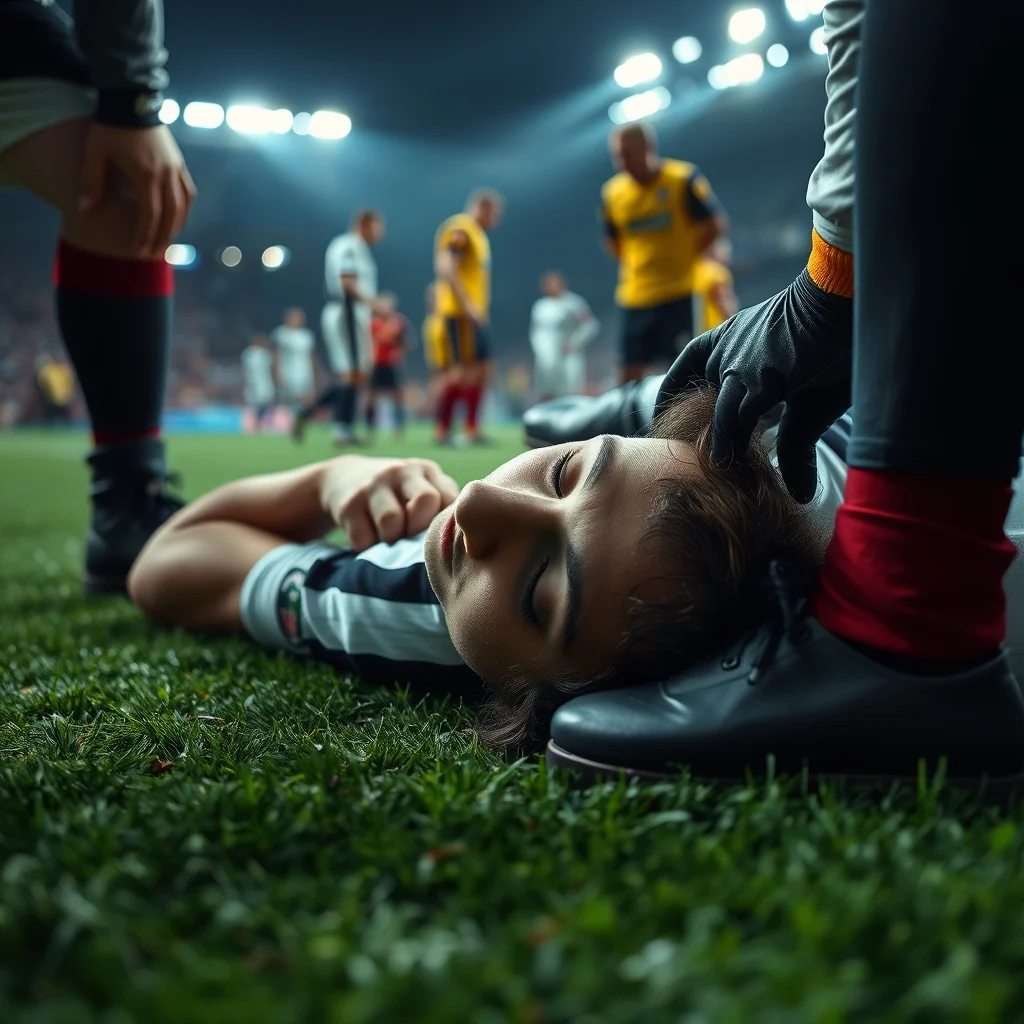
Christian Eriksen is recovering at home with his family after experiencing a collapse during a recent match against Ukraine in Odense. The 34-year-old midfielder, who spent a night in the hospital, stated on Instagram that his “recovery has already started” and assured the public that this incident was different from his 2021 cardiac arrest. Eriksen’s implanted cardioverter-defibrillator (ICD), a type of pacemaker, reportedly responded as designed, delivering a shock that protected him.
The match was halted after 65 minutes when Eriksen collapsed and was later abandoned. He regained consciousness and was able to walk off the field. This incident has brought renewed attention to cardiac health in professional sports and the role of medical devices in player safety.
Background: A History of Cardiac Incidents in Football
Eriksen’s previous collapse occurred during a Euro 2020 match against Finland in 2021, where he suffered a cardiac arrest. Following that event, he was fitted with an ICD. This device allows him to continue his playing career, as regulations in leagues like the Premier League and Bundesliga permit players with ICDs, unlike Serie A, which led to the cancellation of his Inter Milan contract.
The ICD is a small device, roughly half the size of a mobile phone, with wires connected to the heart. It continuously monitors the heart’s rhythm and can deliver an electrical shock to correct dangerous rhythms that could lead to sudden cardiac arrest. This technology was designed to intervene automatically, saving crucial time in emergency situations.
Eriksen’s Statement and Medical Response
In his statement, Eriksen expressed gratitude for the support from his family, teammates, medical staff, and doctors. He specifically highlighted the effectiveness of his ICD, stating, “Thanks to their expertise, my ICD did exactly what it was designed to do: protect me when I needed it.” He clarified that while receiving a shock from the device had a significant impact, the situation differed from his 2021 experience.
Denmark national team doctor Morten Boesen confirmed that “the pacemaker responded as it should,” reinforcing the device’s critical role in Eriksen’s most recent on-field incident. Eriksen plans to focus on recovery, spend time with his family, go on vacation, and play football with his children.
Expert Perspectives on ICDs and Player Safety
Aneil Malhotra, a professor in sports cardiology at Manchester Metropolitan University, explained the function of an ICD to BBC Radio 5 Live. He emphasized that the device works 24/7, monitoring heart rhythm and delivering treatment, including a shock, if a dangerous rhythm is detected. Malhotra noted that an ICD “saves crucial time” compared to external CPR, as seen during Eriksen’s 2021 incident.
There are two main types of ICDs. One is implanted under the skin, typically near the armpit, acting as a miniature defibrillator. The other type, usually fitted below the collarbone, functions similarly to a pacemaker by sending electrical signals to maintain a regular heart rhythm when it detects a slow beat.
Broader Implications for Professional Football
Eriksen’s situation echoes past incidents involving professional footballers, such as Fabrice Muamba’s near-fatal collapse in 2012 and Marc-Vivien Foe’s tragic death in 2003. More recently, Luton Town captain Tom Lockyer collapsed on the pitch in 2023. While some players, like Fabrice Muamba, retired due to medical advice, others, like Daley Blind and Tom Lockyer, have successfully returned to playing with ICDs or after recovering from heart conditions.
The Premier League and Bundesliga’s acceptance of players with ICDs contrasts with Serie A’s stricter regulations. This highlights a divergence in how different football leagues approach player safety concerning cardiac conditions and implanted medical devices. As Eriksen focuses on his recovery, the incident underscores the ongoing importance of advanced medical technology and protocols in safeguarding athletes’ health.
Looking ahead, the focus will remain on Eriksen’s long-term recovery and his potential return to professional football. The incident also prompts continued discussion about cardiac screening for athletes and the evolving standards of care in professional sports worldwide.










Leave a Reply