
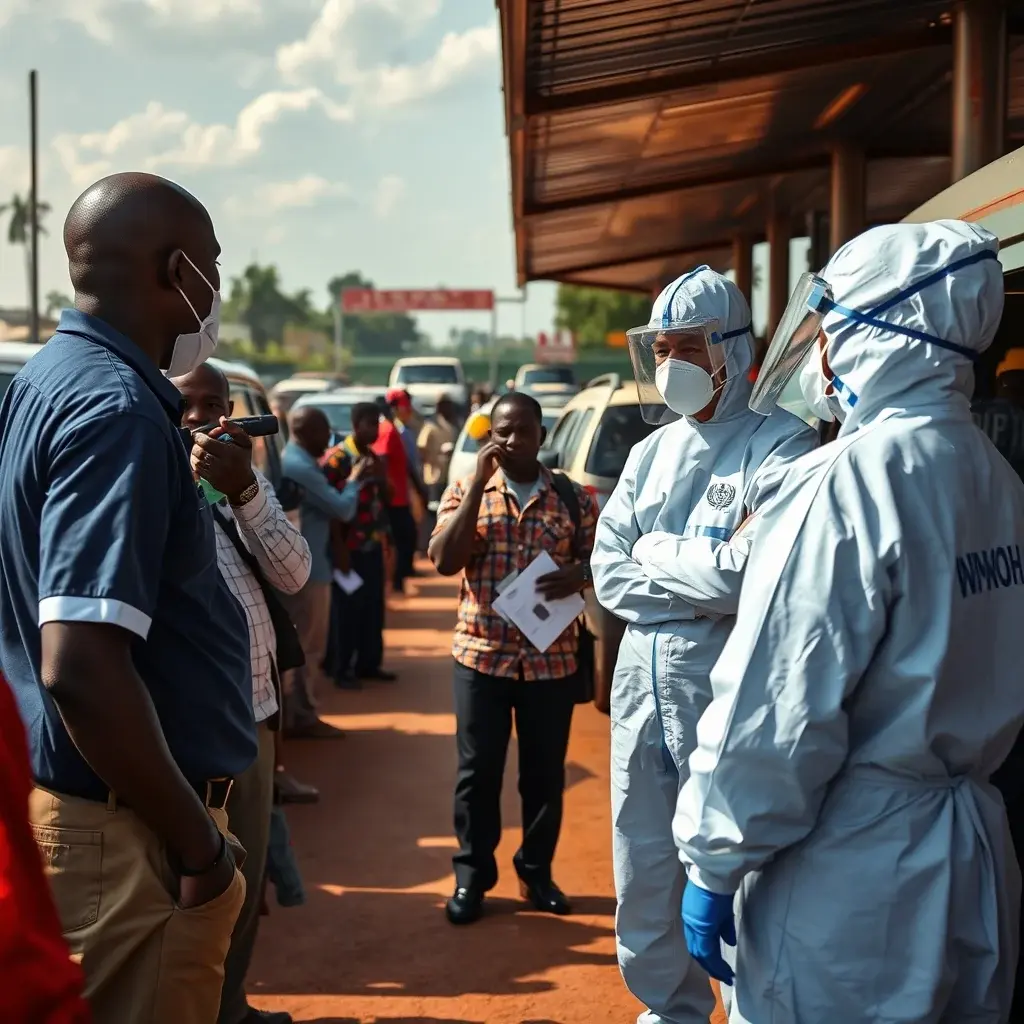
World Health Organization (WHO) Director-General Tedros Adhanom Ghebreyesus urged Uganda on Monday to reconsider its decision to temporarily close its border with the Democratic Republic of Congo (DRC) due to the ongoing Ebola outbreak. The comments were made during a visit to an Ebola isolation unit at a hospital in Uganda’s capital, Kampala, where Tedros also commended the East African nation’s swift and capable response to the virus.
Context of the Outbreak
The current Ebola outbreak, caused by the rare Bundibugyo strain, has been declared a public health emergency of international concern by the WHO. The epicenter of the outbreak is located in the Ituri province of the DRC. Africa’s top public health agency reports a total of 544 confirmed cases in the DRC, with 515 concentrated in the Ituri province.
Uganda has reported 19 confirmed cases of Ebola, a significant portion of which are individuals who recently entered the country from the DRC. This cross-border transmission highlights the interconnectedness of the region and the challenges in containing infectious diseases.
Border Closure Debate
Uganda’s decision to close its border with the DRC was implemented late last month as a measure to curb the spread of Ebola. However, Tedros stated that blanket travel restrictions are generally ineffective in containing such outbreaks. “So I hope they (Uganda’s authorities) reconsider,” he remarked when questioned by Reuters.
The WHO’s stance emphasizes a strategy of targeted interventions, robust surveillance, and rapid response rather than broad-based travel bans, which can disrupt essential services and hinder humanitarian efforts. While border closures might seem like a direct solution, they can also push movement underground, making tracking and containment more difficult.
Uganda’s Ebola Response Praised
Despite the disagreement on border policy, Tedros lauded Uganda’s overall handling of the Ebola situation. He described the country’s response as both prompt and capable, indicating confidence in their public health infrastructure and personnel. This praise underscores the importance of preparedness and effective management in combating epidemic threats.
Expert Perspectives and Data
The WHO’s position against blanket travel restrictions is supported by historical data from previous Ebola outbreaks. Studies have shown that while travel can contribute to spread, complete border closures often have limited impact on containment and can negatively affect local economies and access to healthcare. The effectiveness of response relies heavily on early detection, contact tracing, and community engagement.
The Bundibugyo strain, while rare, has demonstrated its potential for rapid spread, particularly in densely populated areas and regions with porous borders. The 544 confirmed cases in the DRC and 19 in Uganda represent a significant public health challenge requiring coordinated regional and international efforts.
Implications for the Region and Beyond
The WHO’s call for reconsideration of the border closure carries significant implications. It suggests a need for a more nuanced approach that balances public health security with the realities of cross-border movement and trade. For communities living near the border, such closures can disrupt livelihoods and access to essential goods and services.
The situation also highlights the critical need for continued international support for both the DRC and Uganda in their efforts to manage the outbreak. This includes funding for healthcare workers, medical supplies, public health campaigns, and laboratory testing. The effectiveness of these measures will be crucial in determining the trajectory of the current epidemic.
What to Watch Next
The coming weeks will be critical in observing whether Uganda’s authorities heed the WHO’s advice regarding the border closure. The success of containment efforts will depend on the continued collaboration between Uganda and the DRC, alongside sustained international aid. Monitoring the evolution of case numbers in both countries and the effectiveness of implemented public health strategies will be key indicators.









Leave a Reply