
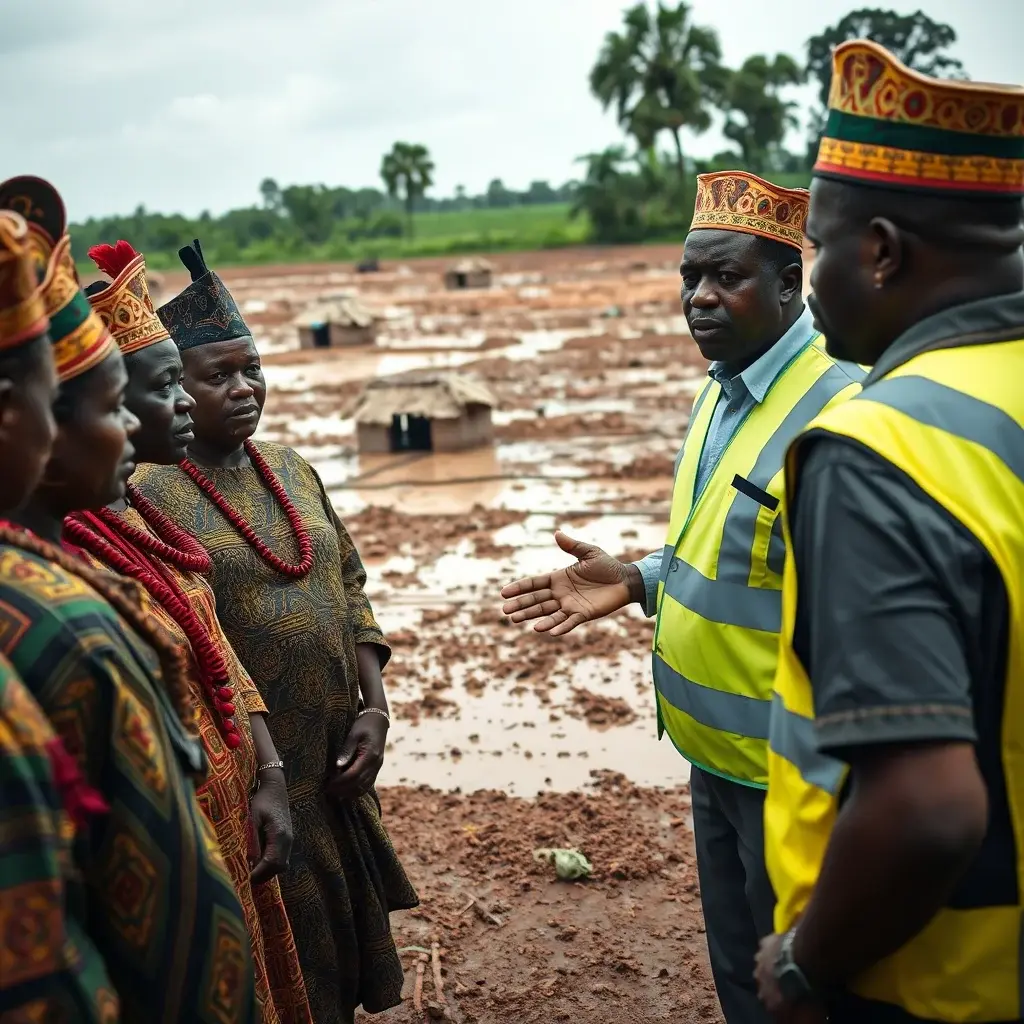
Twifo-Atti-Morkwa District officials, led by NADMO Director James Pra, have issued a stern appeal to traditional leaders to cease the sale of waterlogged lands for development. The warning, issued during a clean-up event in Twifo Praso, highlights the critical need to prevent severe flooding and its associated disasters during the upcoming rainy season.
Context of Disaster Preparedness
The call comes as Ghana, like many West African nations, faces recurring challenges with seasonal flooding. These events are often exacerbated by a combination of heavy rainfall, inadequate drainage systems, and human activities that obstruct natural watercourses.
Waterlogged areas, typically low-lying or marshy terrain, are naturally prone to holding excess water. When these lands are developed without proper planning or consideration for their hydrological properties, they can significantly worsen flood impacts.
Officials Highlight Risks of Development on Vulnerable Lands
James Pra, the NADMO Director for the Twifo-Atti-Morkwa District, directly addressed traditional leaders, emphasizing the long-term risks involved in selling these sensitive lands. He stated that such decisions, made without fully accounting for the potential for severe flooding, directly contribute to the destruction of property and endanger lives during the rainy season.
The district’s commitment to mitigating these risks is underscored by its ongoing efforts. This includes organizing regular clean-up exercises aimed at removing waste that can clog drainage systems.
Waste Management Crucial for Disease Prevention
Beyond land use, officials are also focusing on public health. Richard Senyo, the District Environmental Health Officer, stressed the importance of proper waste management, particularly as the rainy season approaches. He warned that inadequate disposal of refuse creates breeding grounds for disease vectors, significantly increasing the risk of outbreaks like cholera.
Senyo pointed out that the impact of poor waste management extends beyond immediate areas, posing a significant health hazard to surrounding communities. This emphasizes the interconnectedness of environmental health and public well-being.
District-Wide Commitment to Environmental Hygiene
Isaac Yawson, the District Chief Executive, reaffirmed the district’s dedication to maintaining a clean environment. He announced plans for monthly clean-up exercises as a key strategy to combat the accumulation of filth.
Yawson also encouraged a shift in public mindset, urging citizens to take personal responsibility for environmental cleanliness. He stressed that while government initiatives are important, proactive community involvement is essential for sustained success in preventing environmental degradation and its related disasters.
Broader Implications and Future Outlook
The appeals from NADMO and environmental health officials in Twifo-Atti-Morkwa reflect a growing awareness of the complex factors contributing to flood disasters in Ghana. The emphasis on responsible land management by traditional authorities, coupled with robust waste disposal practices, is crucial for building community resilience.
As the rainy season looms, the effectiveness of these preventative measures will be closely watched. The success of these initiatives hinges not only on government action but also on the active participation and cooperation of traditional leaders and the general public. Future efforts will likely focus on strengthening enforcement of land use regulations and enhancing public education campaigns on waste management and disaster preparedness.








Leave a Reply