
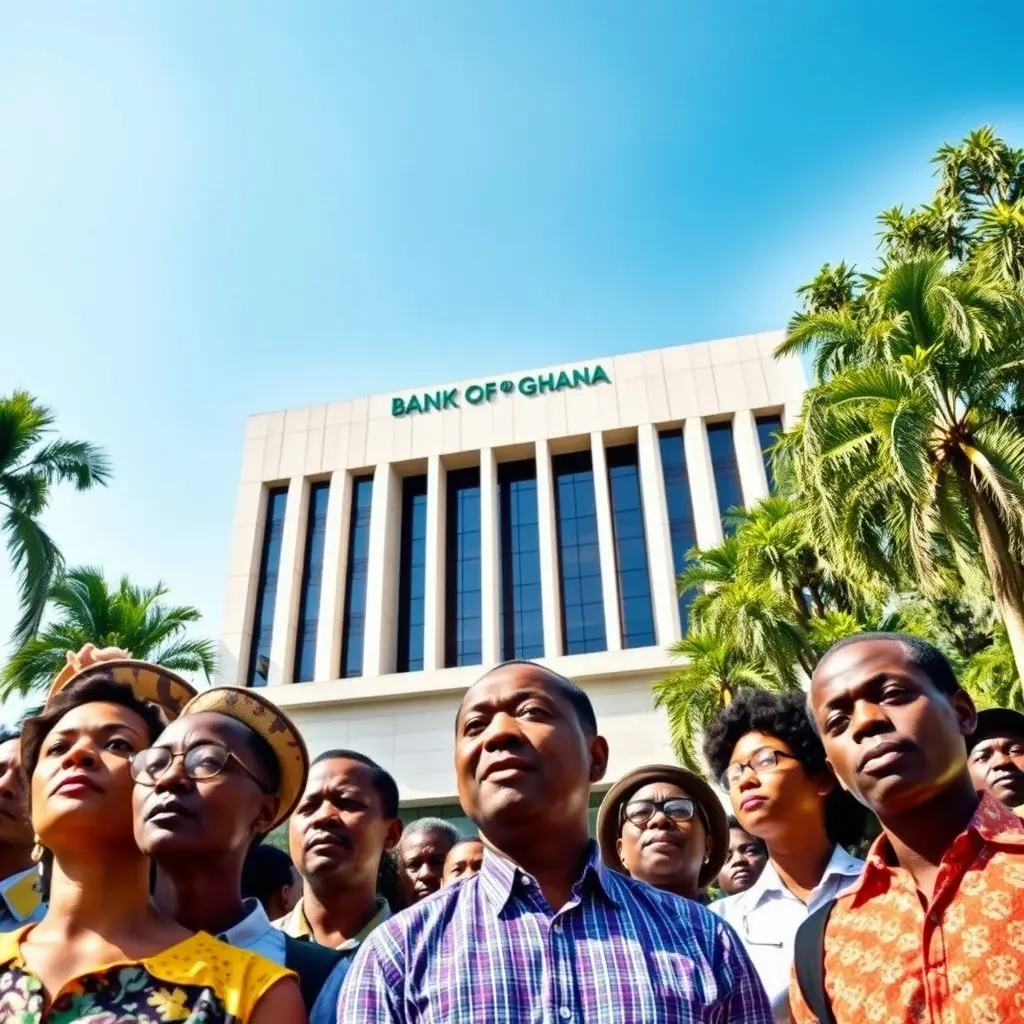
Accra, Ghana – The Minority in Parliament has clarified its stance regarding recent reports of substantial financial losses at the Bank of Ghana (BoG), stating their actions are aimed at highlighting operational challenges and the impact of currency management decisions, rather than accusing the central bank of mismanagement. This clarification comes in the wake of the BoG’s audited financial statements for 2025, which revealed an operating loss of GH¢15.6 billion, a marked increase from the GH¢9.4 billion loss in 2024.
Context of the Losses
The Bank of Ghana’s 2025 audited financial statements, released recently, painted a concerning picture of the institution’s financial health. The reported operating loss of GH¢15.6 billion signifies a considerable jump from the GH¢9.4 billion loss recorded in the previous year. This widening deficit is further underscored by a significant increase in negative equity, which expanded from GH¢58.62 billion to GH¢93.82 billion.
While total assets saw an increase, rising to GH¢237 billion from GH¢215 billion in 2024, total liabilities also climbed substantially, from GH¢276 billion to GH¢333 billion during the same period. This imbalance between assets and liabilities contributes to the growing negative equity, a key indicator of financial strain.
Minority’s Position on Currency Management
Kojo Oppong Nkrumah, Member of Parliament for Ofoase-Ayirebi, speaking on Joy News’ The Pulse, emphasized that the Minority’s engagement has been focused on analysis and public education. He explained that their interventions have consistently drawn attention to the management of the Ghanaian cedi and its consequential impact on the central bank’s financial standing.
According to Oppong Nkrumah, the Minority has previously voiced concerns about the effectiveness of the Bank of Ghana’s currency management strategies. They have pointed to instances where the appreciation of the cedi was attributed to market interventions by the central bank, rather than fundamental economic improvements.
He further referenced subsequent economic developments, including adjustments in international financial institution engagements and policy shifts, which he argued influenced exchange rate movements. These factors, he suggested, contributed to a renewed depreciation of the cedi after intervention measures were eventually suspended.
Previous Warnings and Expert Analysis
Mr. Oppong Nkrumah maintained that the Minority had issued prior warnings about the potential financial repercussions of such market interventions. They had cautioned that these actions could ultimately lead to significant financial losses for the Bank of Ghana.
This perspective aligns with broader economic discussions surrounding central bank interventions in currency markets. While intended to stabilize exchange rates, aggressive market operations can deplete foreign exchange reserves and incur substantial costs, particularly if market conditions reverse or underlying economic fundamentals do not support the desired currency strength.
The significant increase in the BoG’s operating loss and negative equity raises questions about the sustainability of its current financial position and the efficacy of its monetary policy tools. Analysts are closely watching how the Bank of Ghana will address these financial challenges in the coming fiscal periods.
Implications for Ghana’s Economy
The growing financial losses at the Bank of Ghana could have broader implications for Ghana’s economic stability and investor confidence. A central bank grappling with significant financial challenges might face limitations in its ability to implement effective monetary policy or respond to future economic shocks.
Furthermore, a weakened financial position of the central bank could impact its credibility in managing inflation and maintaining exchange rate stability, crucial elements for attracting foreign investment and fostering sustainable economic growth. The government and the Bank of Ghana will need to navigate these challenges carefully, potentially through fiscal consolidation, structural reforms, or revised monetary policy frameworks.
What to Watch Next
Moving forward, attention will be on the Bank of Ghana’s strategies to address its mounting losses and negative equity. Key areas to monitor include any proposed policy adjustments, measures to strengthen its balance sheet, and the government’s fiscal response. The effectiveness of these actions will be critical in restoring confidence in the central bank’s financial health and its capacity to support Ghana’s economic objectives.







Leave a Reply