
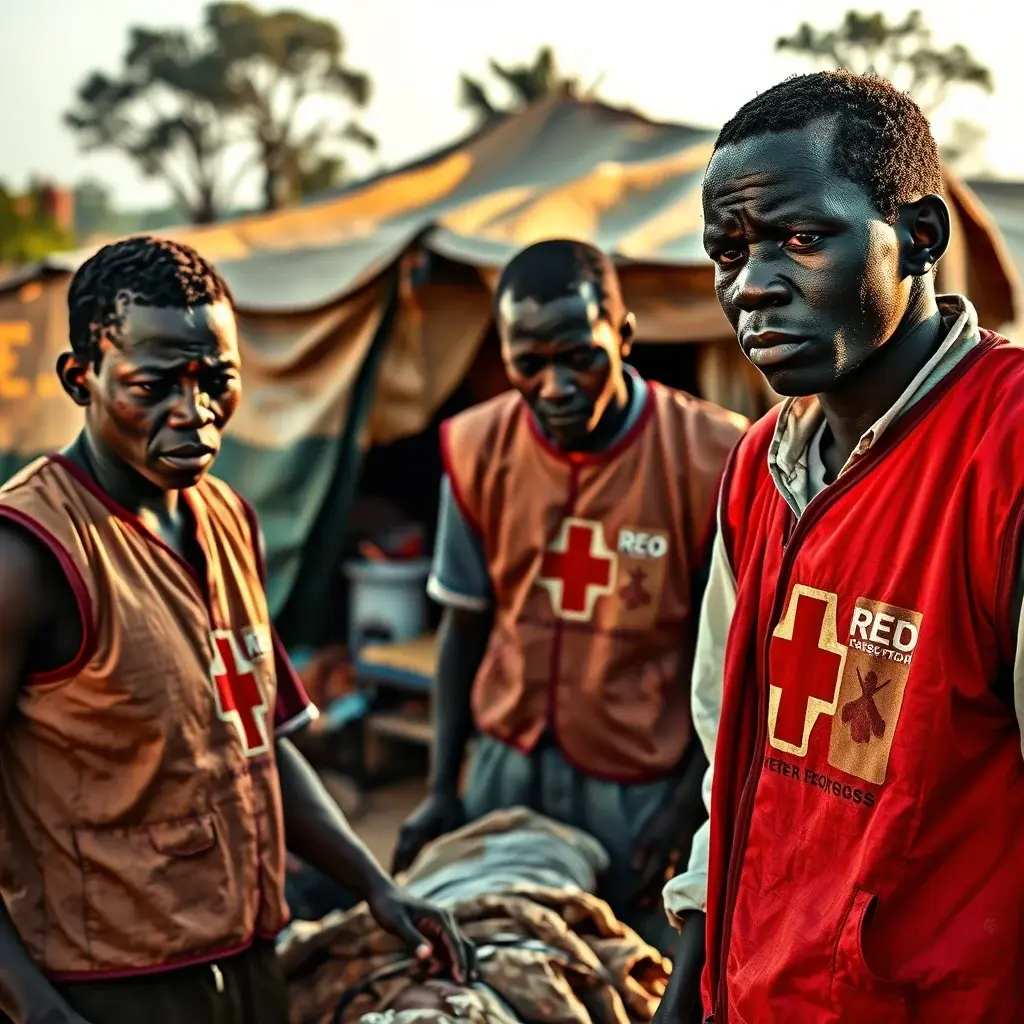
Three Red Cross volunteers have died in the Democratic Republic of Congo from what is suspected to be the Ebola virus, likely contracted while managing deceased individuals. The volunteers, Alikana Udumusi Augustin, Sezabo Katanabo, and Ajiko Chandiru Viviane, are among the early known victims of the current outbreak in the eastern Ituri province, which has seen over 170 suspected deaths and 750 suspected cases.
Volunteers’ Service and Suspected Infection
The tragic loss occurred between May 5 and May 16 in the town of Mongwalu, now identified as the outbreak’s epicenter. It is believed the volunteers contracted the virus on March 27, while working on a project unrelated to Ebola. Their service to the community was acknowledged by the International Federation of Red Cross and Red Crescent Societies (IFRC) as an act of “courage and humanity.” Health experts emphasize that the bodies of Ebola patients can remain highly infectious due to lingering bodily fluids, posing a significant risk to those handling them.
A Rare and Dangerous Strain
The current outbreak involves a less common strain of Ebola, known as Bundibugyo. This particular species lacks a proven vaccine and carries a mortality rate of approximately one-third of those infected. The World Health Organization (WHO) has escalated its public health risk assessment for the DR Congo from “high” to “very high” as a result of the outbreak’s severity and spread.
Regional and International Concerns
WHO chief Dr. Tedros Adhanom Ghebreyesus noted that while the risk in the wider African region is considerable, the global risk remains low. Neighboring Uganda has reported three new cases, bringing its total to five. The African Centres for Disease Control have identified ten other African nations at risk: Angola, Burundi, the Central African Republic, the Republic of Congo, Ethiopia, Kenya, Rwanda, South Sudan, Tanzania, and Zambia.
Containment Measures and Community Trust
In an effort to curb cross-border transmission, the DR Congo’s transport ministry announced the suspension of all commercial and private flights to and from Bunia, the provincial capital of Ituri, where the majority of cases and fatalities have been recorded. Only humanitarian, medical, or emergency flights will be permitted with special authorization. Meanwhile, the response efforts have faced challenges related to community trust and fear. Médecins Sans Frontières (MSF) reported that a tent provided for the Ebola response in Mongwalu was set ablaze. This incident followed a similar event where an angry crowd attacked part of a hospital after being prevented from claiming the body of a suspected Ebola victim for traditional burial rites. MSF stressed the critical need for sustained community engagement and trust-building in such a volatile situation.
Broader Impact and Ongoing Challenges
Beyond Ituri, cases have also been identified in the North and South Kivu regions. These areas are partially controlled by rebel groups, including M23, whose ongoing clashes with government forces complicate the efforts to contain the epidemic. The complex security situation in these regions presents additional hurdles for health workers and aid organizations attempting to reach affected populations and implement vital control measures.









Leave a Reply