
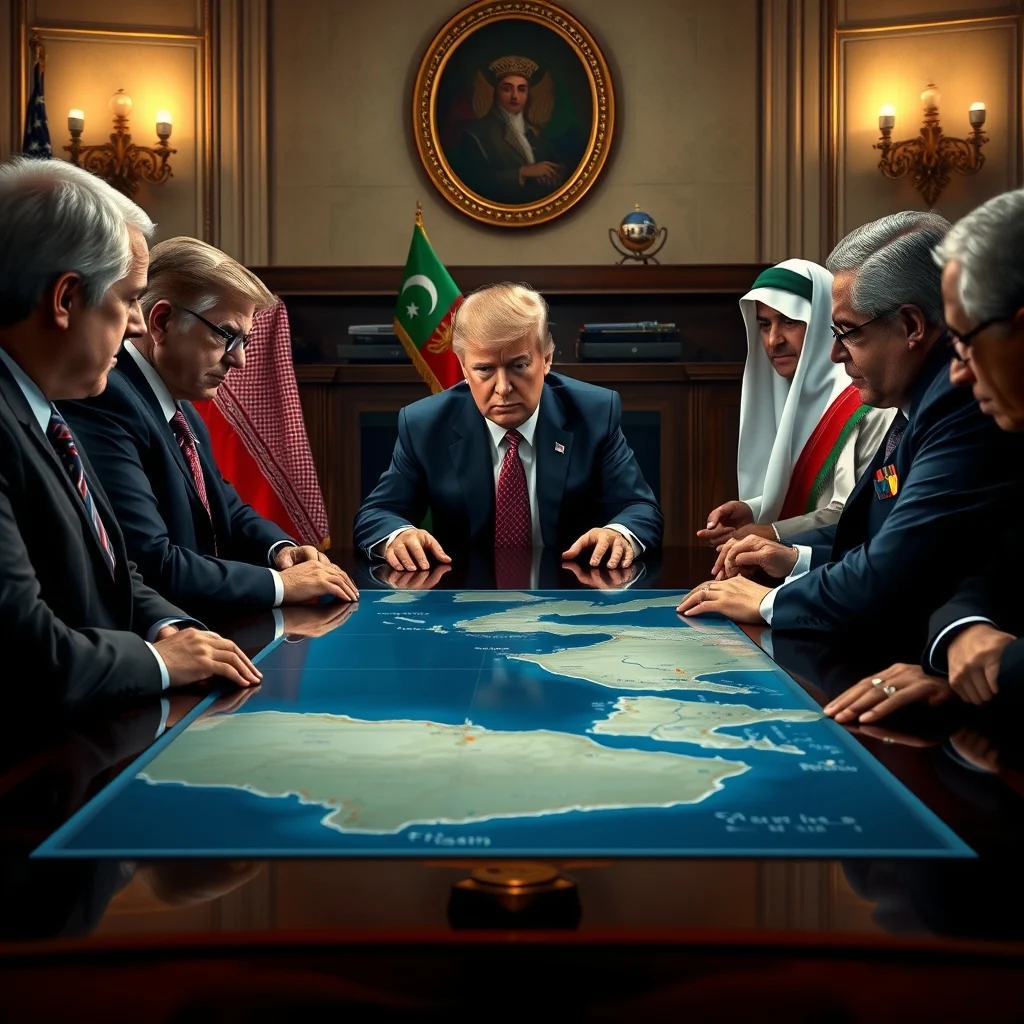
WASHINGTON D.C. – U.S. President Donald Trump announced Saturday that a significant agreement with Iran has been “largely negotiated,” with details poised for imminent release. The purported deal, according to Trump’s social media statements, includes the reopening of the Strait of Hormuz, a critical global shipping lane.
Context of Escalating Tensions and Diplomatic Efforts
This announcement follows a period of heightened tensions and military actions between the U.S. and Iran, which escalated dramatically following wide-ranging strikes on February 28th. Iran retaliated with attacks on Israel and U.S.-allied Gulf states, leading to a fragile ceasefire agreed upon in early April. Since then, both Washington and Tehran have been engaged in discussions aimed at establishing a long-term peace accord, with Pakistan reportedly serving as a key intermediary.
Details Emerge Amidst Conflicting Statements
Trump stated on social media that he had a “very good call” with leaders from Saudi Arabia, the United Arab Emirates, Qatar, and other nations regarding a “Memorandum of Understanding pertaining to PEACE.” He elaborated that the agreement was “largely negotiated, subject to finalization between the United States of America, the Islamic Republic of Iran, and the various other Countries, as listed.” Final aspects are currently under discussion and will be announced shortly.
However, the situation remains complex, with Iranian foreign ministry spokesman Esmaeil Baqaei telling state television that while U.S. and Iranian positions had been converging in the past week, this did not guarantee agreements on key issues. Baqaei accused the Americans of issuing “contradictory statements.” He also described the potential agreement as a “memorandum of understanding” intended to form a “framework, consisting of 14 points.” Iran is reportedly finalizing this memorandum, with further talks anticipated within 30 to 60 days to reach a final accord.
Strait of Hormuz: A Vital Chokepoint
The potential reopening of the Strait of Hormuz is a significant element of the reported deal. This narrow waterway, through which approximately 20% of global oil consumption passes, has been a focal point of recent geopolitical friction. The U.S. has maintained a blockade on Iranian ports since April 13th, with U.S. Central Command (Centcom) reporting significant success in preventing trade. Centcom commander Admiral Brad Cooper stated their forces have been “highly effective” in allowing “zero trade into and out of Iranian ports which has squeezed Iran economically.” Conversely, Iran has asserted military control over the area around the Strait, requiring coordination and authorization for all transit, a claim repeatedly rejected by the U.S. and its Gulf allies.
Shifting Dynamics and Diplomatic Undercurrents
The reported progress comes after a period of apparent diplomatic cooling. Anonymous U.S. officials had briefed American media on Friday about the administration’s preparation for potential new military strikes against Iran, though no final decision had been made. President Trump himself had recently described the existing truce as being on “massive life support” after rejecting Tehran’s demands as “totally unacceptable.” His decision to remain in Washington D.C. over the weekend, foregoing his son’s wedding, underscored the perceived importance of the ongoing diplomatic period.
Regional Reactions and Intermediary Role
Pakistan’s Prime Minister Shehbaz Sharif congratulated President Trump on his “extraordinary efforts to pursue peace,” calling a recent phone call “very useful and productive.” Pakistan has played a crucial role as an intermediary in these negotiations, with Sharif indicating a hope to host the next round of talks soon.
Implications and Future Outlook
If finalized, this agreement could significantly alter the geopolitical landscape of the Middle East, potentially de-escalating regional conflicts and ensuring the stability of crucial maritime trade routes. The U.S. has consistently stated that any agreement would prevent Iran from acquiring nuclear weapons. The coming weeks will be critical in determining whether the “largely negotiated” deal moves to finalization, navigating the complex and often contradictory statements emerging from both sides, and observing the reactions of key regional players.








Leave a Reply