
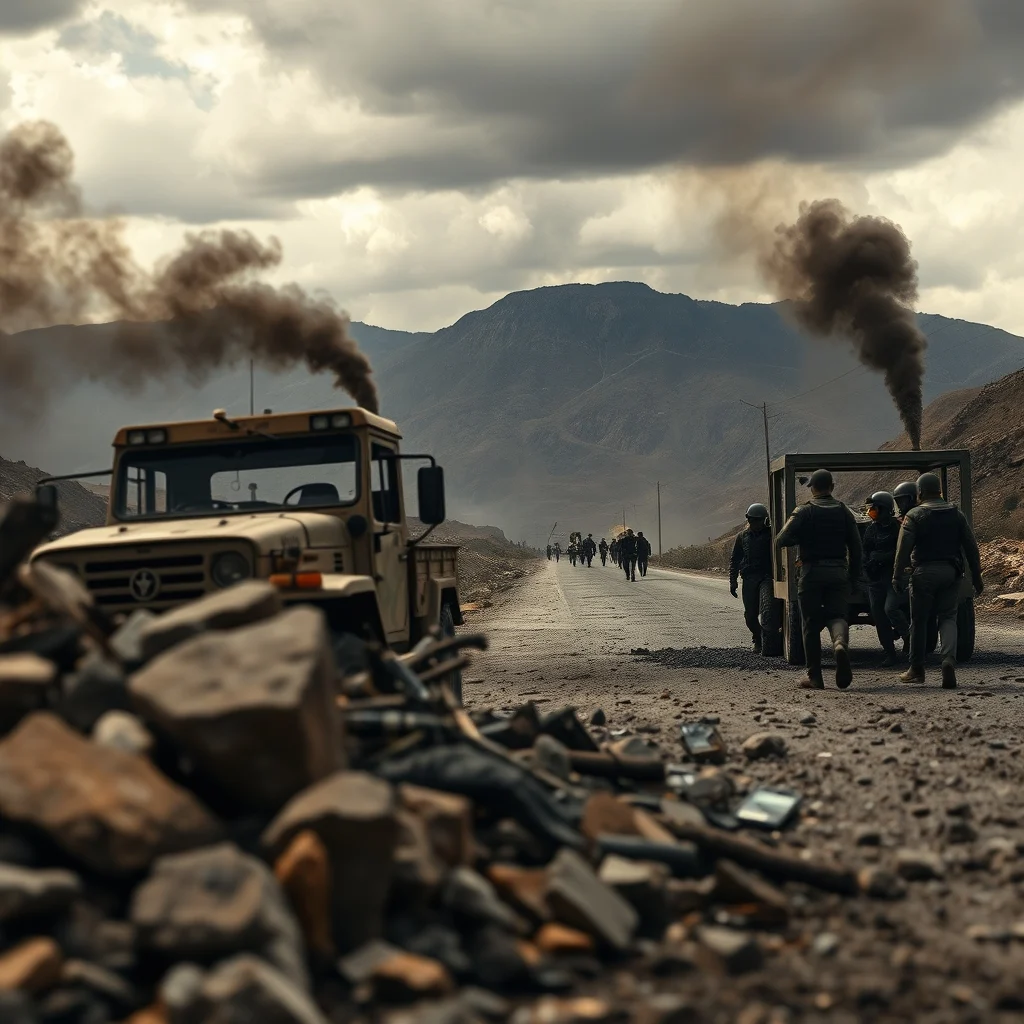
Bolivia’s Public Works Minister, Mauricio Zamora, was briefly separated from his convoy and ambushed by protesters on Saturday afternoon while overseeing an operation to clear anti-government roadblocks near Copata. The incident occurred as security forces deployed bulldozers to clear barriers hindering the flow of essential goods into the capital cities of La Paz and El Alto, facing renewed violence from demonstrators.
Context of the Unrest
The current wave of protests, led by trade unions and supporters of former President Evo Morales, has intensified over the past week. Demonstrators are demanding the resignation of President Rodrigo Paz, a center-right leader who took office just six months ago. Key grievances include the government’s austerity measures, particularly the removal of long-standing fuel subsidies, which have led to increased living costs amidst shortages and inflation. Paz was elected on a promise to address Bolivia’s severe economic crisis.
Another significant point of contention is President Paz’s government’s alignment with the United States, a move that has historically been divisive in Latin America and is strongly opposed by Morales. The Paz administration accuses Morales, who is currently facing legal allegations, of instigating the current unrest.
Operation to Clear Roadblocks
In an effort to alleviate the impact of the roadblocks on the supply of food and medicine, Bolivian police and military forces were dispatched from major cities early Saturday morning. The operation involved using bulldozers to remove rocks and concrete pillars that had been erected by protesters.
However, the mission was met with resistance in several locations. Clashes between security forces and demonstrators erupted, and in some areas, roadblocks were quickly re-established. Reports indicate that some convoys were attacked with stones and even dynamite.
Minister’s Ambush and Associated Violence
Minister Zamora’s vehicle was intercepted in the town of Copata, south of La Paz. Local media reported that residents began pelting his convoy with stones and dynamite. During the retreat, Zamora’s vehicle became separated from the main group.
According to Agencia Noticias Fides, Zamora’s vehicle took a dirt road but encountered a second ambush before eventually reuniting with the convoy. He was later located and confirmed to be safe.
Elsewhere, the violence escalated. In Achicha Arriba, on the highway leading to El Alto, protesters looted and set fire to a customs post after police used tear gas to disperse a crowd. Near Caracollo, north of Oruro, a convoy faced explosive attacks. Demonstrators reportedly burned a military truck and looted a police station. A minibus was also set ablaze on the La Paz-Oruro highway, as reported by the daily newspaper La Razon.
The government has denied claims, which were reiterated by Evo Morales, of a fatality in Vilaque, on the same highway. Journalists covering the operation also reported coming under attack.
Expert Perspectives and Data
The economic situation in Bolivia has been dire, with inflation rates and shortages impacting daily life significantly. The Paz government’s decision to cut fuel subsidies, while aimed at fiscal responsibility, has directly affected consumers, exacerbating public discontent. This policy shift is seen by many as a necessary but unpopular measure to stabilize the economy after years of economic challenges.
Political analysts suggest that the protests are a complex mix of economic hardship, political polarization, and historical anti-US sentiment. Evo Morales, a charismatic figure with a significant following, continues to wield influence, positioning himself as a counterpoint to Paz’s pro-market and pro-US stance. His alleged role in instigating unrest highlights the deep political divisions within the country.
Implications for Bolivia and its People
The ongoing clashes and roadblocks have severe implications for Bolivia’s economy, disrupting supply chains and potentially leading to further shortages and price increases. The government’s ability to maintain order and ensure the free flow of goods is critical for economic stability and public confidence.
President Paz faces a delicate balancing act: addressing the economic crisis through potentially unpopular reforms while managing significant social and political opposition. His administration stated it is exploring dialogue with demonstrators but warned that patience is wearing thin. The situation remains volatile, with the potential for further escalation or de-escalation depending on future government actions and the response of the protest movement.
What to Watch Next
Attention will be on whether the government can secure and maintain humanitarian corridors effectively. The success of future dialogue attempts between the Paz administration and protest leaders will be crucial. Furthermore, the role of Evo Morales and the legal proceedings against him could continue to be a significant factor influencing political stability. The international community will also be observing how Bolivia navigates this period of economic and political turbulence.








Leave a Reply