
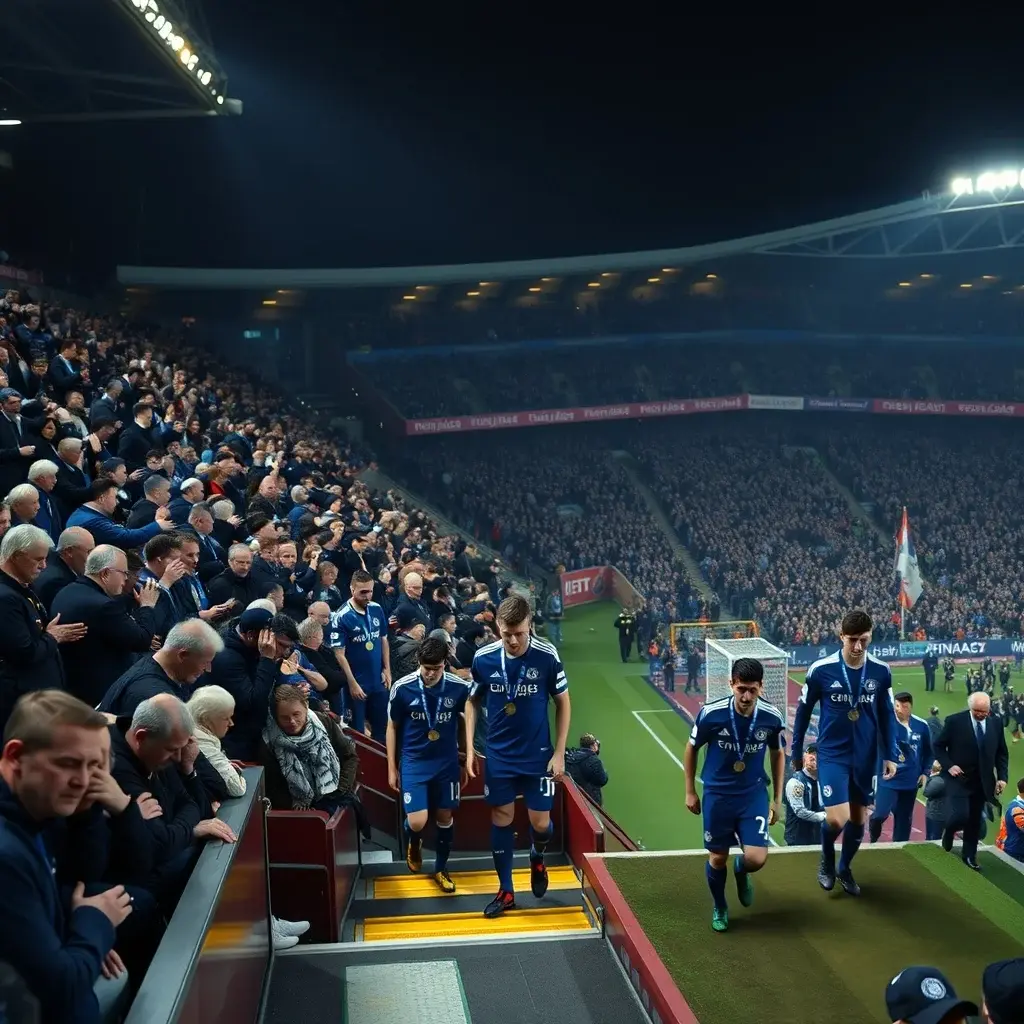
Following a disheartening FA Cup final loss to Manchester City at Wembley, Chelsea fans received news of Xabi Alonso’s impending arrival as the club’s new manager. The former Real Madrid and Bayer Leverkusen boss, aged 44, is set to be unveiled before the pre-season, with his contract commencing on July 1st, aiming to lift spirits after a turbulent season.
Context of a Challenging Transition
The decision regarding Liam Rosenior’s replacement was largely made prior to the FA Cup final, with the club keen to avoid distracting players and staff during the crucial match. The announcement was strategically timed to occur immediately after the game, allowing the focus to shift towards the club’s future direction.
While Alonso’s appointment, marked by his playing success and recent league and cup triumph with Leverkusen, is met with excitement, there’s an underlying acknowledgment of the significant challenges he inherits. Chelsea faces a demanding summer, exacerbated by the FA Cup final defeat which closed off another potential avenue for European competition.
Champions League qualification is now out of reach, and a Europa League spot appears unlikely given the team’s current ninth-place standing in the Premier League with only two games remaining. Securing at least a seventh-place finish, which is probably necessary, seems a tall order.
Even qualification for the Europa Conference League would offer little in terms of financial uplift or genuine excitement for a fanbase accustomed to competing against Europe’s elite. Consequently, there’s a realistic possibility of Chelsea missing out on all UEFA competitions next season.
However, sources within the club strongly refute any suggestions that they would prefer to avoid lesser European competitions or are content without European football, despite recent settlements with financial regulators following substantial transfer expenditures.
Alonso’s Appeal and Chelsea’s Vision
Chelsea is looking to learn from the current season’s shortcomings and has been impressed by Alonso’s perceived knowledge, leadership qualities, emotional intelligence, and alignment with the club’s values. His proven track record of winning trophies and his ability to collaborate effectively within an established organizational structure are also highly valued.
The situation at Chelsea differs significantly from Alonso’s previous coaching role at Real Madrid, where his seven-month tenure ended in January due to player disagreements. Unlike the ‘Galactico’ level of talent at Madrid, Stamford Bridge hosts a different set of players.
Key figures such as Marc Cucurella and Enzo Fernandez reportedly voiced criticisms during the previous management’s tenure, particularly concerning communication issues with Spanish-speaking players. This is an area Alonso will need to address, though sources close to several players indicate excitement about his arrival.
Significantly, Alonso has been appointed as ‘manager’ rather than ‘head coach,’ signaling his seniority within a collaborative structure involving key club figures as they aim to rebuild after a tumultuous campaign that saw the departures of Enzo Maresca and Rosenior.
This designation does not imply unilateral decision-making. Chelsea operates with five sporting directors, each with defined responsibilities, and player recruitment will be a collaborative effort involving Alonso and these directors. The strategy involves balancing the need for experienced additions with long-term planning.
Alignment on significant player departures will also be crucial, especially if the club fails to secure European qualification. Alonso reportedly expresses enthusiasm for the current squad but acknowledges, alongside the club, that improvements are necessary this summer. Minimum targets include reinforcing the center-back, midfield, and forward positions.
There’s an internal recognition of past missteps, and the club is committed to working with Alonso, a former midfield maestro for Liverpool, Real Madrid, and Bayern Munich, to restore the team to a winning standard expected by both the club and its supporters.
Addressing Culture, Squad, and Physical Deficiencies
Chelsea is grappling with deep-seated cultural issues that have hampered progress. This disconnect was highlighted by a fan protest march on Wembley Way prior to the FA Cup final.
A growing rift exists between supporters and the club, as well as between fans and players. Internal divisions within the squad and between players and the wider organization are also apparent.
Co-owner Behdad Eghbali has acknowledged that achieving stability in the managerial position has been an area where the club has faltered. The hope is that Alonso’s stature and authority can help rectify this, reinforcing the club’s ambitions and improving communication channels with both players and the fanbase.
On the field, Alonso will be tasked with enhancing the team’s mental, physical, and tactical capabilities. The squad’s mentality has been questioned, with accusations of players disengaging at times. The team has also exhibited the worst disciplinary record in the league and a poor performance record in crucial matches.
This includes a 14-game winless streak against Manchester City and seven consecutive defeats in domestic cup finals. Physically, Chelsea has been outmatched by opponents, covering less distance than any other Premier League team this season, with a notable exception in their draw against Liverpool.
Defensive issues, initially apparent under Maresca, evolved into broader problems at both ends of the pitch under Rosenior, whose six-game losing streak without scoring ultimately led to his dismissal.
Despite the close nature of the FA Cup final, interim boss Calum McFarlane lamented the team’s misfortune, believing they merited at least one penalty. He praised the squad’s talent and commitment in recent performances, stating, “The fight and heart have been questioned at times, but in the last two performances, I don’t think you can question that.”
While the squad possesses undeniable quality, significant work remains. Chelsea faces a demanding fanbase and has cycled through multiple managers in a short period. The ownership’s approach is under scrutiny, and Alonso faces a formidable task in unifying the club and restoring its competitive edge.









Leave a Reply