
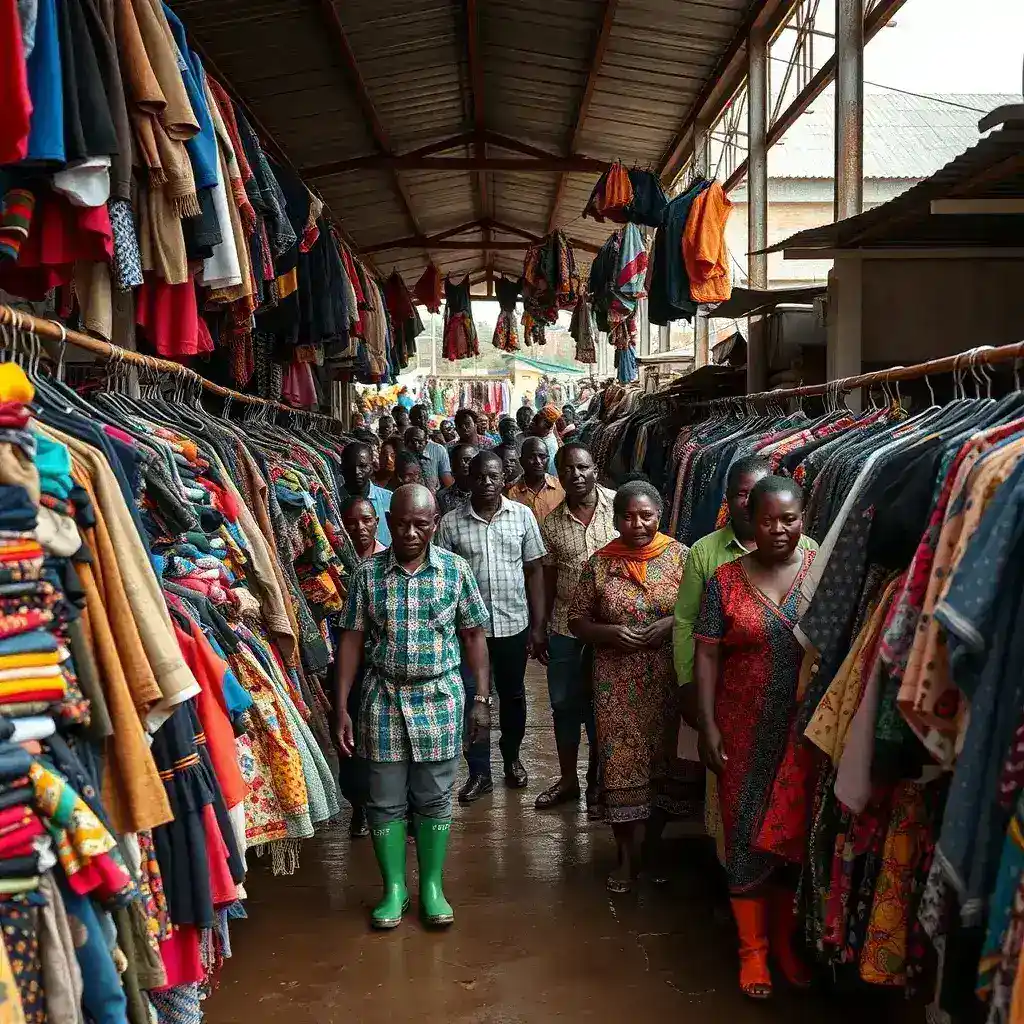
East African nations, including Kenya and Uganda, are facing a complex challenge as they attempt to curb imports of second-hand clothing, known locally as ‘mitumba,’ to foster domestic fashion industries. This effort, reignited a decade after a previous attempt was thwarted, involves new taxes and duties, sparking debate among traders, designers, and policymakers about economic impact, employment, and environmental concerns.
The Mitumba Trade: A Double-Edged Sword
Markets like Gikomba in Kenya, East Africa’s largest open-air trading hub, remain vibrant despite weather conditions, with shoppers flocking to find affordable second-hand garments. This trade, primarily sourced from the US, Europe, and China, poses a significant challenge for local fashion entrepreneurs.
Zia Bett, founder of Kenyan womenswear brand Zia Africa, highlights the difficulty: “We’re competing with second-hand clothing, but we can’t compete on price.” Similarly, Elizabeth Paul of Kuya Creations in Tanzania notes that customers often opt for multiple second-hand dresses over a single locally made one, even at significantly lower prices.
The East African Community (EAC) has long recognized this issue. In 2015, EAC members planned to ban mitumba imports to stimulate local manufacturing. However, the US, a major exporter, threatened to revoke trade benefits under the African Growth and Opportunity Act (Agoa), leading most EAC nations to abandon the ban, except for Rwanda.
New Tax Regimes and Their Repercussions
Recently, Uganda introduced a 30% environmental levy on used clothing imports, in addition to existing duties and VAT, aiming to promote domestic production and address environmental degradation. This move, however, met resistance from mitumba traders like Aaron Sekky, who argue for a free economy and emphasize the extensive employment generated by the trade.
Research commissioned by the Mitumba Consortium Association of Kenya (MCAK) suggests that up to 4.9 million people across East Africa rely on the used clothing trade for their livelihoods. This includes importers, wholesalers, repair tailors, and market vendors.
However, critics argue that the employment argument is limited. Dr. Andrew Brooks, an academic at King’s College London, suggests that retail-focused jobs contribute less to a nation’s economy compared to production roles. Lisa Kibutu, a Kenya Fashion Council board member, describes many mitumba jobs as “hand-to-mouth” without significant growth potential.
Environmental and Quality Concerns
Beyond economic competition, environmentalists point to the significant waste generated by low-quality second-hand clothing ending up in landfills. The Changing Markets Foundation estimated in 2023 that over a third of used clothing shipped to Kenya is unsuitable for resale. Greenpeace highlights the lack of infrastructure to handle this textile waste, with official dump sites overflowing.
Conversely, Teresia Wairimu Njenga, MCAK’s chairperson, argues that mitumba sellers are “champions of preservation of our environment” by preventing the production of vast quantities of new clothing. The debate over whether used garments should be classified as waste under global treaties like the Basel Convention is ongoing.
The Challenge of Local Capacity and Competition
Despite efforts to boost local industries, challenges remain. Ugandan designer Joel Okalany, whose brand Ekikumba Fusion upcycles used clothing, believes East Africa is not yet ready for a complete end to mitumba imports, citing a lack of advanced manufacturing capabilities.
Rwanda’s experience also offers lessons. While the country implemented higher taxes on used clothing, it has reportedly held off on a total ban due to domestic production gaps. Furthermore, Rwanda’s trade ministry noted that restricting mitumba imports alone is insufficient if the influx of cheap, new garments from countries like China and Turkey is not controlled.
Kenyan designer Zia Bett echoes this concern, identifying cheap fast fashion from China as a significant threat to both local manufacturers and mitumba traders. She advocates for focusing on brand building, storytelling, and quality to attract consumers beyond just affordability.
Coexistence and Consumer Choice
The discussion is evolving towards finding a balance. Njenga suggests that both second-hand clothing and locally manufactured garments can coexist, emphasizing the importance of consumer choice. This perspective acknowledges the economic and social roles of the mitumba trade while seeking pathways for local industry growth.
The future of East Africa’s fashion landscape hinges on navigating these complex economic, social, and environmental factors. Policymakers face the task of implementing strategies that support local production without alienating consumers or disrupting the livelihoods dependent on the established second-hand clothing market, while also considering the impact of global fast fashion trends.







Leave a Reply