
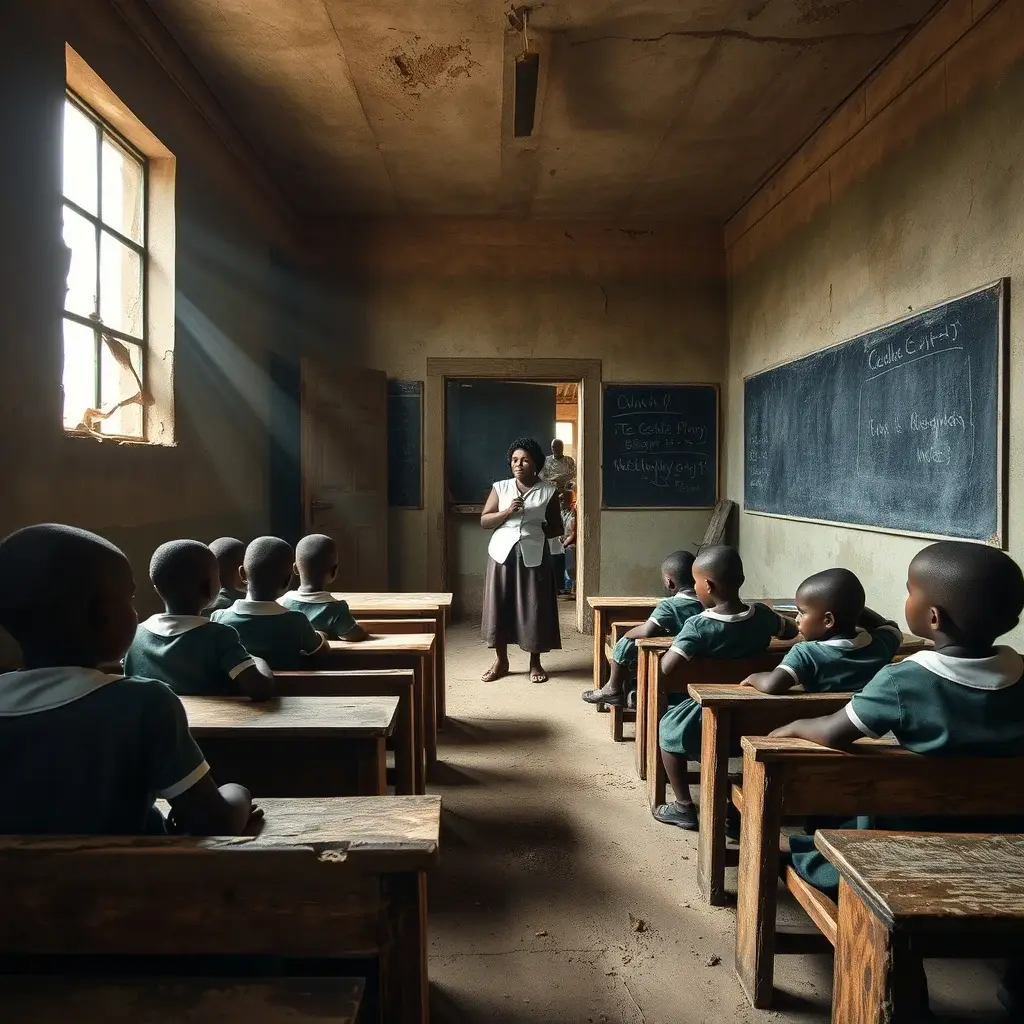
Rev. Nathan Ackweh, the School Improvement Support Officer for the Nyigbenya Circuit in the Ningo-Prampram Municipal Education Directorate, has sounded an alarm over the critical lack of basic educational facilities and learning materials in district schools. This scarcity, including a severe deficit in electricity, threatens to undermine quality education delivery and has already contributed to poor student attendance and declining academic performance, potentially impacting recent Basic Education Certificate Examination (BECE) candidates.
Context of Educational Undersupply
The situation highlights a broader challenge facing educational institutions in the Greater Accra Region, where inadequate resources hinder effective teaching and learning. Schools are struggling to provide fundamental necessities, creating an environment far from conducive to academic success. This lack of basic infrastructure is not an isolated incident but a systemic issue affecting multiple schools within the circuit.
Bueko School: A Microcosm of the Crisis
One of the most affected institutions is the Good Shepherd Anglican Primary and JHS in Bueko. The school, serving approximately 200 pupils, faces a dire shortage of essential resources. Classrooms are overcrowded, with each accommodating between 20 and 30 students, yet many suffer from leaking roofs and a severe lack of adequate furniture.
The teacher shortage is so pronounced that Primary Five and Primary Six students are being taught in a single classroom. This consolidation of grades is a significant concern for educational quality, as it limits individualized attention and potentially hinders comprehensive learning for both age groups.
Compounding these issues, the Junior High School (JHS) block has fallen into a state of disrepair, further deteriorating the learning environment. The dilapidated condition of the facilities poses a direct threat to the safety and well-being of students and educators.
The Water Crisis
Access to potable water presents another grave challenge. With limited availability of sachet water, students and teachers are reportedly forced to drink from salty water sources. During a recent visit, a student was observed drinking directly from a pipe connected to such a source, citing the prohibitive cost of sachet water as the reason.
Teacher Concerns and Urgent Appeals
Educators at the Bueko school have voiced their deep concerns regarding the challenging working conditions. They are appealing for immediate intervention from educational authorities and other stakeholders to address the infrastructural deficits and provide the necessary resources to support effective teaching and learning.
Corporate Intervention Offers Glimmer of Hope
In response to these pressing needs, Fenis Metal Technology Limited has stepped forward with a significant intervention. The company is undertaking refurbishment of parts of the school facility, restoring electricity, and donating essential educational materials. This initiative aims to alleviate some of the immediate challenges faced by the school.
Andy Luu, CEO of Fenis Metal Technology Limited, stated that the company’s support is part of its broader commitment to education and improving learning conditions in underserved communities. The donation is expected to create a more favorable environment for both students and teachers, fostering a better learning experience.
Implications and Future Outlook
This intervention, while commendable, underscores the scale of the problem. The reliance on corporate goodwill highlights a gap in consistent public funding for basic educational infrastructure. The long-term impact of such interventions will depend on sustained efforts and policy changes to ensure all schools, especially those in underserved areas like Bueko, have access to fundamental resources. The situation at Bueko School serves as a stark reminder of the ongoing need for investment in educational infrastructure to guarantee equitable and quality learning opportunities for all children.










Leave a Reply