
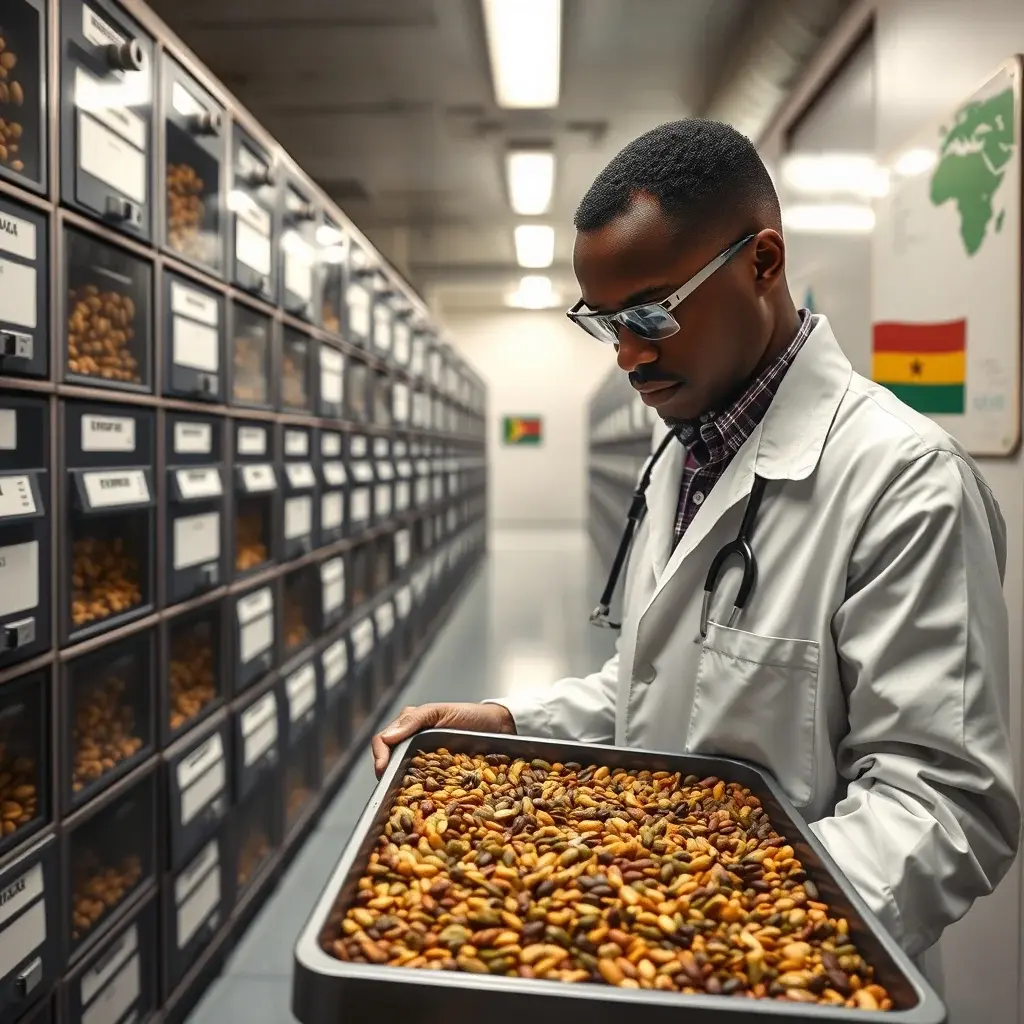
Accra, Ghana – The Council for Scientific and Industrial Research (CSIR)–Plant Genetic Resources Research Institute (PGRRI) in Ghana is experiencing a severe funding shortfall, threatening its crucial role in preserving the nation’s agricultural biodiversity and ensuring future food security. The institute, which safeguards over 6,000 unique plant genetic resources, is operating with minimal support despite its strategic importance to crop improvement and climate resilience.
A National Security Imperative
Dr. Daniel Ashie Kotey, Director of the PGRRI, emphasized the institute’s function as a national security asset during Joy Business’s Agribusiness Month. He highlighted that plant genetic resources are the fundamental building blocks for developing improved crop varieties and serve as a vital insurance policy against climate change and other agricultural stresses.
The PGRRI plays a critical role in maintaining Ghana’s agricultural heritage. It collects, conserves, and documents indigenous seeds and plant materials from across the country. To ensure long-term security, duplicate samples are also stored in international gene banks, including the Svalbard Global Seed Vault in Norway, safeguarding against potential catastrophic events.
Inadequate Government Support
Despite the critical nature of its work, the institute faces significant financial challenges. Dr. Kotey revealed that government funding is insufficient for daily operations and infrastructure maintenance. While the government covers salaries, operational funds for goods and services are released sporadically and amount to less than GH¢50,000 annually.
Maintaining a modern and effective gene bank requires substantial investment in specialized infrastructure and equipment. Dr. Kotey estimates that the PGRRI needs approximately US$500,000 to upgrade its storage and conservation facilities to meet international standards. These facilities are essential for keeping seeds viable for extended periods.
Self-Reliance and Internal Generation
To bridge the funding gap, the PGRRI largely relies on internally generated funds. The institute supplements its budget by producing and selling seedlings, a testament to its resourcefulness in sustaining its vital operations. However, this approach is not sustainable for the long-term preservation of such critical national assets.
Disappearing Varieties and Future Implications
The urgency for enhanced funding is underscored by the increasing disappearance of indigenous crop varieties from Ghanaian farms and markets. Dr. Kotey stressed that protecting the country’s genetic resources is not optional but essential for ensuring Ghana’s ability to feed its population in the future.









Leave a Reply