
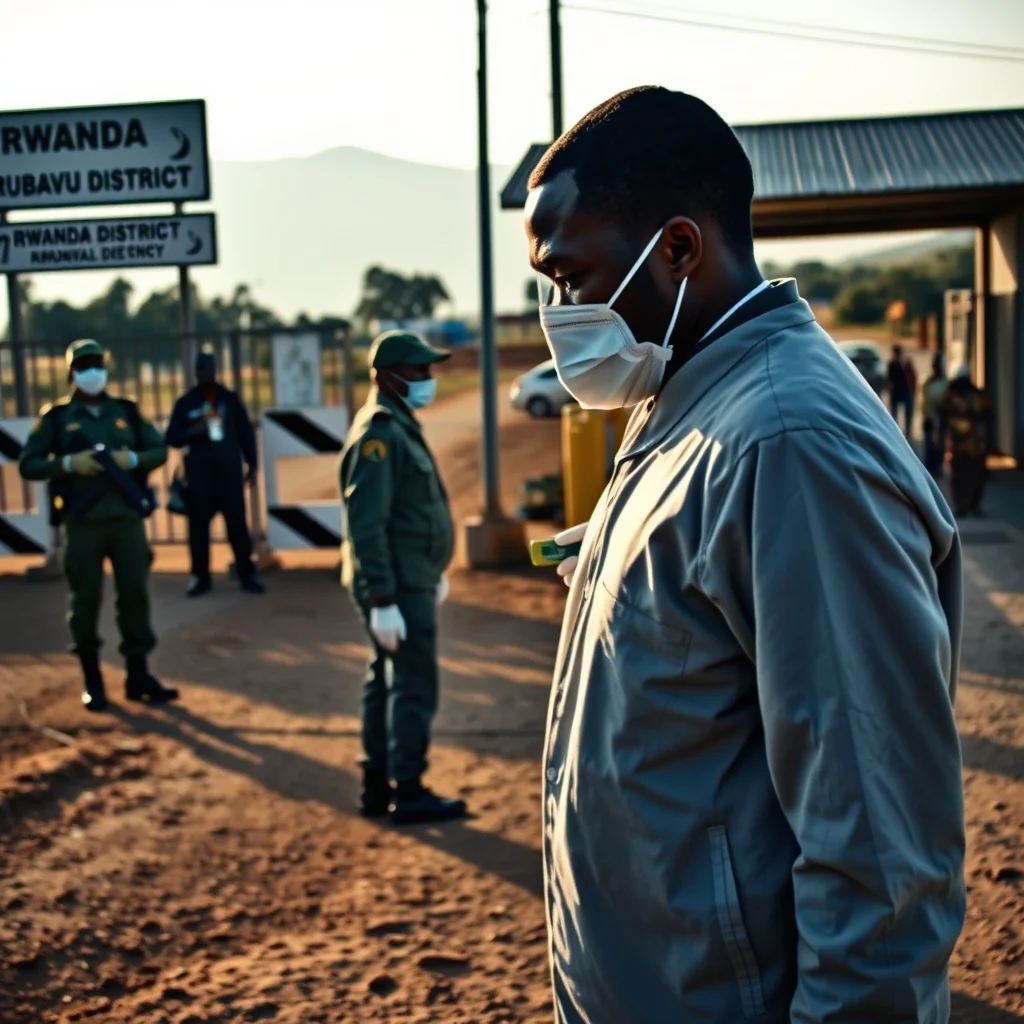
Rwanda’s Rubavu District closed its borders with the Democratic Republic of Congo (DRC) on Sunday, an indefinite measure implemented to curb the spread of the deadly Ebola virus following an outbreak in the neighboring country.
Border Closure and Public Health Concerns
Prosper Mulindwa, the Mayor of Rubavu District in Rwanda’s Western Province, announced the closure of the vital Goma-Gisenyi border crossing. This decision aims to safeguard public health and prevent potential infections from entering Rwanda.
Mayor Mulindwa emphasized the necessity of the closure, stating, “The borders connecting Goma and Gisenyi have been temporarily closed in response to the Ebola outbreak. We will continue engaging with our residents to explain why this decision was made.” He urged patience and cooperation from the local population, highlighting that the measure is critical for community protection.
Continued Screening Amidst Closure
Despite the border closure, health authorities are maintaining strict screening procedures for individuals still permitted to cross. Rwandans returning from the DRC and Congolese citizens heading home are undergoing rigorous health monitoring at the border points, according to local media reports.
Escalating Ebola Outbreak in DRC
The decision to close the borders comes as the death toll from the current Ebola outbreak in the DRC has climbed to 87, as reported by the Africa Centers for Disease Control and Prevention (Africa CDC) on Saturday.
A significant concern is that the outbreak is driven by the Bundibugyo strain of the virus. This particular strain lacks a currently available strain-specific vaccine, increasing the risk of its rapid and widespread transmission across the region.
Regional Implications and Vulnerability
The Bundibugyo strain’s high risk of regional spread prompted Rwanda’s swift border closure. The DRC, with its porous borders and extensive travel networks, presents a significant challenge in containing such outbreaks.
Neighboring countries, including Rwanda, are particularly vulnerable due to their proximity and the high volume of cross-border movement for trade and social reasons. The closure of the Goma-Gisenyi crossing, a key economic and social artery, underscores the severity of the threat.
Expert Warnings and Preparedness
The Africa CDC’s warning about the high risk of regional spread highlights the need for enhanced surveillance and preparedness measures across East Africa. International health organizations are monitoring the situation closely, providing support to DRC’s response efforts and advising regional partners on containment strategies.
Watching for Future Developments
The indefinite nature of the border closure means its impact on local economies and communities will be closely watched. Public health officials will be assessing the evolution of the outbreak within the DRC and the effectiveness of screening measures at permitted crossing points. The availability and deployment of any potential future vaccines for the Bundibugyo strain will also be a critical factor in determining the long-term containment strategy and the potential reopening of borders.










Leave a Reply