
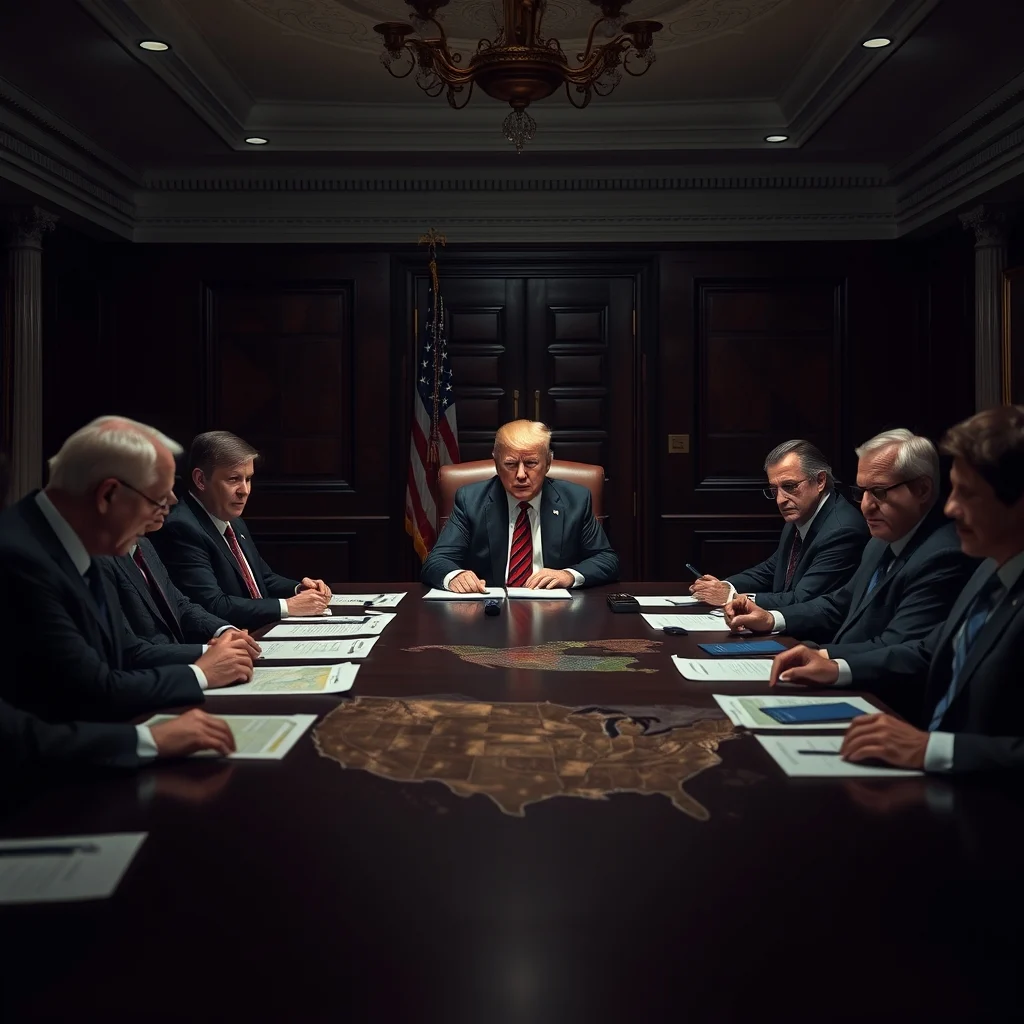
WASHINGTON D.C. – President Donald Trump convened a critical meeting with top aides in the White House Situation Room on Friday to finalize a framework for extending the ceasefire with Iran, but the session concluded without a clear announcement on the path forward. The discussions aimed to address key demands, including Iran’s commitment to never possess nuclear weapons, the reopening of the Strait of Hormuz for unrestricted shipping, and the destruction of any naval mines in the vital waterway.
Background to the Negotiations
The urgency for a resolution stems from escalating tensions following air strikes exchanged between the U.S. and Iran on February 28th. These strikes led to Iran retaliating by targeting U.S.-allied states in the Gulf and effectively closing the Strait of Hormuz. This closure has significantly impacted global oil prices, as approximately 20% of the world’s energy supplies are transported through this chokepoint under normal circumstances.
A ceasefire, effective April 8th, had been in place, with President Trump repeatedly suggesting progress in negotiations. U.S. officials indicated on Thursday that a preliminary Memorandum of Understanding (MOU) had been agreed upon in principle, pending final approval from both President Trump and Iranian leadership. This MOU reportedly included a 60-day extension of the ceasefire and initiated talks concerning Iran’s nuclear program.
Key Demands and Iranian Stance
President Trump articulated clear conditions for any deal, stating, “President Trump will only make a deal that is good for America and satisfies his red lines. Iran can never possess a nuclear weapon.” Specific demands included Iran’s agreement to forgo nuclear weapons, ensure the unimpeded flow of traffic through the Strait of Hormuz, and remove any mines present. Trump also indicated a willingness to lift the U.S. naval blockade of the Strait, allowing ships to resume passage.
However, Iran’s position, as stated by its foreign ministry spokesman Esmaeil Baqaei, is that the nation is “focused on ending the war, and there are no negotiations on the nuclear issue.” The Iranian news agency Fars cited sources suggesting that Trump’s public statements were a “mixture of truth and lies,” disputing the inclusion of provisions for destroying nuclear materials in the MOU.
The U.S. has long sought Iran’s cessation of highly enriched uranium production and the disposal of existing stockpiles, which could theoretically be used for weapons. Iran maintains its nuclear program is solely for civilian purposes and denies any pursuit of nuclear weapons.
Lingering Tensions and Military Readiness
Despite the ceasefire, accusations of violations have continued. Iran’s Islamic Revolutionary Guard Corps claimed responsibility for targeting a U.S. air base in Kuwait on Thursday, alleging it was the source of earlier strikes on Bandar Abbas, Iran. U.S. Central Command labeled this action an “egregious ceasefire violation.”
U.S. Secretary of Defense Pete Hegseth commented on U.S. military capabilities, suggesting the possibility of recommencing strikes if necessary. He affirmed the U.S. possesses sufficient stockpiles globally to support such actions, indicating a strong position regardless of the diplomatic outcome.
Expert Perspectives and Diplomatic Hurdles
U.S. Vice President JD Vance acknowledged on Thursday that negotiators were still refining language, particularly regarding “the question of enrichment.” He expressed optimism, stating, “We’re not there yet, but we’re very close and we’re going to keep on working at it.”
Conversely, Iran’s chief negotiator, Mohammad Baqer Qalibaf, conveyed a lack of trust in verbal assurances, emphasizing actions over words. His statement, “No action will be taken before the other side acts,” and “The winner of any agreement is the one who is better prepared for war the day after,” highlights the deep-seated skepticism on the Iranian side.
Implications and Future Outlook
The lack of a definitive agreement leaves the region in a state of continued uncertainty. The fragile ceasefire remains under pressure, with the potential for renewed hostilities if diplomatic progress falters. The global economy, particularly energy markets, will remain sensitive to any developments impacting the Strait of Hormuz. The coming days will be critical in determining whether the U.S. and Iran can bridge their fundamental differences on nuclear proliferation and regional security, or if the situation will revert to a more confrontational posture.







Leave a Reply