
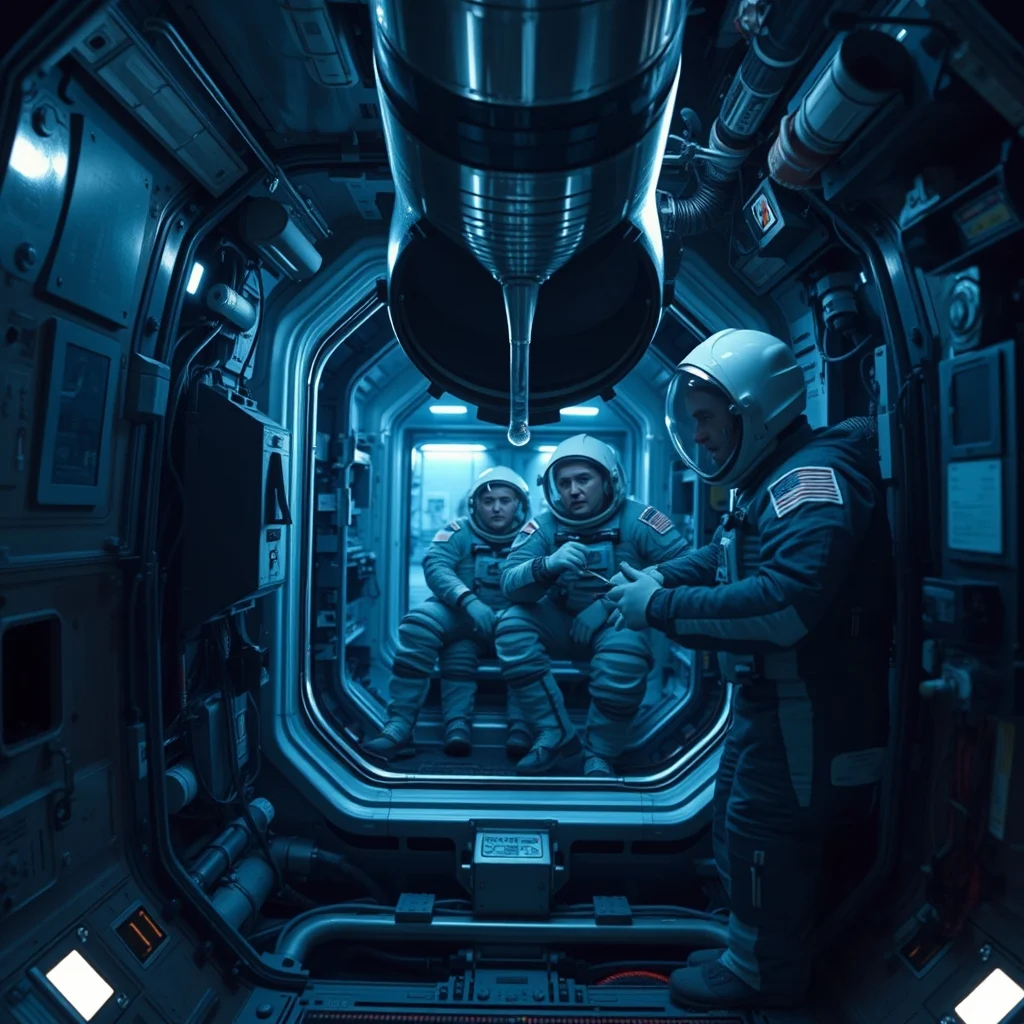
Five astronauts aboard the International Space Station (ISS) returned to the main modules on Friday afternoon after being ordered to shelter in a docked SpaceX Dragon spacecraft due to a worsening air leak and a contentious repair attempt. The order came from NASA, which disagreed with the method Russian cosmonauts were using to address the leak in the station’s Russian segment.
Context of the Air Leak
The incident began when Russian cosmonauts Sergey Kud-Sverchkov and Sergei Mikaev attempted to repair an air leak in the transfer tunnel, known as PrK, leading to the Zvezda service module. This particular issue has been an intermittent problem on the ISS for approximately six years. However, a recent pressure drop noticed by the Russian space agency Roscosmos after the arrival of a cargo ship last month prompted a decision to undertake a more significant repair.
Repair Attempt and Safety Concerns
The situation escalated when the Russian cosmonauts reportedly began using a saw to access the leaking area. According to Reuters, this method prompted NASA to instruct five of the seven crew members to enter the attached SpaceX Dragon ‘Freedom’ spacecraft and prepare for a potential immediate evacuation. The Dragon spacecraft serves as a crucial safety feature, functioning as a lifeboat for the crew.
NASA spokeswoman Bethany Stevens stated on X (formerly Twitter) that the agency had instructed the crew inside the Dragon to end their safe-haven procedures and resume normal operations aboard the ISS after the repair activity was paused. The two Russian cosmonauts involved in the repair had their own escape route via the separately docked Soyuz MS-28 spacecraft.
ISS Operations and Crew Composition
The five astronauts who sheltered in the Dragon were identified as NASA’s Jessica Meir and Jack Hathaway, ESA’s Sophie Adenot, and another astronaut Chris Williams. They had arrived on the ISS in February. The two cosmonauts attempting the repair were the station commander Sergey Kud-Sverchkov and flight engineer Sergei Mikaev.
Despite the temporary safety measures, Russian news agency Tass, citing Roscosmos, reported that the situation posed no threat to the safety of the crew or the station’s systems. The ISS, a collaborative project involving NASA, Roscosmos, JAXA, ESA, and CSA, has been continuously inhabited since 1998 and is the largest human-made structure in orbit.
Expert Perspectives and Past Incidents
While specific expert commentary on this particular repair method was not immediately available, the ISS has a long history of managing and repairing minor leaks. These often occur due to micrometeoroid impacts or material degradation over time. Previous repairs have involved sealing compounds and specialized tape. The decision to use more aggressive methods like sawing suggests a potentially more significant or stubborn crack than typically encountered.
The differing approaches to safety protocols between NASA and Roscosmos highlight the complexities of operating a multinational space station. NASA’s proactive ‘safe haven’ procedure demonstrates a cautious approach to crew safety, prioritizing readiness for evacuation when faced with potentially hazardous repair techniques.
Implications for Future ISS Operations
This event underscores the ongoing challenges of maintaining an aging orbital outpost. As the ISS continues its operations, managing wear and tear, particularly in critical Russian segment modules like Zvezda, will remain a priority. The incident also brings attention to the inter-agency coordination required for emergency procedures and repair protocols. Future repairs might necessitate further development of less invasive but equally effective techniques, or enhanced collaborative decision-making processes to ensure crew safety while efficiently addressing technical issues. The longevity and continued safe operation of the ISS will depend on such robust protocols and technological adaptations.









Leave a Reply