
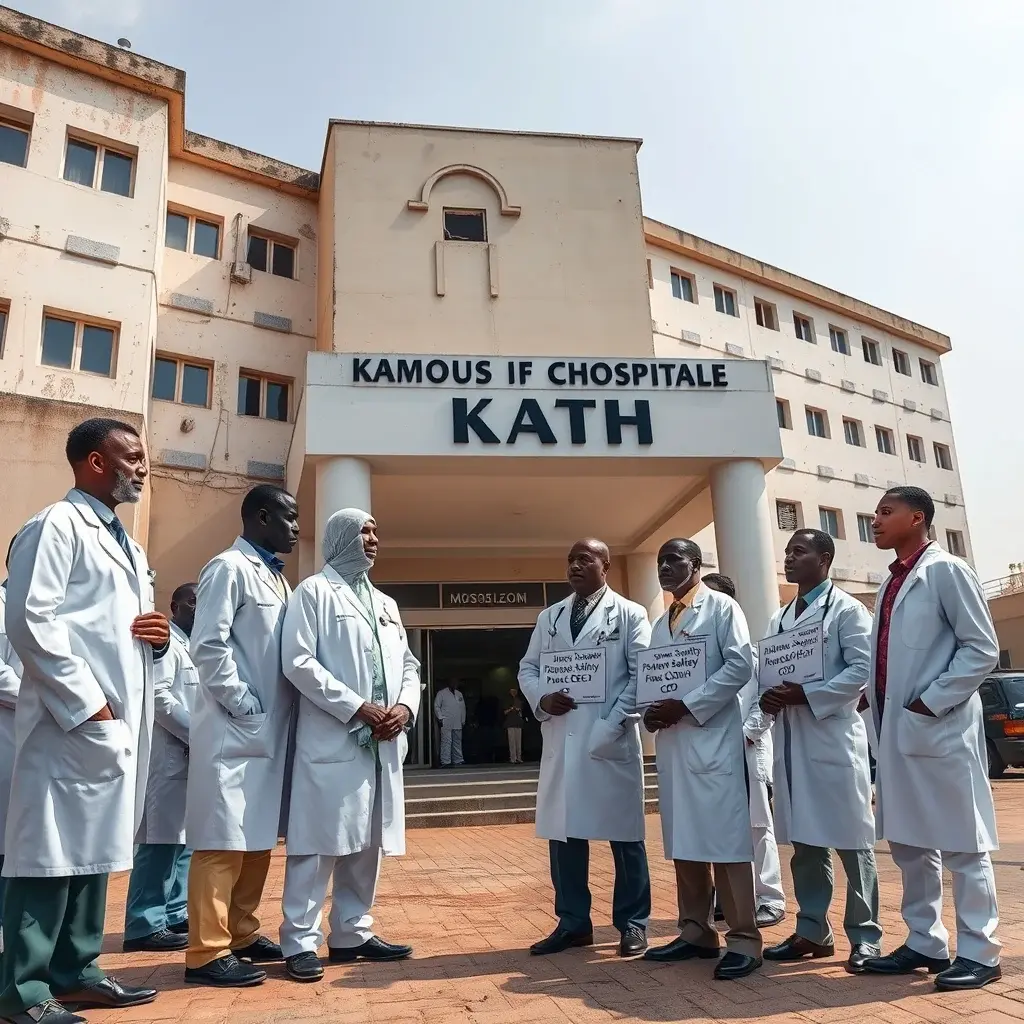
Doctors at the Komfo Anokye Teaching Hospital (KATH) in Kumasi, Ghana, commenced an indefinite strike on Saturday, June 6, 2026, at 6:00 a.m. The industrial action, initiated by the Komfo Anokye Doctors Association (KADA), stems from the recent suspension of the hospital’s Chief Executive Officer (CEO) by the Health Minister. The doctors cite severe congestion in the Emergency Department and management’s response as the immediate cause for their protest, viewing the CEO’s suspension as a punitive measure against efforts to address critical systemic issues.
Context of the Crisis
The strike follows a period of intense disagreement between KATH’s medical staff and hospital management concerning the handling of unprecedented congestion within the Emergency Department.
Hospital management had recently implemented measures aimed at alleviating the strain on the emergency services. These included temporarily halting new emergency admissions and coordinating patient transfers with surrounding health facilities.
KADA had previously described these interventions as a crucial clinical and administrative step. They argued these measures were intended to prevent avoidable loss of life and ensure patient safety amidst severe capacity constraints.
Doctors Condemn CEO Suspension
Despite supporting the management’s interventions, KADA expressed profound dismay that the CEO faced disciplinary action for implementing them.
The doctors unanimously condemned the Health Minister’s decision to suspend the CEO, labeling it as both unjustified and counterproductive.
They believe the suspension undermines ongoing efforts to tackle the deep-rooted systemic challenges affecting the hospital.
Demands for Resolution
The Komfo Anokye Doctors Association has outlined three specific conditions for calling off the strike.
Firstly, they demand a review and reversal of the CEO’s suspension, asserting it was an unfair disciplinary measure.
Secondly, the doctors want the hospital’s Board to establish clear, formal policies for managing situations where the emergency department’s capacity is exceeded. This includes explicit guidance on patient overflow and the circumstances under which admissions might be restricted for patient safety.
Thirdly, KADA is calling on the Ministry of Health to provide concrete timelines for the operationalization of the new Sewua Hospital and Afari Military Hospital. They also seek timelines for the retooling of KATH and other hospitals in the Ashanti Region, essential steps to reduce the overwhelming burden on KATH.
Systemic Challenges at KATH
KATH serves as the principal tertiary referral hospital for the middle and northern sectors of Ghana.
The hospital continues to operate under significant infrastructural limitations, struggling to cope with an ever-increasing patient load.
The doctors emphasized that the current crisis is a manifestation of long-standing systemic issues.
They argue that these challenges necessitate urgent policy and infrastructure solutions, rather than punitive actions against leaders trying to manage the consequences.
Broader Implications and Future Outlook
KADA stressed that the industrial action is not intended to disrupt healthcare delivery but to draw urgent national attention to critical issues.
These issues encompass patient and caregiver safety, clinical governance, professional accountability, and the overall sustainability of healthcare services at Ghana’s second-largest teaching hospital.
The association plans to engage the public and relevant stakeholders through various media channels to highlight the challenges confronting KATH.
They have urged the hospital’s Board to initiate urgent discussions with the Ministry of Health and other stakeholders to find an amicable resolution and prevent further disruption to essential healthcare services.
The situation at KATH underscores the urgent need for investment in healthcare infrastructure and effective management strategies across Ghana’s public hospital system. Observers will be watching closely to see if the strike prompts the necessary policy shifts and resource allocation to address the systemic pressures impacting tertiary healthcare facilities in the region, particularly concerning the timelines for the operationalization of new facilities and the upgrade of existing ones.








Leave a Reply