
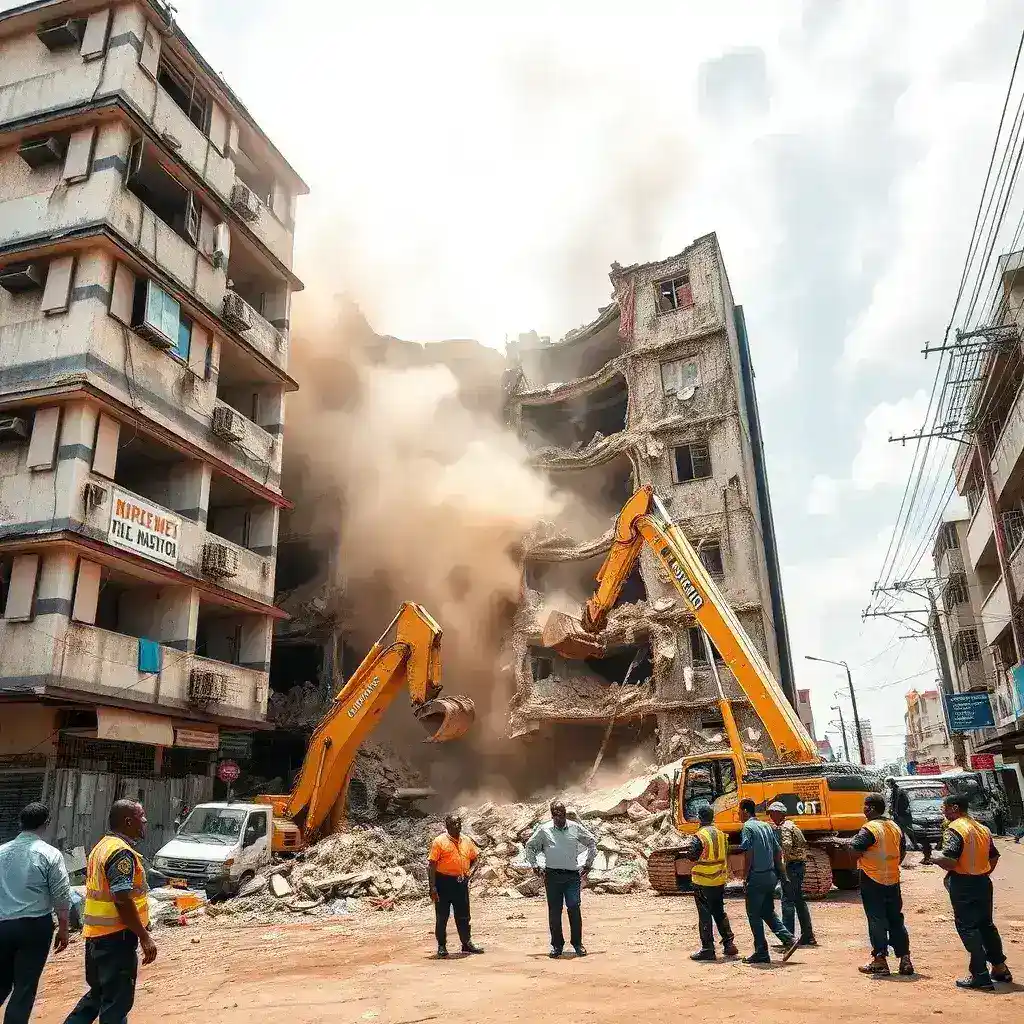
A multi-storey building in Osu, Ghana, was demolished on Monday, June 8, by the National Disaster Management Organisation (NADMO) following a partial collapse that raised critical fears of a complete structural failure. The swift action by emergency officials aimed to mitigate risks to public safety in the densely populated commercial area.
Urgent Demolition Following Structural Failure
The demolition exercise, a joint operation involving the Ghana National Fire Service and the Korle Klottey Municipal Assembly, was deemed necessary after engineers and emergency responders assessed the more than 50-year-old structure as critically unsound. Excavators were deployed to dismantle the weakened building, which had suffered a partial collapse the previous day, Sunday, June 7.
This incident caused significant panic among residents and business owners operating in the vicinity. The authorities’ immediate response underscored the severity of the structural compromise and the potential danger it posed to the surrounding community.
Broader Context of Building Safety in Accra
Officials stated that the demolition was a crucial step to prevent further collapse and safeguard lives and property. The building’s location within the busy commercial hub of Osu amplified the urgency of the situation.
This event is part of a wider, ongoing effort by disaster management agencies across the Greater Accra Region to identify and eliminate dangerous, ageing structures. Recent building collapses in various parts of the region have heightened awareness and prompted a more proactive approach to structural integrity checks.
Expert Assessment and Public Safety Imperative
Engineers involved in the assessment confirmed that the building’s structural integrity had been severely compromised. Factors contributing to the weakening likely include age, lack of maintenance, and potentially inadequate construction standards for its time.
The presence of multiple businesses and residential units within and around the affected structure meant that a catastrophic failure could have resulted in numerous casualties and extensive property damage. The decision to demolish, though drastic, prioritized the immediate safety of the public over preserving the structure.
Implications for Residents and Future Development
The incident serves as a stark reminder of the importance of regular building inspections and adherence to modern safety codes, particularly for older constructions. Authorities are expected to intensify their scrutiny of other ageing structures throughout Osu and the wider Accra metropolis.
This proactive stance aims to ensure compliance with safety standards and prevent similar life-threatening incidents. Residents and business owners in areas with older buildings may face increased inspection activities and potential directives for retrofitting or demolition if structures are found to be non-compliant.
Looking Ahead: Enhanced Scrutiny and Compliance
The focus now shifts to the ongoing assessment of other potentially hazardous buildings. The success of these efforts will depend on robust regulatory enforcement and collaboration between municipal authorities, building owners, and safety experts. The public will be watching closely to see if this demolition marks a turning point in how aging infrastructure is managed to ensure the safety of Ghana’s urban centers.









Leave a Reply