
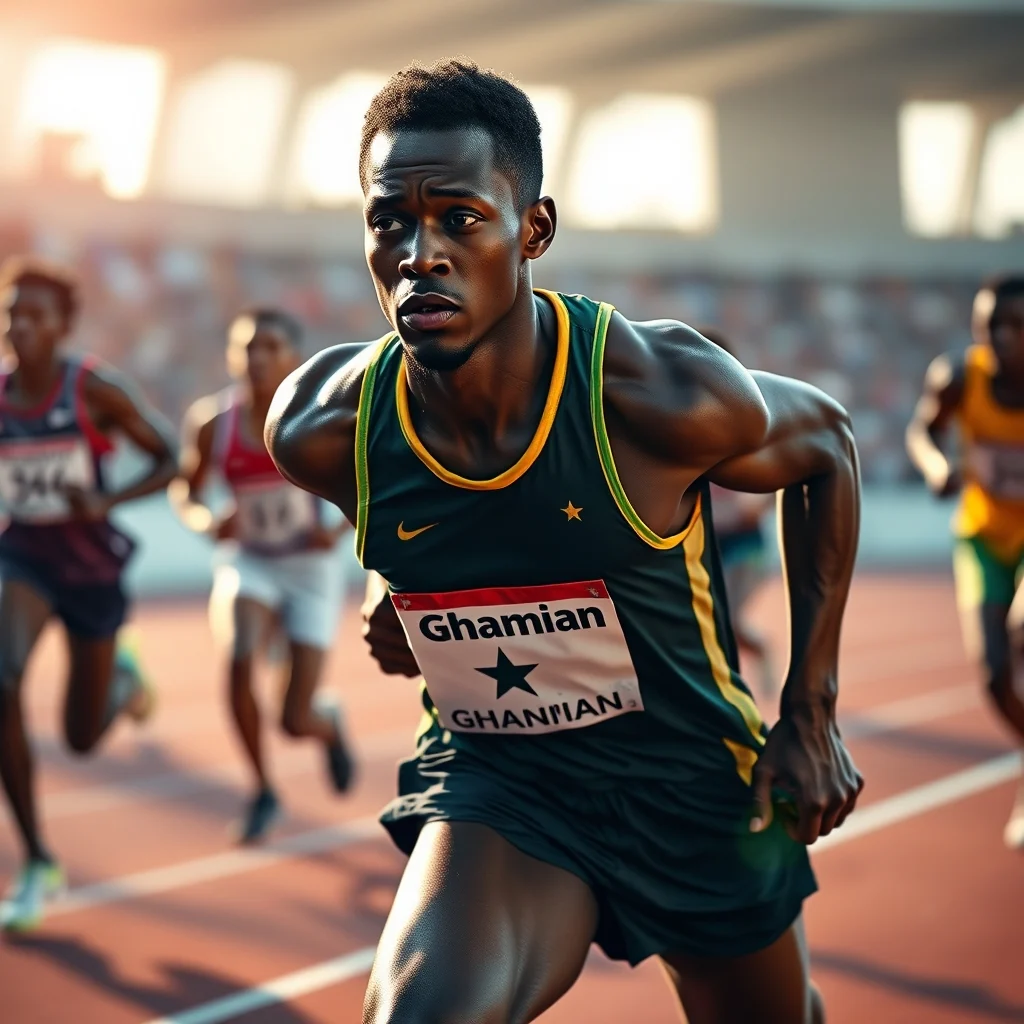
Ghana’s national relay team secured a crucial second-place finish behind China with a time of 38.09 seconds at the World Athletics Relays in Gaborone, Botswana, clinching the final automatic qualification spot for the upcoming World Athletics Championships in Beijing. This marks the team’s fourth consecutive appearance at the prestigious event. However, the celebratory mood has been overshadowed by significant logistical failures and alleged mismanagement by Ghana’s Ministry of Sports and the Ghana Athletics federation in the lead-up to the competition.
Systemic Failures Preceded Qualification
The controversy erupted following a tweet by Abdul Rasheed Sameenu, a member of the relay team, highlighting the unacceptable travel conditions imposed on the athletes. “The Ministry of Sports in Ghana needs to better, don’t set us for failure. If it was ‘black stars’ flights tickets will be ready month prior to their game. 14hrs flight 16hrs lay over is not acceptable for professional athletes. We running with jet lag, no proper recovery,” Sameenu stated, drawing widespread attention to the team’s plight.
Athlete Flight Nightmares
The article details a series of logistical breakdowns affecting key athletes. Ibrahim Fuseini, based in Commerce, Texas, received his economy class flight tickets from the Ministry of Sports and Ghana Athletics only after 4 PM on Tuesday, April 28th, four days before the Gaborone race. His itinerary required him to travel from Commerce, Texas, to Dallas—a journey of at least an hour—to catch a 7:30 PM flight to Doha. This gave him a mere three-hour window to reach the airport, a timeframe deemed impossible given his location.
Fuseini’s initial flight was ultimately cancelled due to the late ticket issuance. A subsequent flight booked for April 30th, two days before the race, still presented significant challenges. This new itinerary involved multiple long-haul flights and layovers, with an arrival in Gaborone scheduled for 7:00 PM on the day before the race. Even with this schedule, Fuseini would have missed the team’s only training session and accreditation due to his late arrival.
Benjamin Azamati, another vital team member, also faced similar last-minute flight arrangements. He initially declined a hastily arranged flight due to an existing injury. While his sponsors, ON, covered his accommodation during a subsequent 14-hour layover in South Africa, highlighting the lack of provision by the federation, other athletes like Sameenu experienced delays at airports due to issues with visa documentation for Botswana, which athletes were supposed to be exempt from.
Forced Replacements and Tactical Compromises
Edwin Gadayi, who was called in to replace Fuseini, endured an even more challenging journey. Summoned from his base in Kumasi, he was initially instructed to travel to Accra by bus. Facing a tight deadline for his flight, Gadayi resorted to a risky motorbike ride through Accra’s notorious traffic to reach the airport on time. His late arrival in Gaborone on Friday night meant he had to undergo accreditation procedures instead of participating in the team’s final training session with Azamati, Joseph Paul Amoah, and Abdul-Rasheed Sameenu.
This lack of preparation forced a tactical shift from the team’s coach, John Bolton. Gadayi, unable to practice baton changes, was positioned as the anchor runner. Despite the compromised preparation, his performance, fueled by adrenaline, was crucial in securing the qualification spot.
Accountability and Funding Issues
The responsibility for these failures is being placed on both Ghana Athletics and the Ministry of Sports. Ghana Athletics, according to the article, requested financial support only in the final week of April, despite the World Relays having strict deadlines for team pre-entry by April 11th and final submission by April 13th, 2026. This suggests a significant delay in internal planning and communication.
However, the Ministry of Sports is also implicated, as it was aware of the major sporting events on the 2026 calendar, including the World Relays, the African Athletics Championships, and the Commonwealth Games. The Ministry had allocated GH₵80 million for federations, with Ghana Athletics requesting GH₵40 million of that sum. The article argues that had the Ministry made funds available earlier, Ghana Athletics, which is perpetually underfunded, would not have faced the crisis of covering basic costs like flight tickets at the last minute.
Looking Ahead
The successful qualification, despite the severe logistical hurdles, raises questions about the future support systems for Ghanaian athletes. The incident underscores a critical need for improved planning, timely fund disbursement, and better communication between the Ministry of Sports, Ghana Athletics, and the athletes themselves. Moving forward, stakeholders will be watching to see if these systemic issues are addressed to prevent similar crises from jeopardizing future athletic endeavors and the careers of Ghanaian sportspeople.





Leave a Reply