
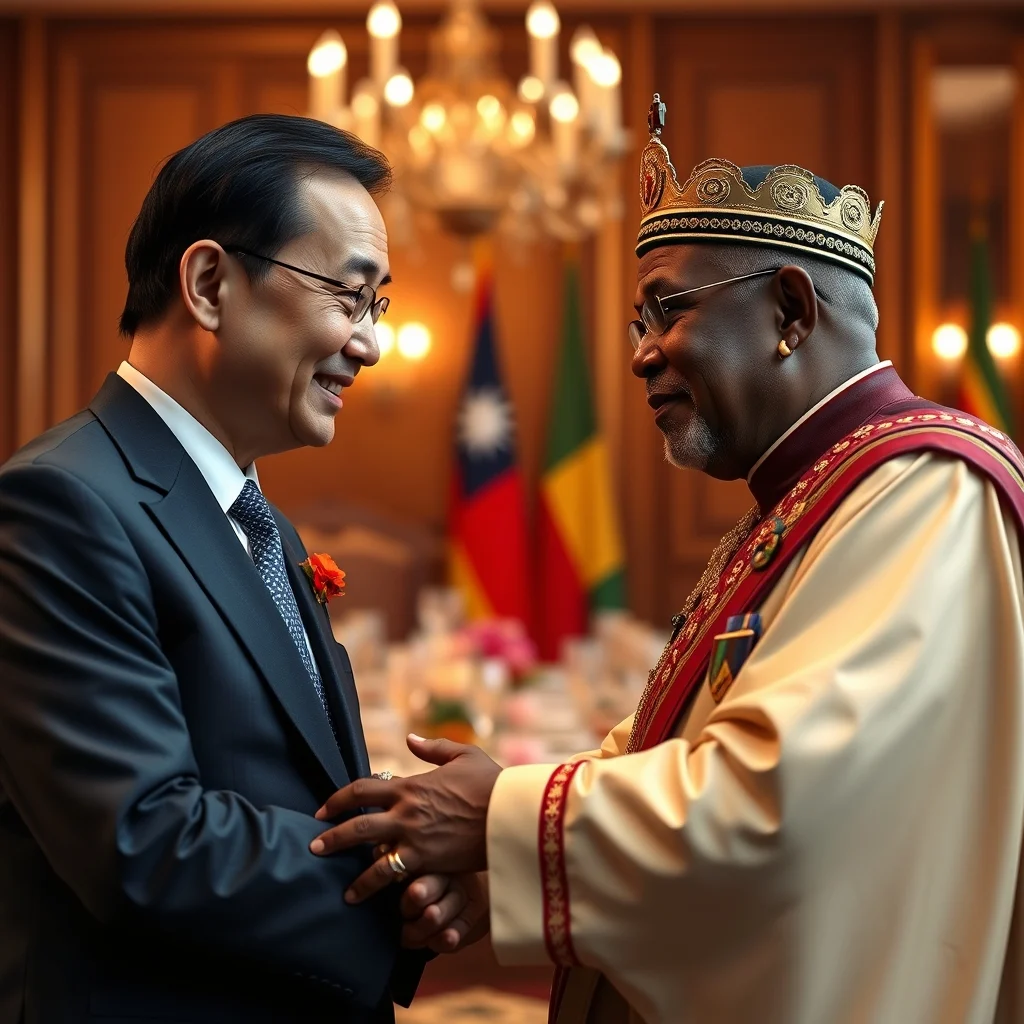
The United States has affirmed Taiwan as a “trusted and capable” partner, highlighting the significant global benefits derived from its international relationships, including its ties with Eswatini. This statement from the U.S. State Department comes as Taiwan’s President Lai Ching-te made a surprise visit to the southern African kingdom on Saturday, a trip that followed a previous attempt reportedly thwarted by Chinese pressure leading to denied overflight permissions from three Indian Ocean states.
Context of Taiwan’s Diplomatic Standing
China views the democratically governed island of Taiwan as an integral part of its territory and strongly disputes Taiwan’s right to engage in state-to-state relations. Beijing actively pressures countries to cease any engagements with Taipei. The United States remains Taiwan’s primary international supporter and a key arms supplier, a stance that consistently draws anger from China.
The State Department spokesperson emphasized that Taiwan’s global partnerships, such as its relationship with Eswatini, yield substantial advantages for the citizens of those nations. The spokesperson noted that it is routine for democratically elected Taiwanese presidents to undertake overseas trips to visit diplomatic allies. This tradition was continued by Lai’s predecessor, Tsai Ing-wen, who visited Eswatini in 2023 and 2018.
“This travel is routine and should not be politicised,” the spokesperson stated, pushing back against potential interpretations of the visit as a provocation.
Eswatini: A Crucial Diplomatic Ally
Eswatini, a nation of approximately 1.3 million people, stands as one of only twelve countries worldwide maintaining formal diplomatic ties with Taiwan. It is also the sole African nation with such a relationship, a significant detail in a continent where China has cultivated extensive economic ties.
During a banquet for President Lai on Sunday night, King Mswati III of Eswatini articulated a sentiment of solidarity. In video footage released by Lai’s office on Monday, the King stated, “When we go with the spirit of the U.N, which says the U.N. is not going to leave no one behind – there are those who are still left behind – 23 million people of Taiwan still feel that they are left behind.”
Taiwan is not a member of the United Nations due to objections from China.
China’s Condemnation and Geopolitical Tensions
China has publicly condemned President Lai’s visit to Eswatini, describing him as “like a rat scurrying across the street.” The trip was facilitated using an Eswatini government aircraft.
The issue of Taiwan remains a significant point of contention in Sino-U.S. relations. Chinese Foreign Minister Wang Yi informed U.S. Secretary of State Antony Blinken (in the provided text, it incorrectly states Marco Rubio) on Thursday that Taiwan is “the biggest point of risk” for the relationship between the two global powers. This discussion preceded a summit between the Chinese and U.S. leaders scheduled for later this month in Beijing.
President Lai maintains that the future of Taiwan can only be decided by its people and asserts Taiwan’s right to engage with the international community. His planned visit to Eswatini was originally intended to coincide with the 40th anniversary of King Mswati III’s accession in April.
Implications and Future Outlook
The U.S. endorsement of Taiwan’s diplomatic partnerships signals a continued strategic alignment, offering crucial support in the face of Beijing’s growing assertiveness. For Taiwan, these diplomatic visits are vital for asserting its sovereignty and demonstrating its capacity for global engagement, countering China’s narrative of isolation.
The visit to Eswatini underscores the strategic importance of maintaining diplomatic ties in Africa, a continent increasingly courted by both China and Taiwan. The strong words from King Mswati III also highlight the growing international awareness of Taiwan’s unique geopolitical situation.
As the U.S. and China prepare for their leaders’ summit, the Taiwan issue is expected to remain a central and sensitive topic. Observers will be watching closely to see if the U.S. “trusted partner” designation translates into further concrete actions or policy shifts regarding Taiwan’s international space. The ongoing diplomatic dance between Taiwan, China, and its international partners, particularly in strategically significant regions like Africa, will continue to shape geopolitical dynamics in the coming months.




Leave a Reply