
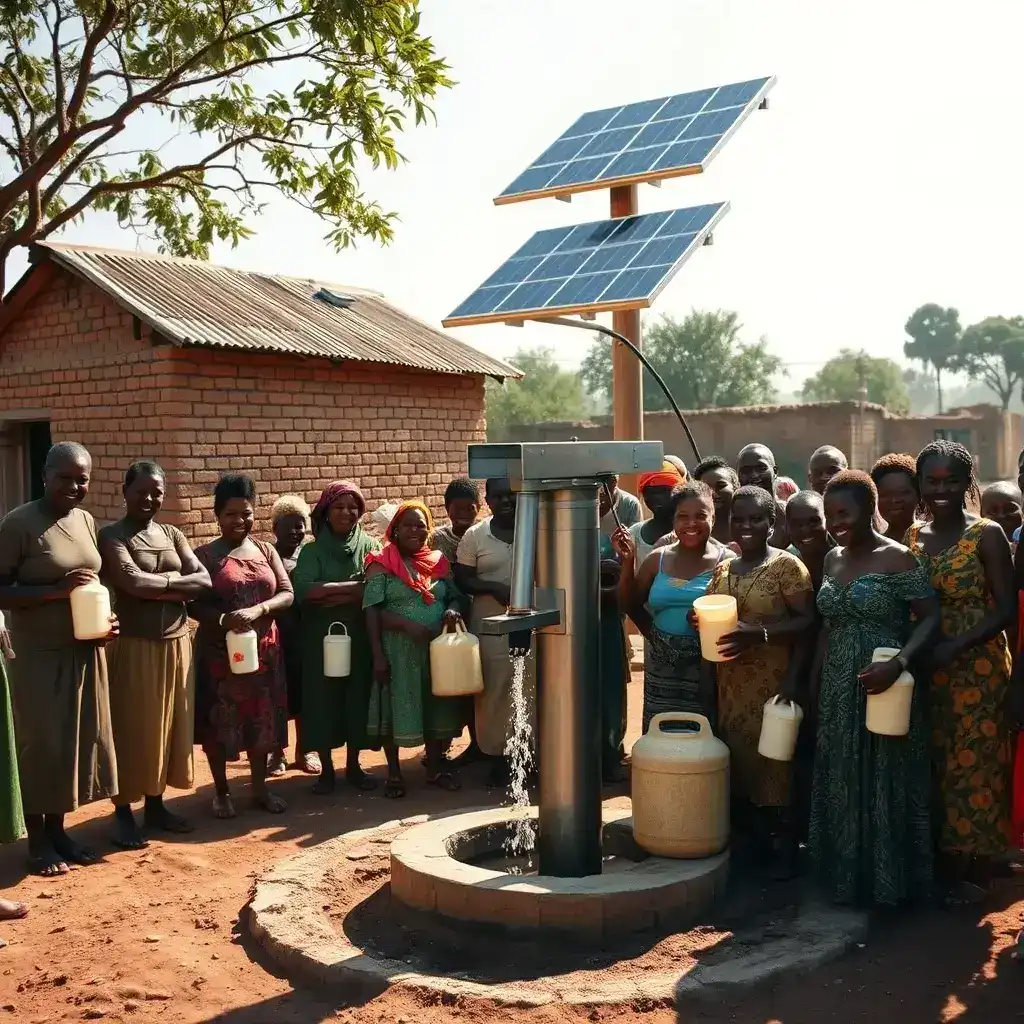
PAALI, UPPER WEST REGION – A solar-powered mechanized borehole has been commissioned in Paali, Nadowli-Kaeo district, funded by Gbankor Bricks and Tiles (GBT). The project, launched yesterday, Tuesday, April 5, aims to alleviate severe water shortages through a community-driven development initiative.
Community Reinvestment Model Fuels Development
The solar borehole project is a direct outcome of Gbankor Bricks and Tiles’ unique social investment model. The factory, established a decade ago by Divisional Chief of the Kaleo Traditional Council, Naa Jamaa Matarah II (also known as Emmanuel Mwinila-Youri), dedicates a portion of its sales to local development initiatives.
“Every single brick that we produce, five pesewas, if we sell one brick, we put five pesewas aside to try and do something back to the community,” Naa Matarah II explained in an interview following the commissioning ceremony.
Swift Delivery and Community Gratitude
The project’s rapid completion was highlighted by Baga Wilfred, Assembly Member for the Gbankor electoral area. He noted that the borehole was finished within a month of water challenges being identified as a community priority.
Janet Kuun-lonno, the Women’s Organiser, expressed profound gratitude on behalf of the residents. The commissioning event transformed into a lively celebration, complete with traditional music and dance. In a gesture of appreciation, community elders presented Naa Matarah II with a sheep.
Sustainable Water Access Through Solar Power
The newly commissioned borehole operates entirely on solar energy, a design choice intended to eliminate ongoing operational costs. This ensures a sustainable and reliable supply of clean water, with a particular benefit for women who often bear the primary responsibility for water collection.
Expanding Social Impact Beyond Water
This water project is the latest addition to Gbankor Bricks and Tiles’ growing portfolio of community interventions. Previous initiatives include the establishment of a library, an ICT centre equipped with 18 computers, support for school furniture, and an annual rewards scheme for basic school pupils.
Business Growth Fuels Social Investment
Naa Matarah II attributed the enterprise’s significant growth to a contract awarded by Speaker of Parliament Alban Sumana Bagbin. The contract for 400,000 bricks for the Sombo Senior High School perimeter wall provided the momentum needed for expansion and increased job creation.
Currently, the factory employs 18 local youths, comprising 15 men and three women. They receive monthly wages of GH¢1,500, supplemented by year-end bonuses for consistent performance.
Promoting Eco-Friendly Building Materials
Beyond infrastructure development, Naa Matarah II actively promotes GBT’s eco-friendly clay bricks as a sustainable alternative to conventional building materials. He advocates for their wider adoption within the construction sector.
To demonstrate the product’s durability and address potential skepticism, he constructed a roadside residence using the factory’s bricks. This structure serves as a live showcase of the product’s quality and has drawn considerable public interest.
“The reason we have invested in building that house is to set it up as a showpiece,” he stated, explaining that earlier projects, while successful, were less visible.
He further highlighted the practical benefits of the clay bricks, noting their natural thermal comfort and elimination of the need for regular painting. “You build a house with cement and concrete, what do you do? You paint it once,” he remarked. “This brick as you see, it doesn’t need to be painted. It is the colour of the earth; it is cool.”
Future Vision: Curbing Rural-Urban Migration
Naa Matarah II envisions a future where sustainable local materials are integral to public infrastructure projects. He believes such initiatives can create viable employment opportunities in rural communities, potentially curbing rural-urban migration and reducing illegal mining activities.
Looking ahead, the continued success of Gbankor Bricks and Tiles and its reinvestment model will be crucial in demonstrating the viability of community-focused enterprises in driving sustainable development and offering attractive alternatives to migration.










Leave a Reply