
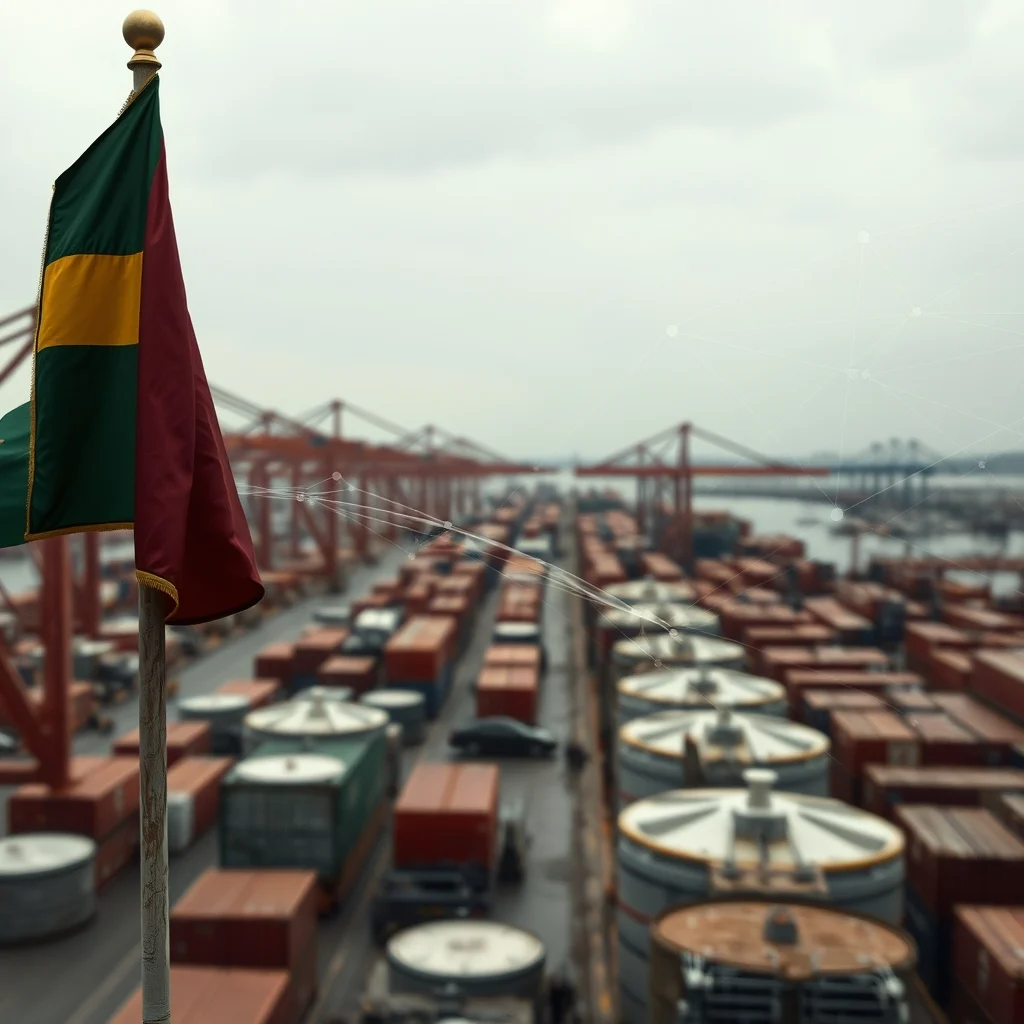
The Institute of Economic Research and Public Policy (IERPP) has sounded an alarm over significant revenue leakages within Ghana’s petroleum sector, estimating that over 200 million litres of fuel are unaccounted for between 2020 and 2025. This shortfall translates into an estimated GH¢600 million in lost tax revenue, a critical concern for Ghana’s ongoing fiscal recovery efforts. The warning was issued on May 10th by IERPP’s Executive Director, Prof. Isaac Boadi, who highlighted persistent issues across the fuel supply chain.
Context of Revenue Challenges
Reports from various industry groups, oversight bodies like the Public Interest and Accountability Committee (PIAC), and sector analyses consistently point to vulnerabilities in Ghana’s petroleum revenue management. These include findings from the Petroleum Product Analysis Report for 2025 and other sector reports covering recent years.
The IERPP statement emphasized that the consensus is clear: a substantial volume of fuel is not accounted for, leading to considerable tax revenue losses. Weak monitoring systems at ports and throughout the petroleum distribution chain are identified as primary enablers of these leakages.
Persistent Leakages and Proposed Solutions
The Chamber of Oil Marketing Companies has previously recommended the implementation of real-time fuel tracking systems, such as Automatic Tank Gauging technology. Routine stock reconciliation and enhanced monitoring of depot and refinery movements are also suggested measures.
IERPP questions the effectiveness of current controls, particularly if systems previously implemented under initiatives like Strategic Mobilisation Limited (SML) are no longer functioning optimally. Understanding these challenges requires a broad look at Ghana’s revenue performance trends from 2019 to 2025.
Revenue Performance: Growth and Underperformance
Data from the Ghana Revenue Authority (GRA) indicates substantial nominal tax revenue growth over the period. Tax revenue climbed from GH¢43.9 billion in 2019 to GH¢153.6 billion in 2024, with notable growth rates of 49.3% in 2023 and 35.8% in 2024.
The GRA surpassed its 2024 revenue target, collecting GH¢153.6 billion against a target of GH¢146 billion, an overperformance of 5.2%. However, this growth was not uniform across all tax categories.
Indirect taxes underperformed by 21.5%, contrasting with stronger performances in direct taxes and customs revenue. Customs revenue, in particular, saw a significant surge, rising from GH¢16.1 billion in 2021 to GH¢45.3 billion in 2024.
Declining Oil Receipts and Missed Targets
Despite overall positive nominal growth, total revenue and grants for the first eleven months of 2025 fell short of the target, amounting to GH¢187.87 billion against a projected GH¢201.37 billion. Domestic revenue also underperformed.
Non-oil tax revenue reportedly missed its target by 4.5%, attributed by IERPP to persistent structural inefficiencies or leakages in tax administration. While oil tax revenue exceeded expectations, overall oil and gas receipts saw a sharp decline.
Oil and gas receipts dropped to GH¢5.92 billion, missing targets by 64.2% and declining by 66.6% year-on-year, a development IERPP labels a “major fiscal concern.u201d
The Cost of Leakages for Ghana
Ghana’s economy is in a fragile fiscal recovery phase, making continuous revenue leakages particularly damaging. The World Bank’s 8th Ghana Economic Update notes that Ghana’s tax collection averaged only 13.2% of GDP between 2017 and 2021, significantly below its estimated tax capacity of 21.2% of GDP.
IERPP argues that every avoidable leakage in petroleum taxation, customs, and domestic tax collection undermines fiscal sustainability and the delivery of public services. The 2024 Auditor-General’s report further highlighted GH¢18.42 billion in irregularities within public institutions.
IERPP’s Call for Accountability
The institute urges the government to move beyond reporting and implement stricter enforcement measures to ensure accountability in the revenue mobilization system. IERPP has posed seven critical questions to government and revenue authorities.
These questions seek to understand the drivers of revenue gains, the reasons for persistent leakages despite digital reforms, and the causes of the sharp decline in oil and gas receipts. The institute also demands accountability from all parties involved in unaccounted fuel volumes and weak enforcement mechanisms.









Leave a Reply