
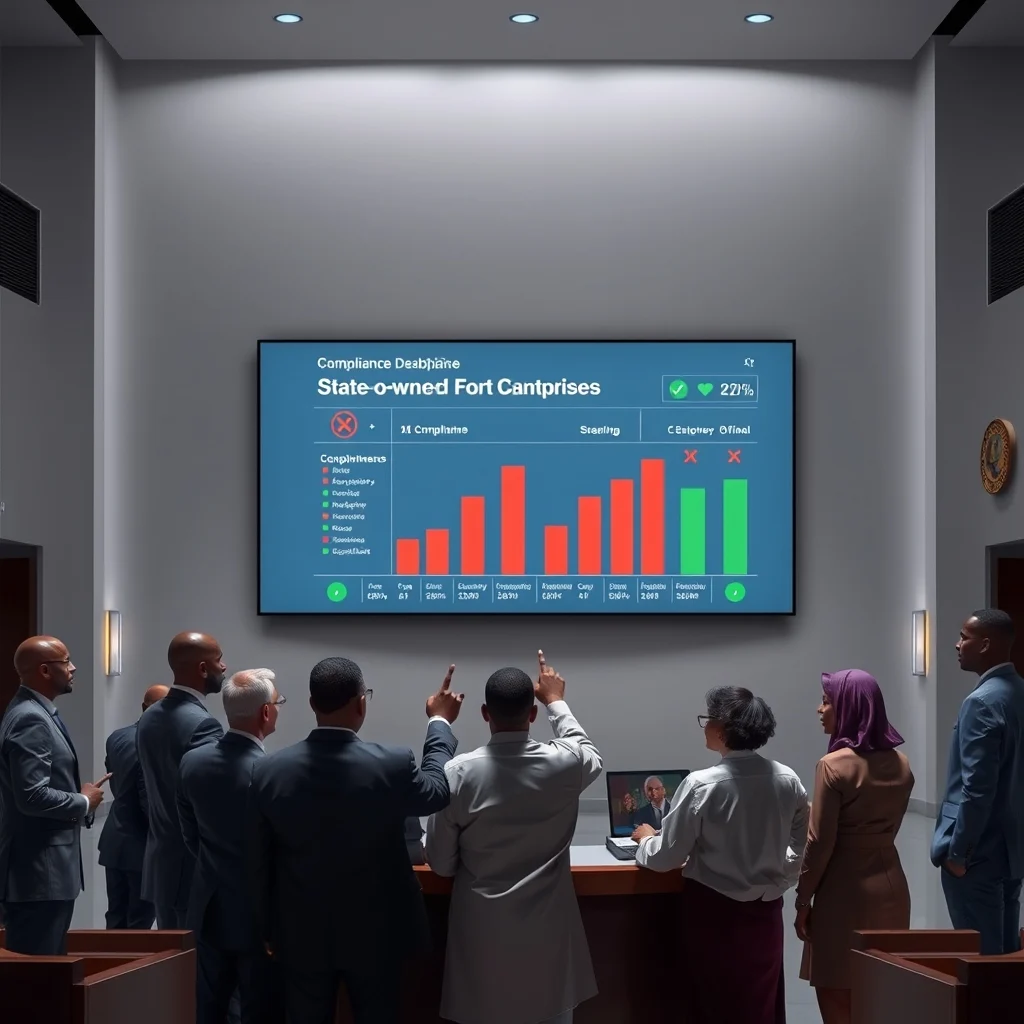
ACCRA, GHANA – As of May 1, 2026, only 61 out of 185 state-owned enterprises (SOEs), joint ventures, and specified entities met the April 30 deadline for submitting their 2025 financial statements to the State Interests and Governance Authority (SIGA). This low compliance rate of approximately 32% highlights significant challenges in financial reporting discipline and institutional accountability within Ghana’s public sector.
Context of Financial Reporting Mandates
State-owned enterprises and similar entities are legally required to submit their audited financial statements annually to SIGA. This process is crucial for transparency, accountability, and effective governance. The deadline is set to ensure timely oversight and assessment of the financial health and operational performance of these public entities.
Widespread Non-Compliance
The compliance dashboard released by SIGA on May 1, 2026, revealed that a substantial majority of entities failed to adhere to the statutory deadline. Over 100 entities had neither submitted their statements nor provided any justification for delays. This widespread non-compliance suggests systemic issues that require urgent attention.
Among the entities that did meet the deadline were prominent organizations such as the Bank of Ghana, Electricity Company of Ghana, Ghana Publishing Company Limited, Ghana Civil Aviation Authority, Ghana Gold Board, Ghana Gas, Ghana National Petroleum Corporation, and Petroleum Hub Development Corporation. Their timely submission reflects a commitment to regulatory requirements.
Reasons for Delays and Non-Submission
SIGA’s data indicated that only five entities formally requested extensions for submitting their financial statements. Another 14 entities cited delays in their audit processes as the reason for not meeting the April 30 deadline. However, the large number of entities providing no explanation points to a deeper problem of oversight or operational capacity.
Notable non-compliant entities include the Minerals Development Fund, Metro Mass Transit, Ghana Tertiary Education Commission, Minerals Commission, National Communications Authority, District Assemblies Common Fund, Lands Commission, Youth Employment Agency, Ghana Broadcasting Corporation, and National Road Safety Authority. The failure of these key institutions to submit financial statements raises particular concern given their public mandate and the funds they manage.
Broader Implications for Governance
The failure of over 60% of SOEs to meet the financial reporting deadline casts a shadow over the effectiveness of accountability mechanisms within the public sector. It raises questions about the rigor of financial oversight and the consequences for entities that do not comply with basic reporting obligations.
This situation could impact investor confidence, hinder efficient resource allocation, and potentially mask financial irregularities. The lack of timely financial data makes it difficult for policymakers and the public to assess the performance and financial stability of these crucial state entities.
Positive Compliance and Future Outlook
While the overall compliance rate is low, the entities that successfully submitted their statements are likely to be recognized for their adherence to governance standards. Their proactive approach sets a positive example for other public institutions.
The SIGA compliance list referenced was accurate as of May 1, 2026. Submissions made after this date would not be reflected in the initial report.
What to Watch Next
Moving forward, attention will be on SIGA’s response to the widespread non-compliance. It will be critical to observe whether the authority implements stricter enforcement measures, provides support to entities facing audit delays, or revisits the reporting framework to address systemic challenges. The public will also be watching for any corrective actions taken against non-compliant entities and the subsequent improvement in financial reporting rates in the coming fiscal years.










Leave a Reply