
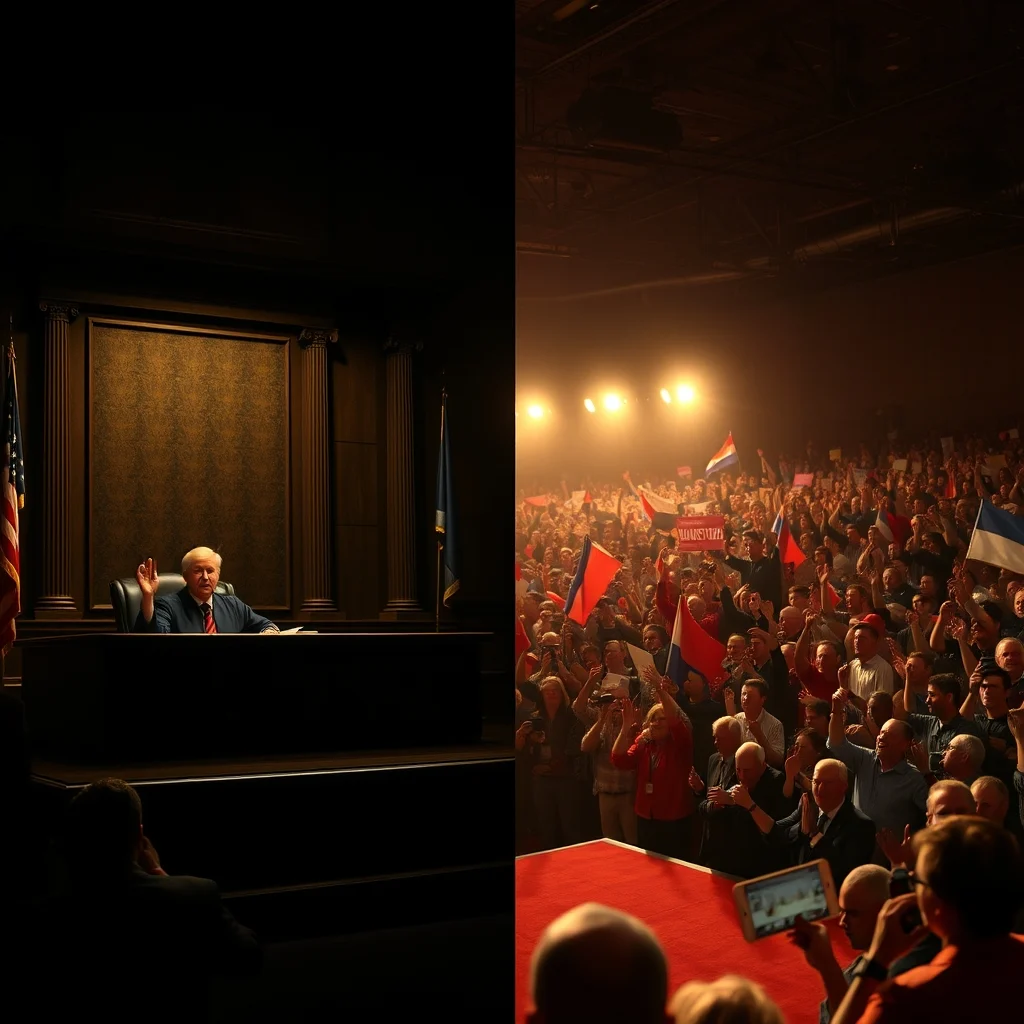
Government spokesperson Felix Kwakye Ofosu has accused the New Patriotic Party (NPP) of selective outrage and duplicity regarding criticism of the judiciary, questioning the party’s consistency on free speech principles. Kwakye Ofosu made these remarks during an interview on Joy FM’s Top Story on Wednesday, May 13.
The core of Kwakye Ofosu’s argument centers on the differing levels of scrutiny and consequences faced by individuals associated with the NPP compared to those from the then opposition National Democratic Congress (NDC) and journalists. He highlighted the “Muntie 3” case, where several NDC members and journalists were imprisoned for contempt of court after making disparaging remarks about judges.
Kwakye Ofosu questioned the NPP’s current stance on such criticism, pointing out that individuals linked to the NPP who have also criticized judges have not faced similar legal repercussions. He specifically asked whether NPP members, such as “Nana B and his colleagues,” had not previously supported or benefited from the strict application of contempt laws when it suited their political agenda.
He emphasized the principle of consistency, asserting that if NDC-affiliated individuals and journalists were punished for criticizing the judiciary, then similar standards should be applied impartially to all, regardless of political affiliation. This, he argued, is essential for upholding the integrity of both free speech and the judicial process.
Furthermore, Kwakye Ofosu clarified that the government plays no role in initiating or overseeing legal proceedings against individuals accused of attacking judges. He stated that such matters are handled independently by the courts, underscoring the separation of powers.
“These matters have nothing to do with government. Abronye did not attack the President or any member of the government. He attacked a judge, and the judge is taking action against him. So in what way do you draw government into this?” he questioned, illustrating that legal actions are typically pursued by the affected judicial officers themselves.
He maintained that the current situation should not be conflated with government responsibility, asserting that individuals have the right to seek legal recourse when they believe their rights or the dignity of their office have been infringed upon. This, he suggested, is a matter of individual judicial action, not governmental intervention.
Kwakye Ofosu concluded by characterizing the NPP’s position as an “exercise in duplicity.” He accused the party of misrepresenting its commitment to free speech, arguing that their actions demonstrate inconsistency rather than a genuine dedication to upholding such principles. He suggested that the NPP’s approach is politically motivated and lacks a principled basis for defending free expression.
The accusations raise questions about the NPP’s past actions and their current rhetoric concerning judicial criticism and the boundaries of free speech. Observers will be watching to see if the NPP responds to these allegations and how future cases involving criticism of the judiciary are handled, potentially indicating a shift in political discourse or a continued pattern of selective enforcement.






Leave a Reply