
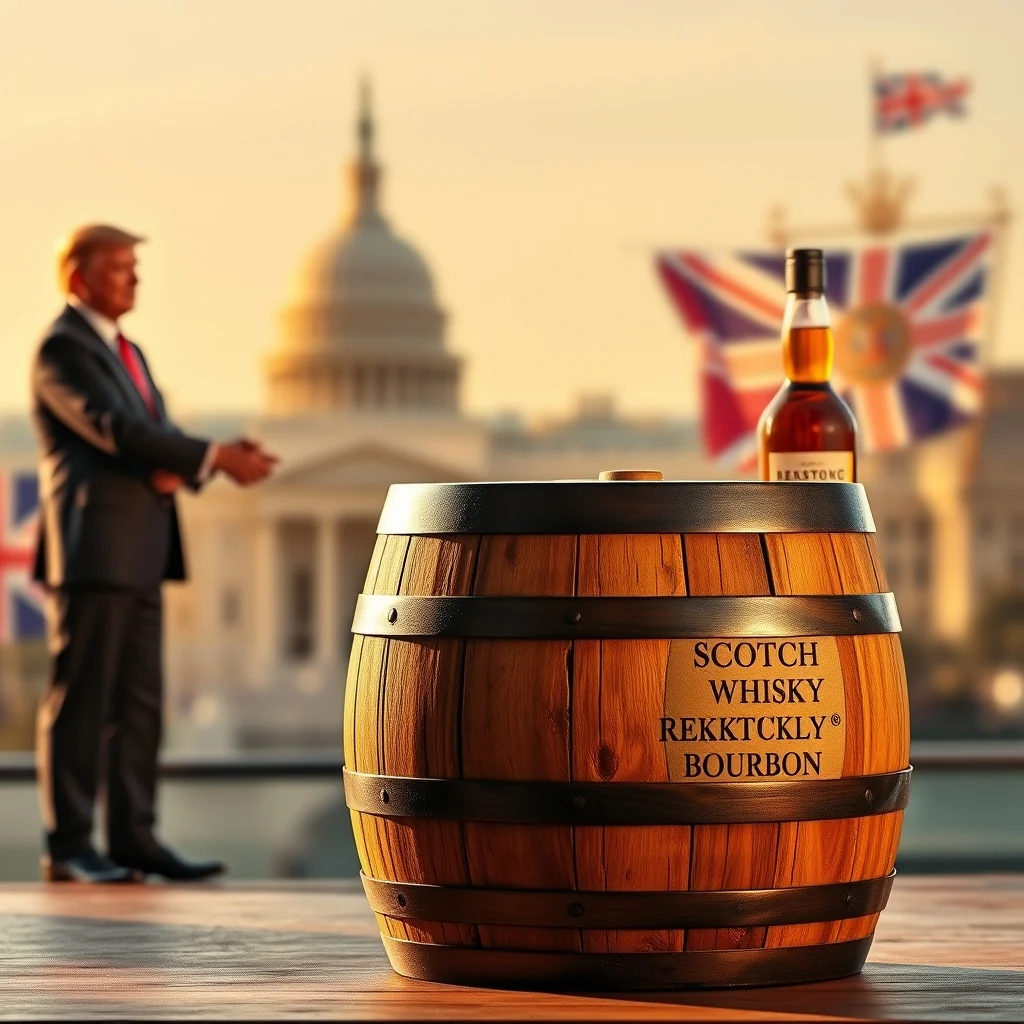
In a significant move announced following the conclusion of King Charles III and Queen Camilla’s state visit to the United States, former President Donald Trump has declared his intention to remove all tariffs and restrictions on whisky imports. The decision, reportedly influenced by the Royal visit, aims to restore trade relations between Scotland and Kentucky, particularly concerning the import of used bourbon barrels essential for Scotch whisky production.
Context of Trade Restrictions
The tariffs, initially imposed under the Trump administration, placed a 10% surcharge on imported Scotch and Irish whiskies into the US, the largest export market for the Scottish industry. These tariffs created substantial financial pressure on distillers, with the Scotch Whisky Association reporting significant losses in export value over the past year.
Specifically, the restrictions impacted the flow of used bourbon barrels from Kentucky to Scotland. The Scotch whisky industry relies heavily on these barrels, importing approximately £200 million worth annually, for aging their spirits. The disruption to this supply chain posed a considerable threat to a sector that contributes significantly to the Scottish and UK economies.
Trump Cites Royal Influence for Tariff Removal
Donald Trump announced the impending removal of these trade barriers via his Truth Social account, stating the decision was made “in honour of the King and Queen of the United Kingdom.” He described the Royal visit as the catalyst for this action, suggesting it was achieved with minimal prompting.
“The King and Queen got me to do something that nobody else was able to do, without hardly even asking!” Trump remarked. He emphasized the interconnectedness of Scotland and Kentucky through their shared whisky and bourbon industries and the crucial role of wooden barrels in their production processes.
During a press conference following the Royal departure, Trump reiterated his decision. “I just took all the restrictions off, so Scotland and Kentucky can start dealing again,” he stated, linking the move directly to the presence of the King and Queen in the US.
Industry Reaction and Economic Impact
The announcement has been met with widespread relief and enthusiasm from the whisky industry. Graeme Littlejohn, Director of Strategy for the Scotch Whisky Association, expressed delight, highlighting the substantial economic losses incurred due to the tariffs. “The industry’s been losing around £4m a week in lost exports to the United States – £150m over the course of the last year while tariffs have been in place,” he told BBC Scotland News.
Littlejohn credited extensive negotiations at senior levels for the progress, suggesting the state visit provided the crucial momentum. “Perhaps the state visit has been the catalyst for getting this over the line and the King’s added that little bit of royal sparkle to make the deal work,” he commented.
The UK government also welcomed the news. UK Business and Trade Secretary Peter Kyle stated, “This is great news for our Scotch whisky industry, which is worth almost £1bn in exports and supports thousands of jobs across the UK.” Scotland’s First Minister John Swinney echoed this sentiment, calling it “tremendous news for Scotland” and expressing gratitude for the King’s role.
Broader Implications and Future Outlook
The lifting of these tariffs is expected to provide a significant boost to the Scotch whisky sector, enabling distillers to recover lost export revenue and strengthen their position in the vital US market. The move underscores the potential for high-level diplomatic engagements, even informal ones, to influence trade policy.
The specific mechanism and timeline for the formal removal of the tariffs are now keenly awaited by industry stakeholders. Attention will also be on whether this positive development signals a broader trend towards de-escalation of trade tensions between the UK and US, or if it remains a unique outcome tied to a specific diplomatic event.





Leave a Reply