
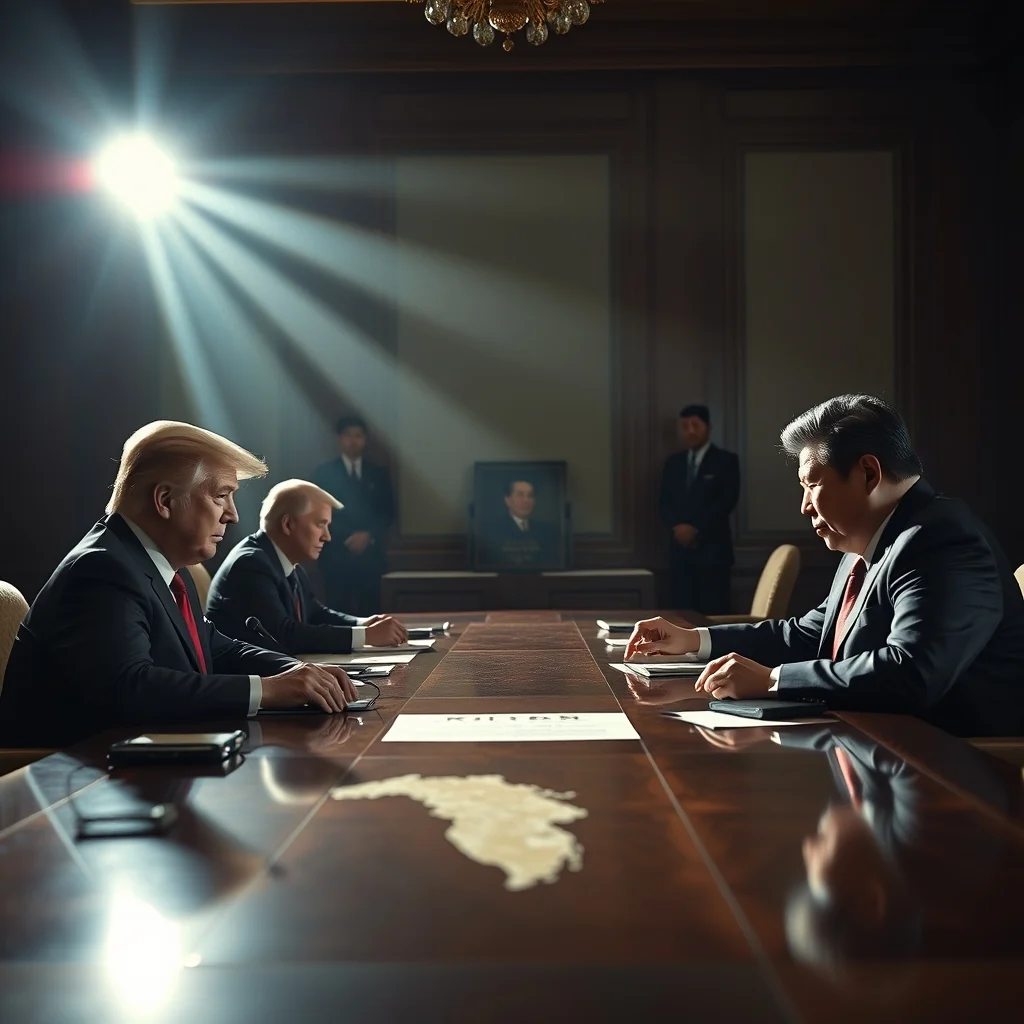
U.S. President Donald Trump issued a warning to Taiwan against formally declaring independence from China, a statement made public on Friday shortly after concluding a high-stakes summit with Chinese President Xi Jinping in Beijing. Trump expressed his disinterest in supporting such a move, emphasizing a desire to de-escalate tensions between the two global powers.
Navigating a Delicate Diplomatic Balance
The United States has historically maintained a complex relationship with both mainland China and Taiwan. While legally bound to provide Taiwan with the means for self-defense, Washington adheres to a policy of “strategic ambiguity” regarding direct military intervention. This policy aims to deter Chinese aggression while also avoiding actions that could provoke Beijing, which considers Taiwan a renegade province.
Taiwan, officially the Republic of China, operates as a self-governing democracy. Its current president, Lai Ching-te, has previously articulated that Taiwan does not require a formal declaration of independence, as it already considers itself a sovereign entity. This stance, however, is a significant point of contention for Beijing.
U.S. Policy and Presidential Statements
In his interview with Fox News, President Trump stated he had made “no commitment either way” regarding the island’s status. He reiterated that U.S. policy had not changed, expressing a desire to avoid conflict. “We’re not looking to have wars, and if you kept it the way it is, I think China’s going to be OK with that,” Trump remarked.
During the flight back to Washington, Trump informed reporters that the Taiwan issue was a significant topic of discussion with President Xi. He noted that Xi “feels very strongly” about the island and does not wish to see a move toward independence. Xi himself warned during the talks, as reported by Chinese state media, that the “Taiwan question is the most important issue in China-U.S. relations,” and that mishandling it could lead to conflict.
Cross-Strait Tensions and Military Posturing
Beijing has consistently voiced strong disapproval of Taiwan’s leadership, labeling President Lai Ching-te a “troublemaker” and an obstacle to cross-strait peace. In recent years, China has intensified military exercises around Taiwan, increasing regional tensions and challenging the established balance. This military posturing is a key concern for both Taiwan and its international partners.
The Trump administration previously approved an $11 billion arms sale package to Taiwan, including advanced weaponry, which drew condemnation from China. Trump indicated that a decision on whether to proceed with this sale was imminent and had been a subject of detailed discussion with President Xi.
Taiwan’s Perspective and Regional Stability
Many in Taiwan identify as distinct from mainland China, though a majority favor maintaining the current status quo—neither formal independence nor unification. Taiwan’s Foreign Minister, Lin Chia-lung, stated that his government was closely monitoring the U.S.-China summit and actively communicating with the U.S. and other nations to safeguard Taiwan’s interests and ensure stable bilateral relations.
Minister Lin characterized Taiwan as a “guardian of peace and stability” in the region, while accusing China of escalating risks through “aggressive military actions and authoritarian oppression.” This highlights Taiwan’s perception of its role and the threats it faces.
Implications and Future Outlook
President Trump’s remarks suggest a continued emphasis on maintaining the status quo, potentially signaling a desire to manage relations with China by avoiding actions that could be interpreted as supporting Taiwanese independence. This approach aims to reduce the immediate risk of military confrontation, a scenario both leaders appear keen to avoid.
The U.S. State Department’s past removal of a statement reiterating opposition to Taiwanese independence in February 2025 had already signaled potential shifts, which Beijing viewed as encouraging separatist forces. U.S. officials at the time clarified their stance as opposing unilateral changes to the status quo from either side.
Moving forward, attention will be on President Trump’s decision regarding the arms sale to Taiwan and any further direct communication between U.S. and Taiwanese leadership. These actions will be closely scrutinized by Beijing and will shape the ongoing dynamics of cross-strait relations and regional security.







Leave a Reply