
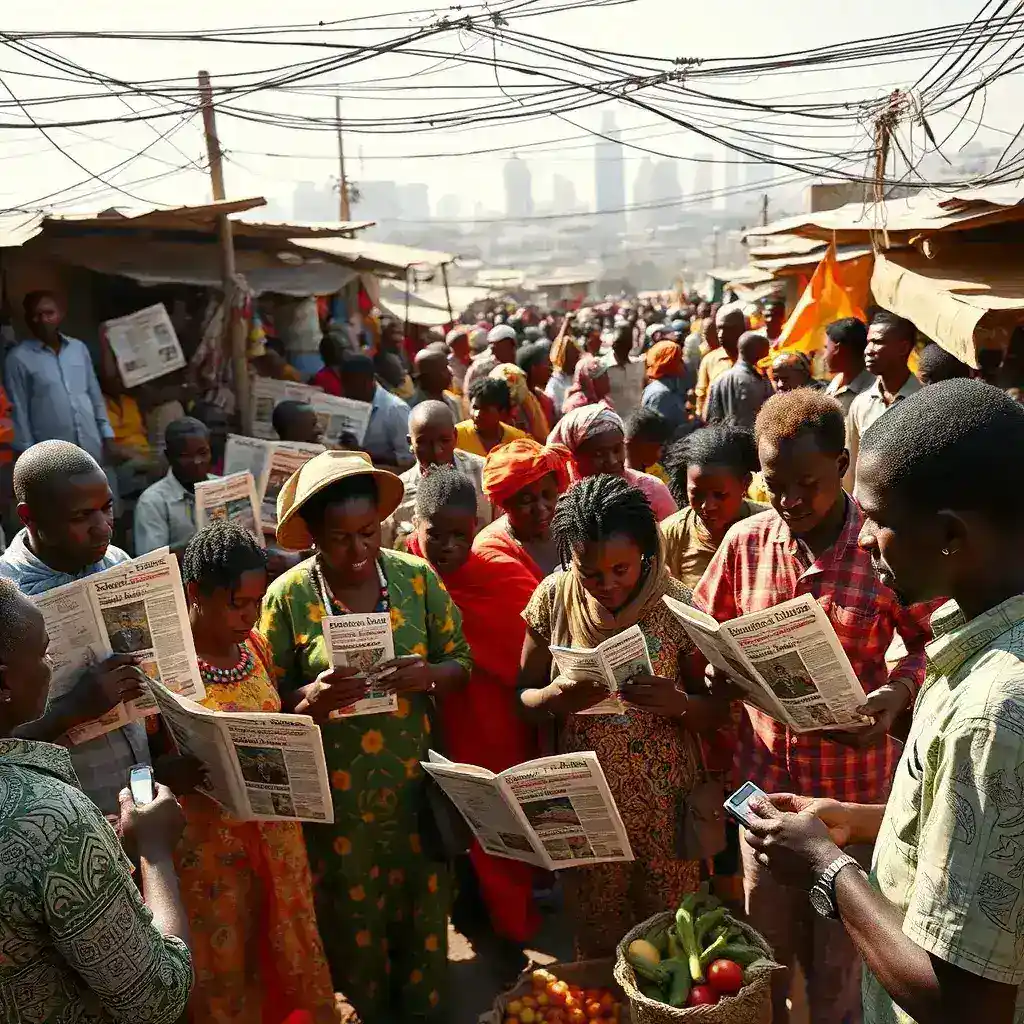
Accra, Ghana – This past Saturday, the Ghanaian public discourse engaged with critical national issues including the nation’s impending exit from an International Monetary Fund (IMF) program, the proposed privatization of the Electricity Company of Ghana (ECG), ongoing debates surrounding freedom of speech, and the repatriation of Ghanaian citizens from South Africa due to xenophobic attacks. The discussions, highlighted on the program Newsfile, aimed to connect these diverse issues to Ghana’s broader developmental trajectory and its standing within the African continent.
Political Tensions and Free Speech Debate
The political landscape has seen heightened activity, with former Vice President Mahamudu Bawumia criticizing the current administration’s handling of alleged reckless conduct and criminal behavior, asserting that democracy should not shield impunity. This has ignited a debate on the boundaries of free speech in a politically polarized Ghana.
Analysts question whether Dr. Bawumia’s statements represent a legitimate democratic warning or are politically motivated ahead of future elections. The core of the discussion revolves around distinguishing between enforcing the law and suppressing dissent, and understanding the true meaning of free speech in the current Ghanaian context.
Repatriation and Pan-Africanism Concerns
Beyond Ghana’s borders, the nation is actively repatriating citizens from South Africa following a resurgence of xenophobic attacks targeting foreign African nationals and their businesses. These incidents underscore rising tensions related to immigration, unemployment, and local commerce ownership.
Critics argue that evacuating citizens without a robust diplomatic response risks normalizing hostility towards Africans residing in other African nations. Questions have been raised regarding Ghana’s diplomatic efforts and the role of the African Union in addressing such crises.
The situation challenges the principles of Pan-Africanism, particularly as African migrants increasingly face economic antagonism in fellow African states. The effectiveness of diplomatic channels and the commitment to continental solidarity are under scrutiny.
Resource Nationalism vs. Investor Confidence
Domestically, discussions surrounding the control of Ghana’s natural wealth have intensified. The Institute of Economic Affairs (IEA) has spurred renewed debate on resource nationalism and the necessity of stronger state ownership over strategic minerals and extractive industries.
Conversely, the Ghana Chamber of Mines has cautioned that policy uncertainty and potential state intervention could deter investors and negatively impact future economic growth. The central question is whether Ghana should pursue greater national control over its resources, or if aggressive resource nationalism would jeopardize investment, job creation, and long-term economic stability.
Economic Recovery and the Post-IMF Era
A significant economic development is Ghana’s announcement of effectively completing its IMF program, following a staff-level agreement on the final review of the country’s support arrangement. The government asserts that the economy is stabilizing, inflation is decreasing, and fiscal discipline is being restored.
However, many households continue to grapple with high living costs, unemployment, and persistent economic pressures. This disparity raises critical questions about whether Ghana has truly overcome its economic challenges.
The focus now shifts to sustainability: can the country maintain fiscal discipline without external oversight once the IMF program concludes? Crucially, when will the average citizen begin to experience the economic recovery that the government is celebrating?
Connecting the Dots for Ghana’s Future
The discussions on Newsfile connected these multifaceted issues, highlighting the interplay between free speech, African solidarity, economic sovereignty, and governance in the post-IMF period. The program explored the implications of opposition figures alleging political intimidation, Ghanaians fleeing xenophobic violence abroad, national debates on resource ownership, and the government’s declaration of nearing the end of its IMF engagement.
These converging conversations prompt a critical assessment of the direction Ghana is heading, emphasizing the need for robust policy, inclusive economic growth, and a strong commitment to democratic principles and continental unity. The path forward requires careful navigation of these complex challenges to ensure sustainable development and tangible benefits for all citizens.





Leave a Reply