
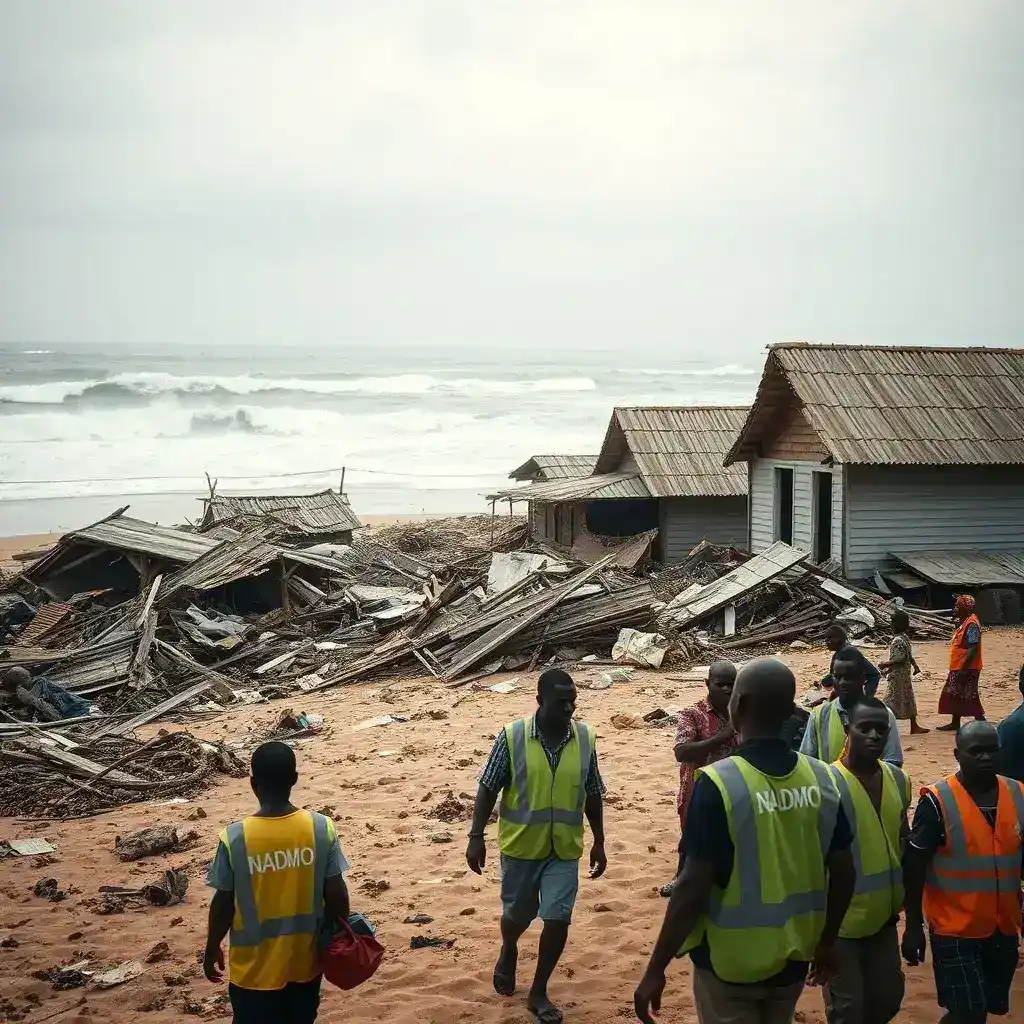
A powerful tidal wave swept through the coastal community of Moree in Ghana’s Central Region early Sunday morning, destroying 13 homes and leaving more than 80 residents displaced. The incident occurred around 3:00 AM, according to the National Disaster Management Organisation (NADMO), with no reported casualties despite the significant property damage.
Disaster Strikes Coastal Village
The early morning surge of the sea caused widespread destruction in Moree, a community within the Abura-Asebu-Kwamankese District. Homes were reduced to rubble by the force of the waves, displacing families and disrupting their livelihoods. Fortunately, emergency responders confirmed that all residents were accounted for and safe from direct harm.
NADMO officials in the Central Region were alerted to the disaster by distress calls detailing collapsed buildings and property loss. Personnel from NADMO, National Security, the Ghana Police Service, and the District Assembly mobilized quickly to the scene.
Immediate Response and Relief Efforts
Responding teams immediately commenced rapid assessments of the damage. Their primary focus was on safeguarding lives and providing immediate assistance to those who lost their homes. Temporary shelters were established to house the displaced residents.
The statement from NADMO cautioned that the sea conditions remained rough following the incident. Residents were urged to remain vigilant and calm as authorities worked to secure the area and intensify safety measures. The organisation expressed its sympathy to the affected families.
NADMO assured the public that comprehensive support mechanisms were being activated to aid the victims of the tidal wave. This includes providing essential relief items and coordinating further assistance for the homeless.
Recurring Coastal Hazards in the Region
This devastating event in Moree is not an isolated incident but highlights a persistent challenge faced by coastal communities in the Central Region. Reports indicate that tidal waves and severe coastal erosion are recurring hazards that threaten homes and infrastructure.
Experts and local officials have repeatedly called for robust, long-term solutions to combat these ongoing coastal threats. These calls often include the construction of effective coastal defense systems, such as sea walls and breakwaters, to protect vulnerable settlements.
Public education campaigns aimed at raising awareness about the risks associated with living in coastal areas prone to erosion and tidal surges are also deemed crucial. Understanding potential dangers and following safety advisories can help mitigate the impact of such natural disasters.
Looking Ahead: Mitigating Future Risks
As NADMO continues its assessments and scales up relief operations in Moree, the focus is shifting towards preventing future occurrences. The incident underscores the urgent need for government and stakeholder investment in sustainable coastal management strategies.
The long-term implications for Moree and similar coastal communities are significant. Without adequate protective measures, these areas remain vulnerable to increasingly severe weather events, potentially leading to further displacement and economic hardship. Future interventions will likely involve a combination of engineering solutions and community-based adaptation plans to build resilience against the encroaching sea.







Leave a Reply