
Accra, Ghana – In a crucial national dialogue gripping Ghana, citizens and policymakers are questioning the true extent to which the nation benefits from its rich gold reserves, particularly in light of persistent underdevelopment in mining regions. The Institute of Economic Affairs (IEA) has amplified concerns, prompting a debate that extends beyond simple ownership models to encompass the complex economic realities and developmental responsibilities inherent in the mining sector.
Context: The Resource Curse Dilemma
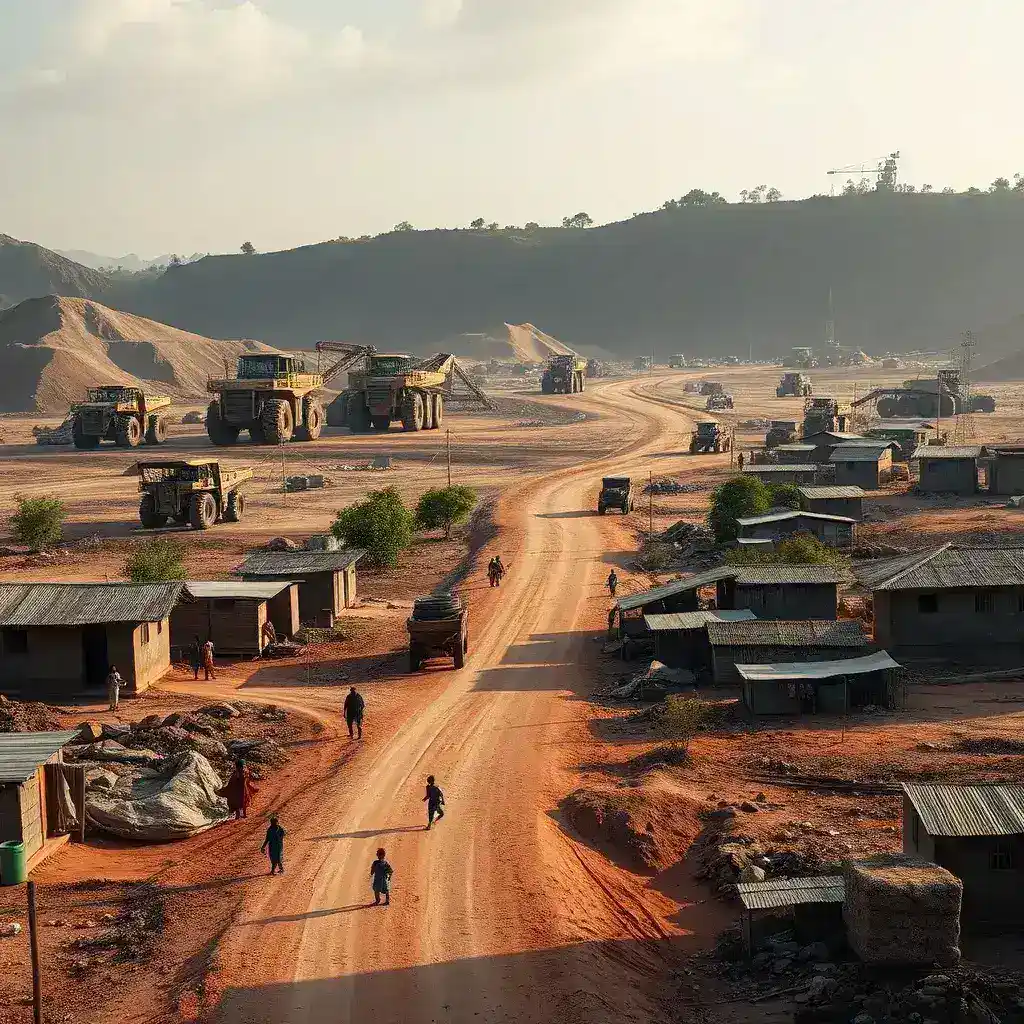
Ghana, renowned for its significant gold production, faces a paradox: despite abundant mineral wealth, many communities situated near mining operations grapple with inadequate infrastructure, high unemployment, and a general lack of development. This disparity fuels public sentiment and calls for greater national control over resource extraction.
The Ownership Debate: A Deeper Look
A central theme in the current discourse is the question of whether Ghanaian ownership of mines would inherently lead to better outcomes for the ordinary citizen. Experts caution against oversimplification, emphasizing that the nationality of a mine’s owner does not automatically alter fundamental business economics.
“Whether a mining company is Ghanaian-owned, South African-owned, Canadian-owned, or Australian-owned, the economics of mining do not change,” states an analysis from the Institute of Economic Affairs. “Mining companies are businesses. They must raise capital, manage costs, pay workers, satisfy investors, and remain profitable to survive.”
The critical question, therefore, is not merely about changing hands but about tangible benefits. Would a Ghanaian-owned entity automatically increase tax contributions, pay higher royalties, or invest more in community development than its international counterparts, especially when balancing these with investor expectations?
Equity Participation: An Alternative Pathway
As Ghana seeks to maximize financial benefits from its minerals, alternative strategies are being considered. Increasing the government’s equity participation in existing mining operations presents a potential avenue. This model allows the state to share directly in profits through dividends and capital appreciation, while maintaining investment stability and leveraging foreign expertise and capital.
“If the government believes certain mines are exceptionally profitable and strategic, then negotiated equity participation may provide a more practical and sustainable pathway to increasing national benefit than creating uncertainty around security of tenure,” the IEA analysis suggests. This approach mirrors strategies employed by other resource-rich nations aiming to balance national sovereignty with investment competitiveness.
Development Responsibility: A Shared Burden
The debate also confronts the fundamental question of who bears the primary responsibility for community development. While mining companies are often expected to contribute, the primary obligation rests with the state.
“Should mining companies support local development? Absolutely. And many already do,” the analysis notes, citing examples like Gold Fields Ghana Foundation’s significant investments in local infrastructure and social programs. However, it poses a crucial counterpoint: “After government collects these revenues, how much actually goes back into the mining communities?”
The article highlights that the central government retains a substantial portion of royalties and tax revenues, making it imperative to scrutinize how these funds are allocated to the very communities impacted by mining activities. The consensus is that while private companies can supplement development efforts, they cannot substitute for governmental responsibility.
Encouraging Local Investment in Exploration
Another challenging aspect of the conversation involves the limited Ghanaian investment in the high-risk, early stages of mining, such as exploration. Many aspiring local owners show interest in taking over established, profitable mines but less in the decade-long, capital-intensive process of discovering and developing new mineral deposits.
“If we truly want greater Ghanaian participation in mining, shouldn’t we also encourage Ghanaian investment in exploration and mine development from the beginning, rather than waiting until someone else has already taken the risk?” the analysis prompts. This encourages a shift towards fostering Ghanaian entrepreneurship across the entire mining value chain.
Learning from History and Global Examples
Ghana’s past experiences with extensive state control in the mining sector, which led to inefficiency and underinvestment, serve as a cautionary tale. This history does not negate the need for reform but underscores that ownership alone is not a panacea.
Successful resource-rich nations like Botswana, Canada, Australia, and Chile have achieved prosperity not by excluding foreign investment but by establishing robust institutions, stable policies, transparent governance, and competitive investment climates. These factors are presented as critical for sustainable resource management.
Moving Forward: Systemic Change
The path forward requires a balanced approach that integrates greater Ghanaian participation with policy stability and continued capital attraction. The focus should shift from a contest between patriotism and investment to creating a system that works for Ghana.
Key questions for future consideration include enhancing the flow of mineral revenues to mining communities, improving accountability in royalty usage, supporting Ghanaian investment from exploration to production, establishing long-term mining policies resilient to political shifts, and leveraging mining for genuine local economic transformation.
Ultimately, the success of Ghana’s mining sector hinges not just on who owns the mines, but on the effectiveness and equity of the entire system designed to manage these vital resources for the benefit of present and future generations.








Leave a Reply