
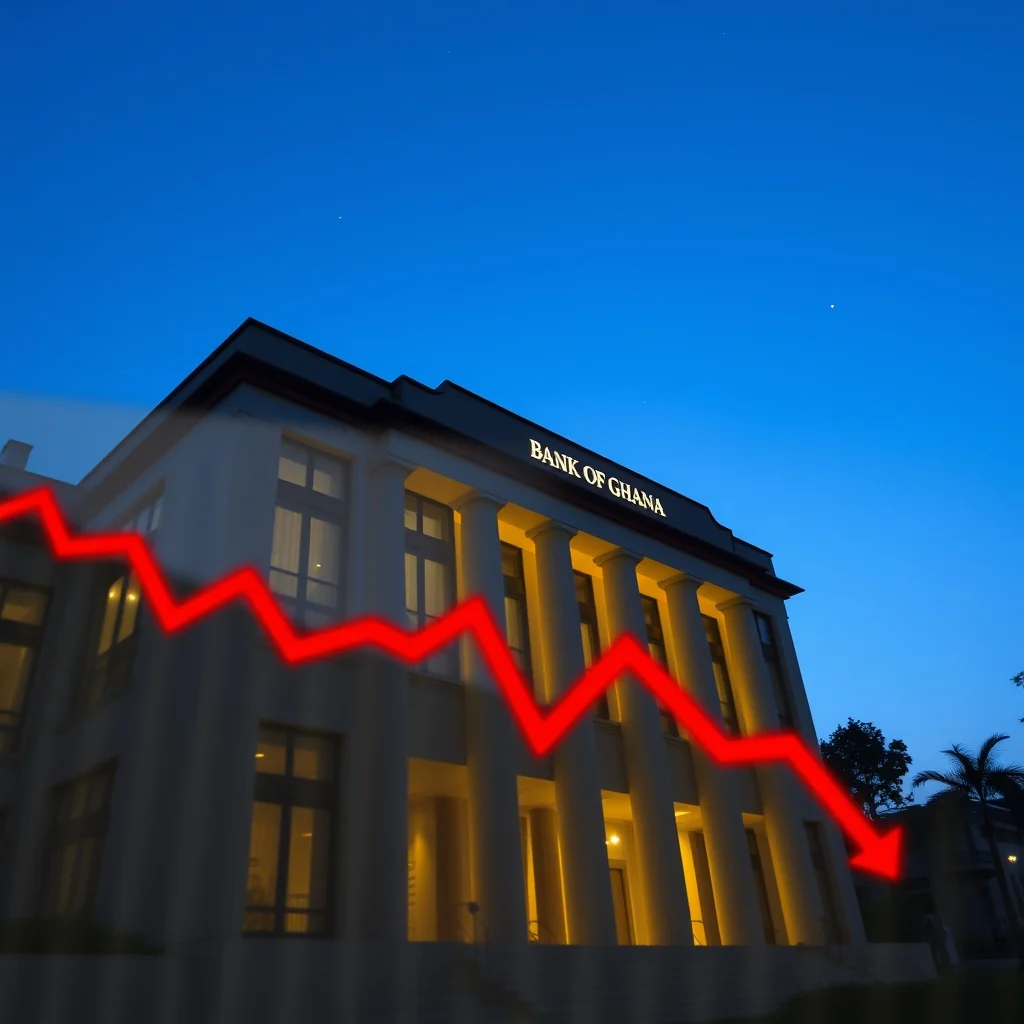
The Bank of Ghana reported a significant financial loss of GH¢15.6 billion for the fiscal year 2025. This figure, revealed in the central bank’s financial statements released on May 1, 2026, marks the second-largest loss recorded by the institution since 2008. The disclosure followed preemptive information shared by the NDC Majority Caucus on April 30, 2026.
Context of the Financial Statements
The release of the 2025 financial statements by the Bank of Ghana came under scrutiny following a press briefing by the NDC Majority Caucus. They publicly disclosed portions of the bank’s accounts before the official release, raising questions about transparency and timing.
JoyNews Research Analyst, Caleb Ziblim, conducted a preliminary review of the released statements. His analysis highlighted critical factors influencing the bank’s financial performance for the year.
Gold Reserve Sales Impact on Losses
A key finding from Ziblim’s analysis is the substantial impact of the sale of nearly half of Ghana’s gold reserves. These sales occurred in November and December of 2025.
The transactions generated an estimated GH¢9.5 billion in profit. This profit significantly reduced the overall loss position for the Bank of Ghana in 2025.
Without the proceeds from the gold reserve sales, the bank’s losses could have escalated. The projected deficit, in that scenario, might have surpassed GH¢25 billion. Such an outcome would have further weakened the bank’s balance sheet.
Concerns Over Open Market Operations
The potential for losses exceeding GH¢25 billion raises concerns about the Bank of Ghana’s financial stability. It also brings into question its capacity to sustainably manage the costs associated with its open market operations.
Open market operations are a key tool central banks use to manage the money supply and interest rates. High losses can impair a central bank’s ability to conduct these operations effectively.
Frontloading of Stabilization Costs
Ziblim’s analysis also suggests a strategic move by the Bank of Ghana. There appears to be a frontloading of stabilization and intervention costs into the 2025 financial year.
This approach might be intended to create fiscal space. The goal could be to improve the central bank’s ability to manage its books in subsequent years, 2026 and beyond.
Broader Economic Implications
The significant loss and the sale of gold reserves have broader implications for Ghana’s economy. They raise questions about the management of national assets and the central bank’s financial health.
Investors and international financial institutions will closely monitor these developments. The central bank’s ability to maintain stability is crucial for economic confidence and growth.
Future Outlook
Moving forward, attention will be on the Bank of Ghana’s strategies to address its financial performance. The impact of frontloading costs and the long-term implications of the gold reserve sales will be critical areas to watch. The effectiveness of its monetary policy tools in a potentially constrained environment will also be under close observation.







Leave a Reply