
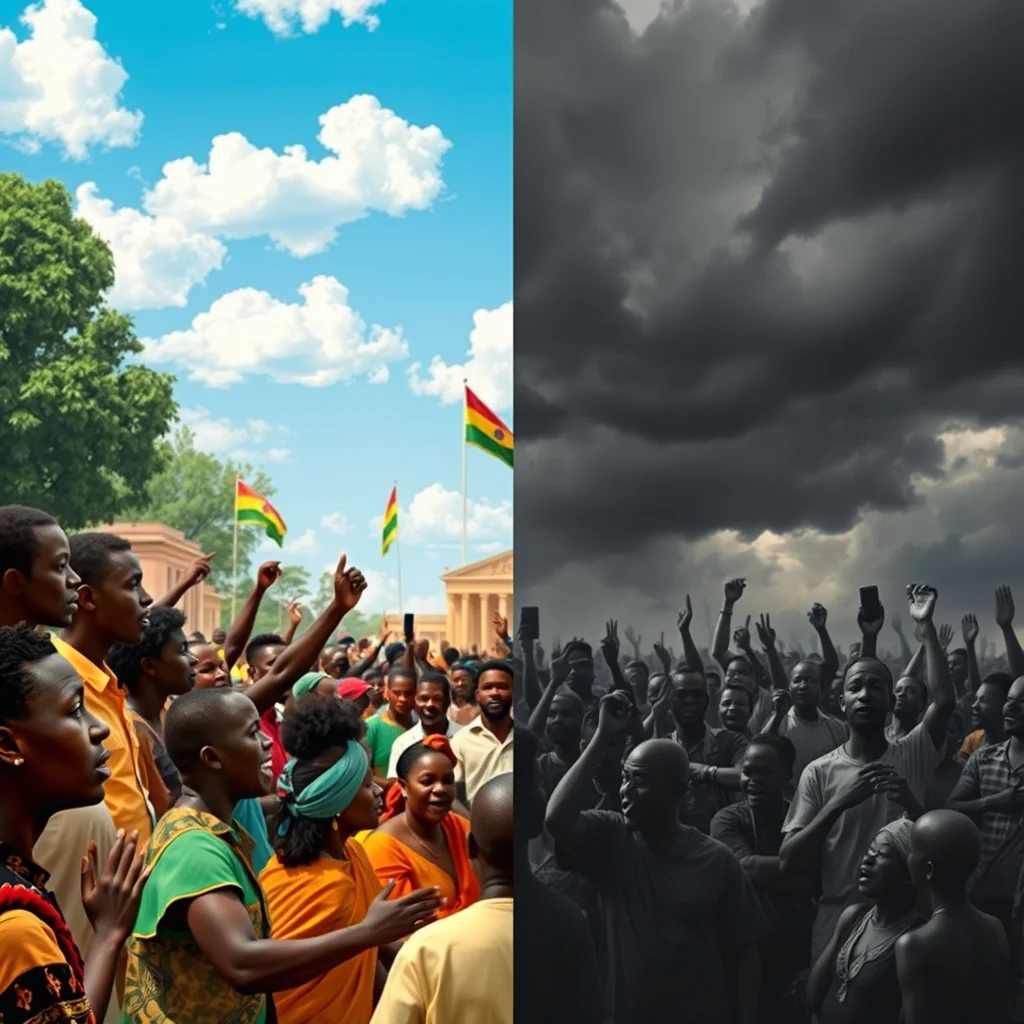
Accra, Ghana – In a stark warning to the nation, Professor Yaw Gyampo, a prominent academic, has highlighted a critical tension within Ghana’s developing democracy: the misuse of free speech, which he argues, risks undermining the very foundations of democratic governance. This concern, articulated recently, points to a growing trend where freedom of expression is being conflated with licentious, divisive, and potentially destabilizing rhetoric, threatening the nation’s hard-won democratic progress. The debate centers on whether unchecked inflammatory language, even if not directly inciting violence, can amount to a form of ‘coup d’état’ against the state itself.
The Historical Context of Free Speech
The concept of democracy, from its ancient Athenian roots to modern representative systems, has always championed dissent and the free exchange of ideas. Founding figures like Cleisthenes and Locke envisioned a public sphere where citizens could voice disagreements. However, this freedom was never intended to be a license for buffoonery, foolish talk, or speech that actively harms the fabric of society.
The core idea was to allow for civil and decorous debate, fostering disagreement that strengthens, rather than tears apart, the polity. The founders understood that societal progress hinges on the ability to disagree constructively. This principle is crucial for a nation like Ghana, which is still navigating its path as a transitional democracy, having recently emerged from authoritarian rule.
The Erosion of Decorum in Public Discourse
Professor Gyampo contends that a segment of public discourse in Ghana has devolved into insults and intemperate language. This trend is particularly concerning when it plays on people’s emotions and threatens to plunge society into chaos. He argues that such reckless speech is not merely uncivil; it can be nation-wrecking, akin to a ‘coup d’état’ in its potential to destabilize the state.
The argument that victims of defamatory or harmful speech should simply resort to civil lawsuits is also challenged. Gyampo points out the lengthy judicial processes, which can take up to five years for a defamation case to be resolved. This protracted timeline makes legal recourse an impractical and insufficient remedy for immediate damage caused by reckless speech.
The Role of Enablers and Cheerleaders
Beyond those who directly engage in inflammatory speech, Gyampo identifies another dangerous group: those who do not directly insult but tacitly encourage or cheer on those who do. These individuals, by downplaying the severity of such rhetoric and directing victims to the courts, become complicit in the erosion of democratic decorum. Their actions, he suggests, are equally, if not more, damaging to nation-building efforts.
Historical examples, such as the role of hate speech in inciting the Rwandan genocide, serve as potent reminders of how language can have devastating real-world consequences. While Ghana is not Rwanda, the principle that unchecked incitement can lead to societal breakdown remains a critical warning.
Implications for Ghana’s Democratic Future
The professor’s concerns underscore the fragility of transitional democracies. Ghana’s journey from authoritarianism to its current democratic status requires constant vigilance. The risk of democratic relapse is real if the norms of civil discourse are abandoned.
Freedom of speech, while a cornerstone of democracy, must be exercised responsibly. It is not synonymous with recklessness, buffoonery, or speech that incites hatred and division. The emphasis, Gyampo argues, should be on preventing such harmful speech from occurring in the first place, rather than relying solely on post-hoc legal remedies.
Looking Ahead: Guarding Against Implosion
The path forward for Ghana involves fostering a culture that values civil discourse and robust debate without descending into vitriol. This requires a collective commitment from citizens, leaders, and media practitioners to uphold democratic principles. The challenge lies in finding the balance between protecting free expression and safeguarding the nation from the destructive potential of unchecked rhetoric. What remains to be seen is how Ghana will collectively address this challenge to ensure its democratic journey continues on a stable and progressive trajectory, guarding against implosion and relapse.





Leave a Reply