
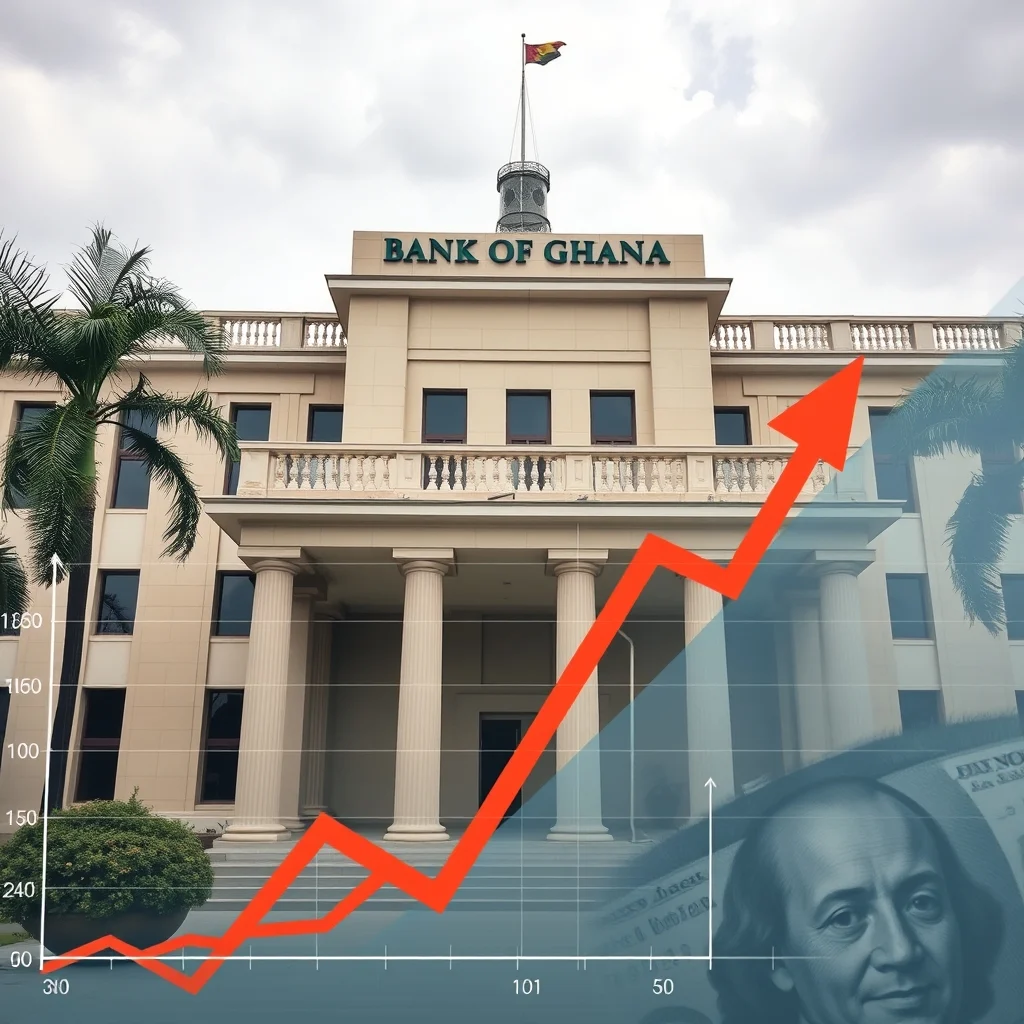
The International Monetary Fund (IMF) has defended the Bank of Ghana’s stringent monetary tightening measures, asserting they were prudent and necessary for macroeconomic stability, despite the central bank recording a significant GH¢15.6 billion loss in its 2025 audited financial statements. This defense comes as the central bank’s negative equity position deepened to GH¢93.82 billion.
Context of Economic Stabilization
Ghana has recently navigated a period of severe macroeconomic instability, marked by high inflation and a depreciating currency. In response, the Bank of Ghana has implemented a series of aggressive policies aimed at restoring confidence and stabilizing the economy.
These measures include substantial interest rate hikes, active absorption of liquidity from the market, and direct interventions in currency markets. The goal has been to curb inflation, stabilize the Ghanaian Cedi, and rebuild investor confidence.
IMF’s Stance on Policy Measures
Dr. Ruben Atoyan, IMF Mission Chief, explicitly rejected the notion that the Bank of Ghana’s actions were overly aggressive. He characterized the approach as “very prudent” and highlighted the positive outcomes that he believes are recognizable by the public.
His comments were made in response to the recently published 2025 financial statements, which revealed a substantial increase in the central bank’s operational loss, rising from GH¢9.49 billion in 2024 to GH¢15.6 billion in 2025. The statements also showed a sharp deterioration in the bank’s equity, moving from GH¢58.62 billion negative in 2024 to GH¢93.82 billion negative in 2025.
Understanding the Financial Costs
Dr. Atoyan explained that the financial losses are an unavoidable consequence of implementing monetary policy in an environment of high inflation and elevated interest rates. “There is a cost of doing monetary policy, and this is something that people need to understand,” he stated.
The Bank of Ghana’s 2025 financial statements, according to Dr. Atoyan, transparently document the financial burden associated with these necessary stabilization efforts. “Absorbing liquidity from the market is costly, and that’s what we see as reflected in the statement,” he elaborated.
While acknowledging the significant financial pressure these operations placed on the central bank, Dr. Atoyan emphasized their necessity. “Yes, so it did generate some costs for the Bank of Ghana, but it was a necessary cost for the stabilisation going forward,” he asserted.
Broader Economic Reforms
The IMF has been a consistent supporter of Ghana’s monetary tightening program. These actions are part of a larger framework of reforms under the country’s ongoing economic recovery program, which the IMF is backing.
The central bank’s interventions over the past two years have been critical in its efforts to combat persistent inflation and support the local currency. The aggressive stance is seen as crucial for achieving sustainable economic recovery.
Implications and Future Outlook
The defense of the Bank of Ghana’s policies by the IMF suggests a continued commitment to the current stabilization strategy. For businesses and consumers, this implies a sustained period of tight monetary conditions, which can impact borrowing costs and economic growth in the short term.
However, the focus remains on achieving long-term macroeconomic stability, which is essential for attracting investment and fostering sustainable economic development. The financial costs incurred by the central bank are viewed as an investment in future economic health. Observers will be watching closely to see if the current trajectory leads to sustained inflation reduction and currency stability, and how the central bank manages its balance sheet in the coming years.










Leave a Reply