
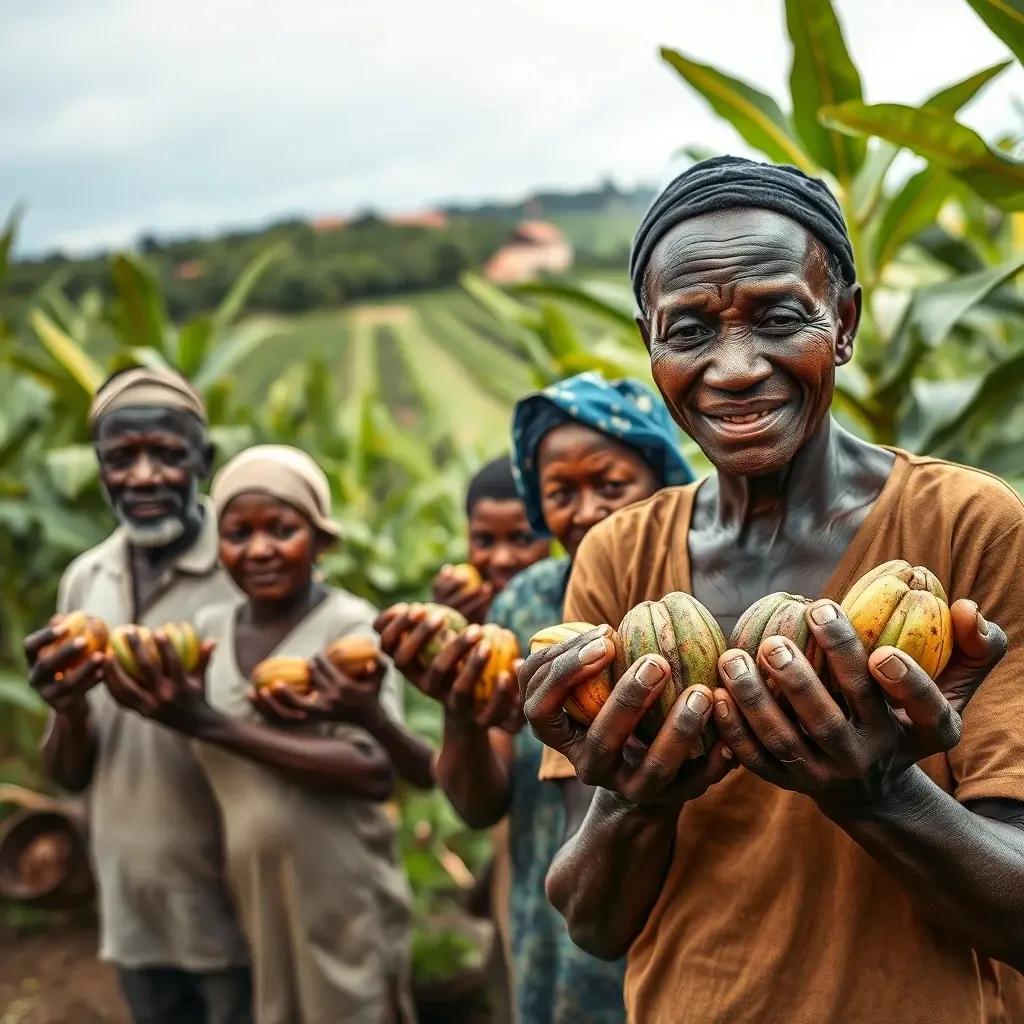
A push is underway to reform Ghana’s decades-old cocoa law, which mandates that farmers sell their produce exclusively to the state-controlled Ghana Cocoa Board (COCOBOD) at prices set by the government. This article, written by a lawyer with experience in strategic litigation, argues that the current law, with roots in the colonial era, violates farmers’ basic rights by denying them the freedom to negotiate prices and choose their buyers, effectively reducing them to a state of servitude.
The Unseen Hardship of Cocoa Farmers
Cocoa cultivation is an arduous and lengthy process, often spanning three to five years before the first harvest. Farmers face significant challenges, including securing land, often through precarious tenancy agreements, and dedicating years to planting, pruning, and tending to trees without any income from the crop.
This demanding labor occurs amidst limited access to essential services like roads, healthcare, and electricity in rural communities. Farmers also struggle to provide for their families and ensure their children’s education.
Climate change exacerbates these difficulties, with rising temperatures reducing yields and increased rainfall fostering pests and diseases. Erratic weather patterns further deepen the uncertainty faced by these agricultural workers.
Legal Constraints and Economic Disparities
A 1984 law, originating from colonial legislation, prevents Ghanaian cocoa farmers from freely negotiating prices or selling their property to buyers of their choice. They are compelled to sell exclusively to COCOBOD at prices determined unilaterally by the state, which are consistently below market rates.
Trading outside this state-imposed monopoly is a criminal offense, punishable by a minimum of five years imprisonment. The author contends that this practice infringes upon fundamental civil rights and natural law, as it mandates imprisonment for trading one’s own property.
Data analysis from the International Cocoa Organisation (ICCO) reveals that over a 30-year period (1990/1991 to 2020/2021 cocoa seasons), Ghanaian cocoa farmers received, on average, only 55.8% of the global cocoa price. In some seasons, like 1993/1994, this figure dropped as low as 32%.
This framework, the article argues, effectively reduces farmers to a state of servitude, a treatment not applied to any other trade or occupation. Unlike minimum wage laws that ensure workers earn above market rates, cocoa farmers are subjected to mandated below-market prices.
Proposed Reforms for a Fairer System
The proposed reforms do not advocate for a complete liberalization or the abolition of COCOBOD. Instead, the core argument is that the state should cease confiscating farmers’ property through forced sales at below-market prices.
Farmers should have the right to sell their produce to any buyer and negotiate prices freely. The state can still participate in the market through a commercial entity, offering competitive prices. Revenue generation for the state can be achieved through various means such as income taxes, export levies, buyer license fees, and other market-based mechanisms.
The article points out that Ghana previously operated a competitive market system with multiple buyers and cooperatives before colonial intervention. The proposed reform aims to restore a market structure closer to this historical model.
Ghana as an Outlier in Global Cocoa Markets
Ghana is currently the only major cocoa-producing nation maintaining a complete statutory monopsony over cocoa purchases from smallholder farmers. Most other major producers have liberalized their markets to varying degrees.
Neighboring Côte d’Ivoire, the world’s largest producer, operates a hybrid system where a regulatory body sets a guaranteed minimum price, but licensed private buyers, exporters, and cooperatives compete to purchase cocoa. This allows the state to ensure stability while farmers benefit from competition.
Implications for the Future
With the global cocoa industry projected to reach $146 billion by 2035, the article emphasizes that there is no justification for shortchanging the farmers who form the industry’s foundation.
Thoughtful and creative reforms can ensure a more equitable distribution of value across the supply chain, benefiting farmers, the government, and all other stakeholders. The article concludes by suggesting that Ghana can learn from international best practices to strengthen its cocoa sector.










Leave a Reply