
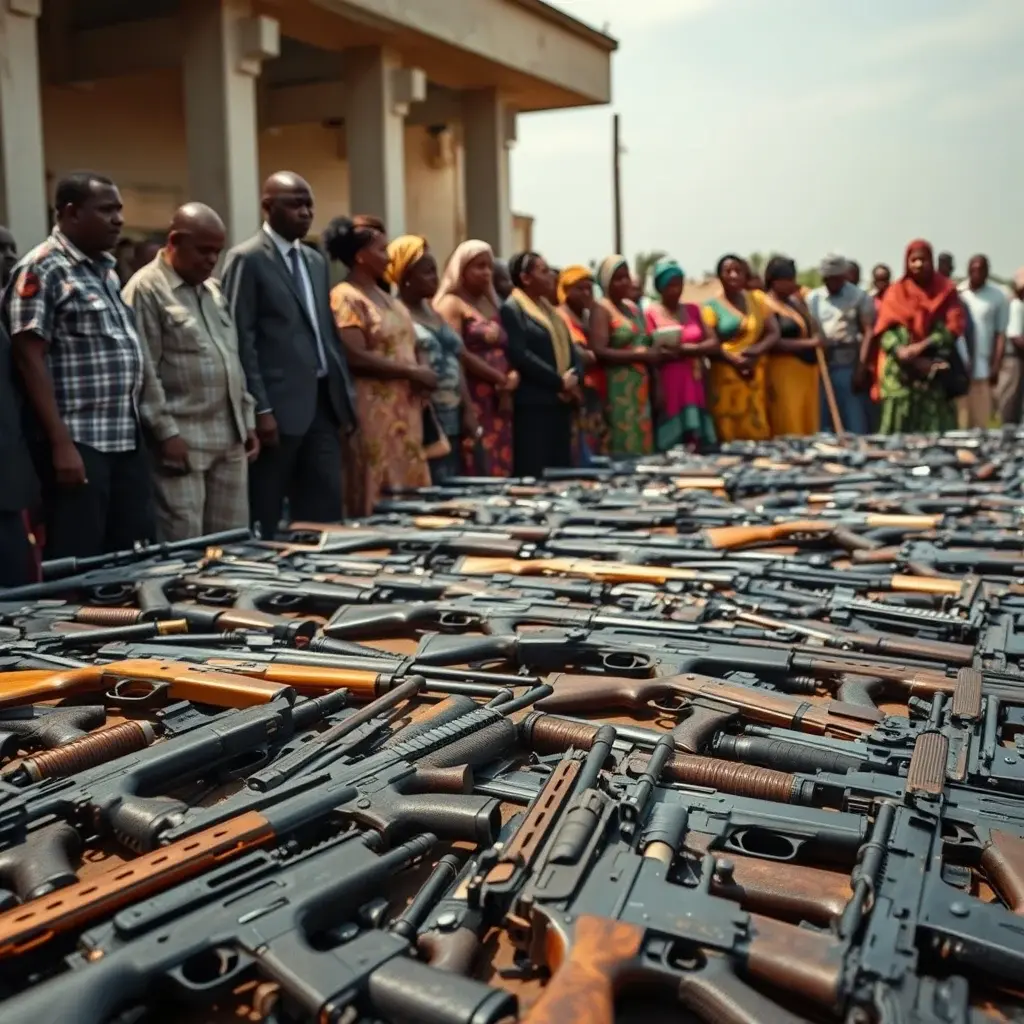
Accra, Ghana – Over 4,000 firearms were voluntarily surrendered during a recently concluded national gun amnesty program, according to Dr. Adam Bonaa, Executive Secretary of the National Commission on Small Arms and Light Weapons (NACSA). The weapons are slated for destruction soon, aligning with international protocols Ghana adheres to.
Context of the Amnesty
The nationwide Gun Amnesty Programme was a collaborative effort launched by the Ministry of the Interior, Ghana Police Service, NACSA, various security agencies, traditional leaders, religious organizations, and civil society groups. Its primary objective was to curb the proliferation of illicit firearms and reduce gun-related violence across the country.
Initially running from December 1, 2025, to January 15, 2026, the program saw an encouraging public response. Authorities extended the deadline to January 30, 2026, to accommodate more individuals, particularly those in remote areas, to surrender or regularize unlicensed firearms without facing arrest or prosecution.
Significant Surrender Numbers
Dr. Bonaa revealed the significant number of surrendered weapons in an interview with the Ghana News Agency on the sidelines of the Women and Girls Empowerment Seminar. This event was held in Accra to commemorate the 2026 International Women’s Day for Peace and Disarmament.
He described the surrendered cache as a substantial contribution to Ghana’s ongoing efforts to combat the illicit arms trade and gun violence. The weapons are being prepared for destruction, a process NACSA is planning for either June 25 or July 9, 2026.
Destruction Exercise and Transparency
The planned destruction exercise is timed to coincide with activities marking the United Nations Day for Weapons Destruction. “We haven’t done destruction for a while and this is a significant number of weapons in peacetime that will be destroyed,” Dr. Bonaa stated.
NACSA intends to conduct the destruction publicly at a designated location. This move aims to ensure transparency, allowing the media and the general public to witness the process firsthand. The commission has formally communicated with the presidency, expressing hope for President John Dramani Mahama’s attendance as Commander-in-Chief of the Ghana Armed Forces.
Addressing the Threat of Illicit Arms
During the seminar, Dr. Bonaa emphasized the severe threat posed by the proliferation and misuse of small arms. He highlighted that these weapons endanger public safety, human security, and national development.
He noted that women and girls disproportionately suffer from gun violence, experiencing domestic insecurity, displacement, intimidation, and economic hardship. Despite this, they often emerge as strong advocates for peace, dialogue, and reconciliation.
Promoting Gender Inclusion in Peace Efforts
Dr. Bonaa stressed the importance of recognizing women not as peripheral figures but as central actors in promoting sustainable peace and national security. He disclosed that NACSA has implemented a deliberate gender inclusion policy.
This policy ensures equal participation of men and women in various training programs, including crucial armoury management courses for security personnel. The commission remains committed to public education, fostering collaboration with stakeholders, encouraging community involvement, and integrating gender perspectives into all national arms control initiatives.
Call for Collective Responsibility
The Executive Secretary called for a collective approach to building a peaceful and gun-violence-free Ghana. He asserted that sustainable peacebuilding necessitates the active involvement of families, schools, the media, traditional leaders, civil society organizations, and the broader public to achieve desired outcomes.
Future Implications
The successful collection of over 4,000 weapons signals a positive step in Ghana’s commitment to reducing the availability of illicit firearms. The upcoming public destruction event is expected to reinforce this commitment and serve as a deterrent. Observers will be watching to see if this amnesty program can be sustained and replicated, and how effectively NACSA’s gender inclusion policies translate into tangible peacebuilding outcomes. The focus on women and girls as agents of peace also points towards a broader strategy for conflict prevention and resolution in the region.










Leave a Reply