
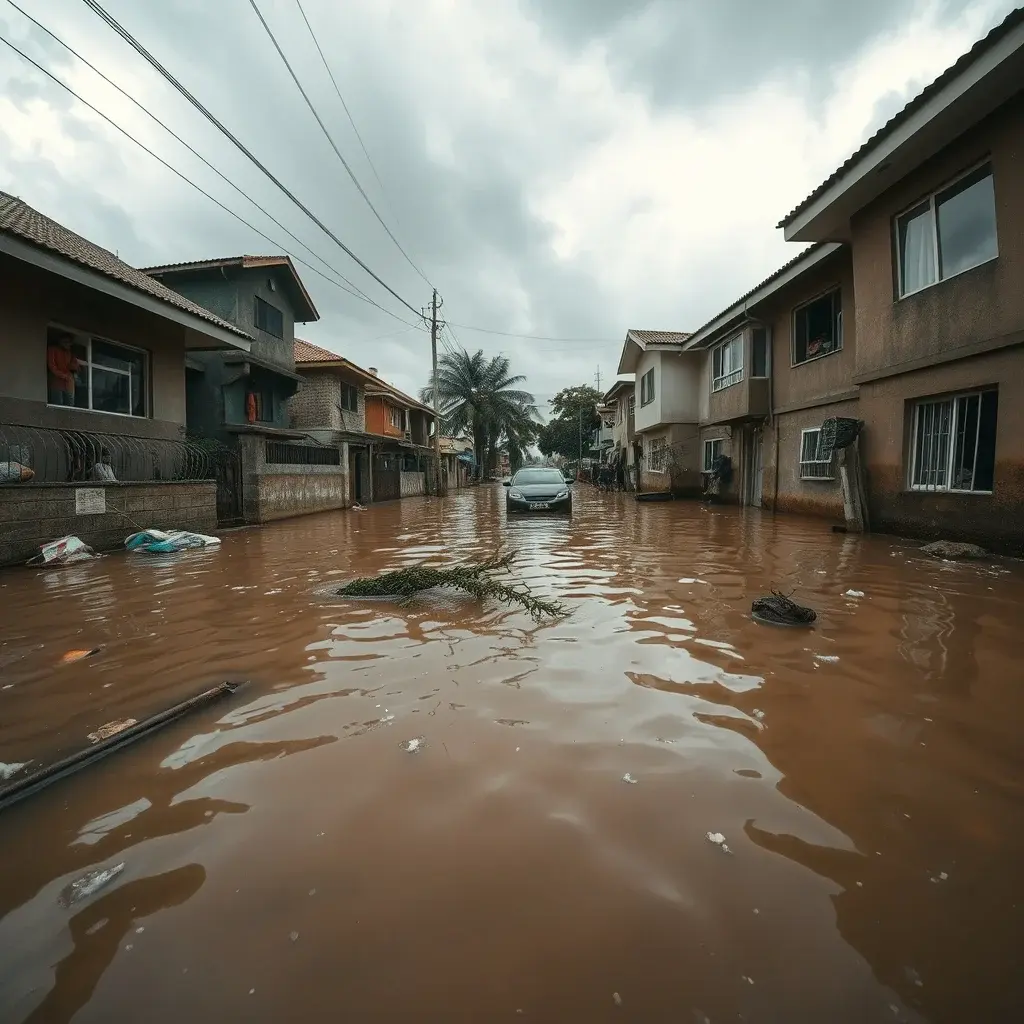
Accra, Ghana – For over 30 years, the capital city of Accra has grappled with a recurring and devastating problem: severe flooding during the rainy seasons. Despite numerous rainy seasons, government promises, and tragic loss of life, effective long-term solutions remain elusive, leaving residents vulnerable to the destructive power of overflowing waterways.
A History of Recurring Disasters
The issue of flooding in Accra is not a new phenomenon. Personal accounts from as far back as July 1995 detail catastrophic inundation of residential areas, displacing families and causing significant property damage. One such account recounts a harrowing experience where a friend, living in the Odawna area, had to seek refuge on the first floor of their home as floodwaters rose, tragically witnessing a neighbor drown from their window.
These experiences are not isolated incidents. In 1998, another massive flood event paralyzed parts of the city, trapping residents indoors for over 24 hours and preventing them from carrying out daily activities, including commuting to work. These recurrent events highlight a persistent failure to implement adequate urban planning and infrastructure development to mitigate flood risks.
Inaction Despite Tragic Consequences
The human cost of Accra’s flooding is undeniable. The devastating floods of June 3, 2015, serve as a stark reminder of the city’s vulnerability, claiming the lives of over 150 citizens. This tragedy, along with countless other incidents, has underscored the urgent need for comprehensive action.
However, decades of governance by both major political parties, the National Democratic Congress (NDC) and the New Patriotic Party (NPP), have yielded little tangible improvement. Critics argue that a lack of political will, coupled with issues of corruption and misallocation of resources, has hampered progress. The focus often appears to be on short-term fixes rather than sustainable, long-term solutions that address the root causes of the flooding.
Expert Perspectives on Urban Planning Failures
Urban planning experts point to several key factors contributing to Accra’s vulnerability. Inadequate drainage systems, the encroachment of construction on natural waterways, and poor waste management, which clogs existing drains, are frequently cited. The rapid and often unplanned urbanization of Accra has outpaced the development of essential infrastructure designed to manage large volumes of rainwater.
Dr. Ama Ofori, an urban geographer at the University of Ghana, notes, “Accra’s topography, with many low-lying areas, makes it inherently susceptible to flooding. However, this susceptibility is exacerbated by decades of neglecting critical drainage infrastructure and failing to enforce building regulations in flood-prone zones.” She emphasizes the need for an integrated approach that combines improved engineering with stricter land-use planning and public awareness campaigns.
The Citizen’s Burden
For many residents of Accra, the recurring floods have led to a sense of resignation and a realization that personal preparedness is paramount. The repeated failure of authorities to provide lasting solutions has forced citizens to make decisions based on personal experience and risk assessment, such as avoiding low-lying areas for housing, regardless of political assurances.
This situation raises questions about accountability and the effectiveness of governance in addressing fundamental public safety issues. The perception among some citizens is that the political elite are insulated from the worst effects of flooding, allowing the problem to persist without the urgency that direct impact would create.
Implications and the Road Ahead
The ongoing flooding in Accra has significant implications for public health, the economy, and the overall quality of life for its residents. Repeated inundation damages homes, disrupts businesses, and poses serious health risks due to contaminated water and the spread of waterborne diseases. The economic cost, both in terms of direct damages and lost productivity, is substantial.
Looking forward, the challenge for Accra is to break this cycle of inaction. This will likely require a multi-pronged strategy involving substantial investment in modernizing and expanding drainage systems, rigorous enforcement of land-use and building regulations, effective waste management, and potentially nature-based solutions like restoring wetlands. Without a concerted and sustained effort from both government and citizens, Accra’s rainy seasons will continue to be a period of anxiety and devastation.






Leave a Reply