
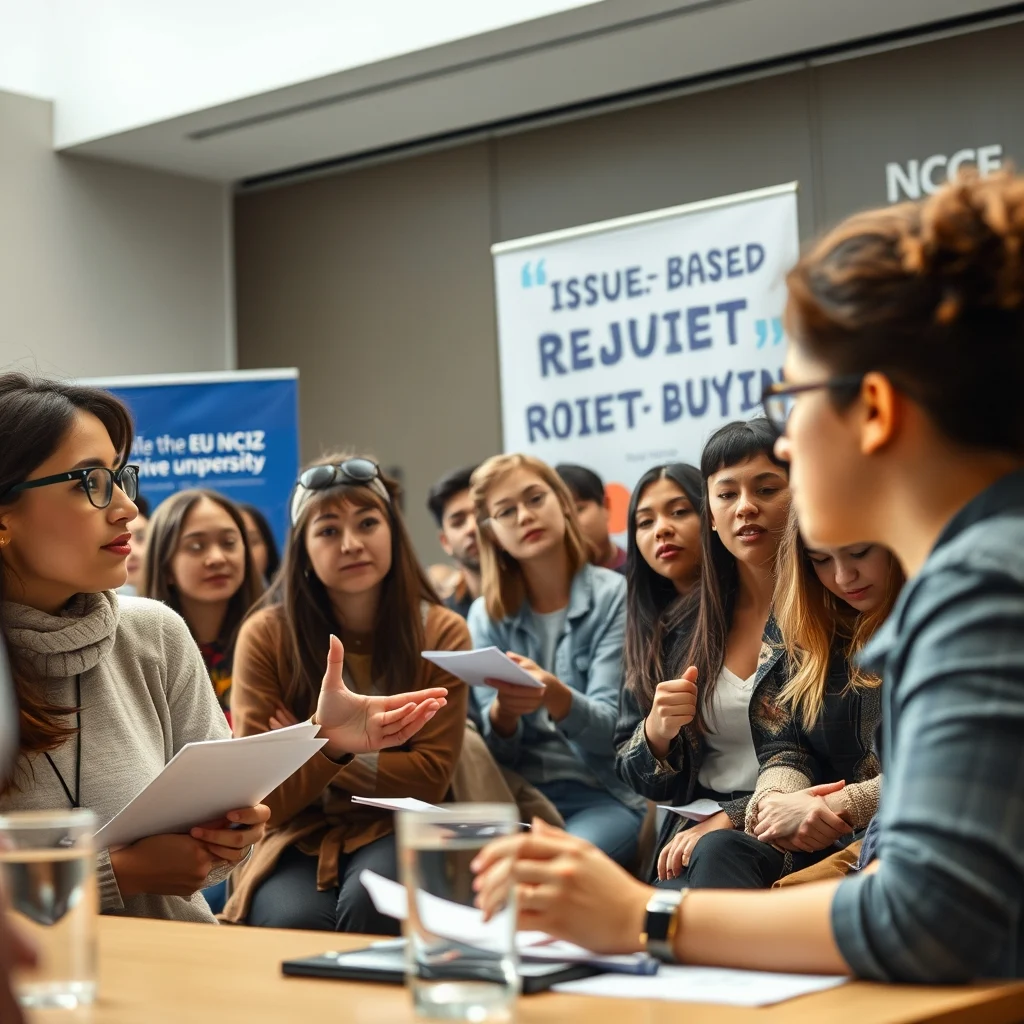
The National Commission for Civic Education (NCCE) has called on students across Ghana’s tertiary institutions to actively reject vote-buying, intimidation, insults, and misinformation during campus elections. The call was made by Mercy Essien, the Central Regional Director of the NCCE, who emphasized that these elections should serve as a crucial training ground for democratic governance and responsible leadership, rather than succumbing to unethical practices.
Campus Elections as a Training Ground
Speaking at a forum organized by the NCCE under the “Civic Engagements on the Rule of Law and the Fight Against Corruption” initiative, part of the Participation, Accountability, and Integrity for a Resilient Democracy (PAIReD) programme, Ms. Essien highlighted the importance of ethical conduct in student leadership. This initiative is supported by the European Union, GIZ, and the Ministry of Finance.
Ms. Essien stressed that upcoming elections for bodies like the Students’ Representative Council (SRC), Graduate Students’ Association of Ghana (GRASAG), National Union of Ghana Students (NUGS), and Junior Common Room Committee (JCRC) must be issue-based. Campaigns should focus on ideas that genuinely benefit students’ welfare.
“Elections should not be characterised by insults, misinformation, intimidation, vote-buying, manipulation, or unhealthy rivalry,” she stated. She urged students to instead embody maturity, tolerance, fairness, and discipline throughout the electoral process.
The NCCE views campus elections as a vital training ground for future national leaders. The values instilled and practiced today will significantly shape the democratic future of the country.
Combating Corruption and Unhealthy Rivalry
Ms. Essien observed that societal progress hinges on leadership guided by honesty, accountability, transparency, and respect for the rule of law. Conversely, societies decline when corruption, abuse of office, and influence peddling become normalized.
She warned that silence and indifference, which allow wrongdoing to thrive, pose as significant a threat to national development as corruption itself. True leadership, she added, is defined not by titles or popularity, but by responsibility, sacrifice, and service to others.
Kweku Simpson, Legal Officer at the Central Regional office of the Commission on Human Rights and Administrative Justice (CHRAJ), echoed these concerns. He described corruption and influence peddling as major obstacles to national development.
Mr. Simpson cautioned student leaders against leveraging their political or social connections for unfair advantages. This is particularly relevant as many student leaders eventually transition into national politics.
Chief Inspector Isaac Evans Ettie, Public Relations Officer for the Central Regional Command of the Ghana Police Service, also advised students to be mindful of situations that could lead to conflicts of interest.
Inauguration of Civic Education Club
The forum also marked the inauguration of the executive members for the University of Cape Coast (UCC) chapter of the NCCE Civic Education Club. Sandra Awolousor was sworn in as president, with Mohammed Alhassan serving as Vice-President. Dugratey Quame Clara Korkor assumed the role of General Secretary, while Frimpong Samuel was named Projects and Programmes Coordinator.
Looking Ahead: Fostering Democratic Values
The emphasis on ethical conduct in campus elections signals a broader effort to embed democratic principles and anti-corruption values from an early stage of leadership development. As these students progress, their commitment to integrity in these formative electoral experiences could significantly influence the quality of governance and public service in Ghana’s future.









Leave a Reply