

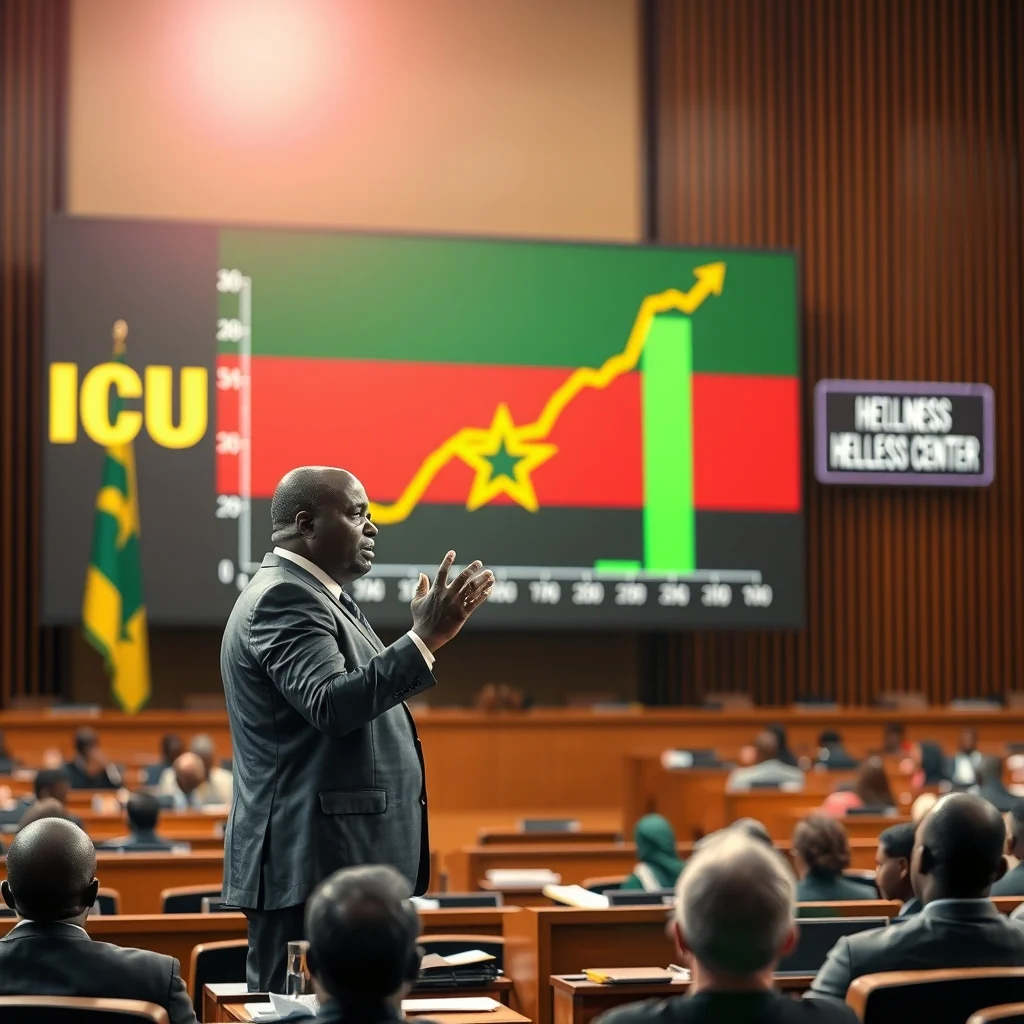
Accra, Ghana – Finance Minister Dr. Cassiel Ato Forson asserted in Parliament on Thursday, May 28, that Ghana’s recent economic turnaround is a direct result of disciplined reforms implemented under President John Dramani Mahama’s administration. He attributed the recovery to the government’s efforts to stabilize an economy he described as having been inherited in a state of crisis due to severe mismanagement by the previous administration.
Context of Inherited Challenges
Dr. Forson detailed that upon taking office, the Mahama government confronted a deeply troubled economic landscape. This inherited situation was characterized by fiscal indiscipline, structural weaknesses, and policy failures that had significantly weakened the nation’s economy by the close of 2024.
The minister painted a picture of an overextended and inefficient public sector, rife with waste and corruption. He argued that this environment exacerbated the country’s economic vulnerabilities. Furthermore, he stated that the prior administration had undermined its own International Monetary Fund (IMF) program by failing to meet negotiated targets and commitments.
Forson emphasized that these economic challenges were not merely cyclical but deeply structural. He cautioned that revisiting these past issues was not about assigning blame but underscoring the critical importance of fiscal discipline and the severe consequences of economic mismanagement. He declared emphatically that Ghana must never return to such a path.
Reforms and Stabilization Measures
According to Dr. Forson, President Mahama’s government acted swiftly to stabilize the economy and rebuild confidence in the IMF-supported program. The administration recalibrated the IMF framework to ensure equitable burden-sharing and implement more robust structural reforms.
A comprehensive suite of fiscal and institutional reforms was introduced. These included enhanced public financial management controls, rigorous audits of government arrears, and measures to eliminate inefficiencies in public spending.
New governance and oversight bodies were established, such as the Office of Value for Money and an Independent Fiscal Council. These institutions aim to bolster accountability and ensure adherence to fiscal rules.
Additional measures involved operationalizing a Sinking Fund for improved debt management and introducing the Ghana Gold Board (GOLDBOD) to enhance foreign exchange stability. Amendments to the Public Financial Management Act were also made to institutionalize long-term debt and deficit targets.
The government also undertook a significant reduction in the size of the executive, cutting the number of ministers from 123 (later revised to 88) down to 60, and reducing ministries from 30 to 23. This move was intended to streamline governance and reduce public expenditure.
Several taxes described as “nuisance taxes” were removed, including the E-Levy, Betting Tax, Emissions Levy, and VAT on motor insurance. These removals were aimed at alleviating financial pressure on households and businesses.
Measurable Economic Results
Dr. Forson presented data indicating that these policy interventions yielded significant and measurable improvements across key macroeconomic indicators. Real Gross Domestic Product (GDP) growth reached 6.0 percent in 2025, representing the strongest post-pandemic expansion. Non-oil GDP growth surged to 7.6 percent, the highest in 14 years.
Ghana’s economy surpassed the US$100 billion threshold for the first time, positioning it as one of Africa’s largest economies and ranking eighth on the continent. Per capita income rose to US$3,385.
Fiscal performance saw a primary surplus of 2.5 percent of GDP in 2025. The public debt-to-GDP ratio decreased sharply from 61.8 percent in 2024 to 44.7 percent by the end of 2025, exceeding IMF targets ahead of schedule.
Debt servicing pressures eased considerably, with the debt-to-domestic revenue ratio falling from 55.7 percent in 2022 to 28.8 percent in 2025, even with the resumption of full Eurobond payments. Ghana’s debt risk rating improved from “high risk” to “moderate risk” under the Debt Sustainability Analysis.
Inflation experienced a notable decline, dropping from 23.8 percent in December 2024 to 3.4 percent by April 2026. Interest rates also fell sharply, with the 91-day Treasury bill rate dropping by over 2,300 basis points to 4.8 percent. Government bond yields and the policy rate saw substantial reductions.
Externally, the current account balance recorded a surplus of 8.3 percent of GDP in 2025. The Ghanaian cedi appreciated by an impressive 40.7 percent against the US dollar.
Implications and Future Outlook
Dr. Forson concluded by emphasizing that these results validate the effectiveness of fiscal prudence and disciplined economic management. He stated that macroeconomic stability is the bedrock for sustainable growth, attracting investor confidence, and fostering job creation.
The reported economic recovery suggests a potential shift in investor sentiment towards Ghana, provided these gains are sustained. The government’s commitment to fiscal discipline, as highlighted by the reforms, will be crucial in maintaining this positive trajectory. Investors and citizens alike will be watching closely to see if the implemented structural changes lead to long-term economic resilience and broad-based prosperity.









Leave a Reply