
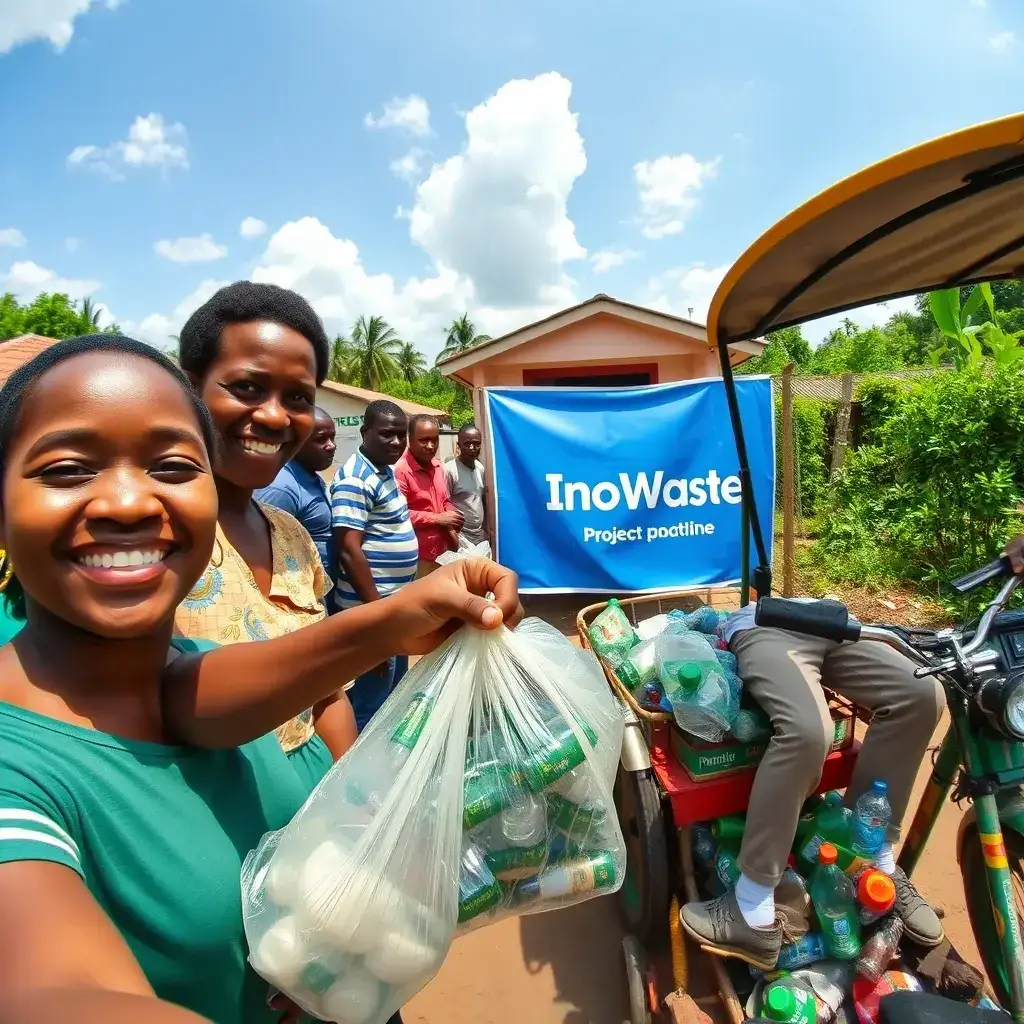
Accra, Ghana – The Deutsche Gesellschaft für Internationale Zusammenarbeit (GIZ) GmbH, in partnership with Zoomlion Ghana Limited and Blue Skies, launched the InnoWaste Project on Thursday, May 28, at the Fiesta Royale Hotel. This initiative, funded by Germany’s Federal Ministry for Economic Cooperation and Development (BMZ) through the develoPPP programme, aims to create jobs and foster a circular economy in Ghana by transforming plastic waste into valuable resources.
Addressing Ghana’s Plastic Waste Crisis
Ghana faces a significant challenge with plastic waste, generating approximately one million metric tonnes annually. Alarmingly, only about 9.5 percent of this is collected for recycling, leading to substantial pollution of rivers, oceans, and communities. Experts warn that without urgent action, plastic pollution in Ghana’s water bodies could increase by 190 percent between 2020 and 2040.
The InnoWaste Project directly confronts this crisis, aligning with Ghana’s National Plastic Management Policy and its climate commitments under the Paris Agreement. The project seeks to change the narrative, viewing waste not as a problem but as a resource with significant economic potential.
Creating Livelihoods and Empowering Communities
A core objective of InnoWaste is to improve the livelihoods of individuals working within the plastic waste management sector, with a particular focus on empowering women and young people. The project aims to create 600 new jobs, with at least 30 percent designated for women and 60 percent for youth.
Beyond job creation, InnoWaste plans to enhance the working conditions for over 3,600 people and increase the income levels for at least 365 actors within the plastic waste value chain. This includes providing essential equipment like tricycles and hand carts to around 500 waste collectors and aggregators.
The project also emphasizes strengthening cooperatives among waste collectors and recyclers. These groups will receive financial management training, digital tools, motorbikes, and laptops to professionalize their operations and improve efficiency.
Innovative Approaches to Waste Management
InnoWaste is introducing innovative solutions to tackle the plastic waste problem. A significant component involves public education and behavioral change campaigns designed to instill a mindset of proper waste management from a young age. This includes training teachers and community leaders, as well as developing pilot recycling curricula for schools.
Unique initiatives like plastic vending machines will be introduced in selected locations, allowing individuals to deposit plastic bottles and receive rewards. This aims to incentivize collection and direct waste towards recycling streams.
Furthermore, a mobile application will be developed to create a real-time connection between waste generators, collectors, aggregators, and recycling companies, streamlining the entire waste value chain.
Partnership and Business Interests
The project is a collaborative effort between GIZ, Zoomlion Ghana Limited, and Blue Skies, underscoring the importance of public-private partnerships in addressing environmental challenges. For private sector partners like Zoomlion and Blue Skies, the project offers not only a chance to enhance their corporate social responsibility but also to improve operational efficiency and reduce costs.
Blue Skies, for instance, has already been proactive in addressing plastic waste within its own value chain, developing an alternative plastic industry policy. Zoomlion has a history of supporting informal waste workers, providing training, formal employment opportunities, and essential equipment.
Health and Sustainability Focus
Recognizing the often-unsafe working conditions for waste workers, InnoWaste includes provisions for improved health and safety. The project plans to register at least 60,000 individuals under Ghana’s National Health Insurance Scheme and provide health screenings for waste workers.
The project, which began in October 2023, is scheduled to run until September 2028. It represents a significant step towards building a more sustainable waste management system in Ghana, turning waste into wealth and fostering a cleaner environment.
Looking Ahead
The success of the InnoWaste Project will be closely watched as Ghana strives to achieve its circular economy goals. Key indicators to monitor will include the actual increase in plastic processing volumes, the number of sustainable jobs created, and the measurable improvement in income and working conditions for waste sector participants. The long-term impact on reducing plastic pollution and fostering a culture of environmental responsibility will be crucial in assessing the project’s overall contribution to Ghana’s sustainable development agenda.







Leave a Reply