
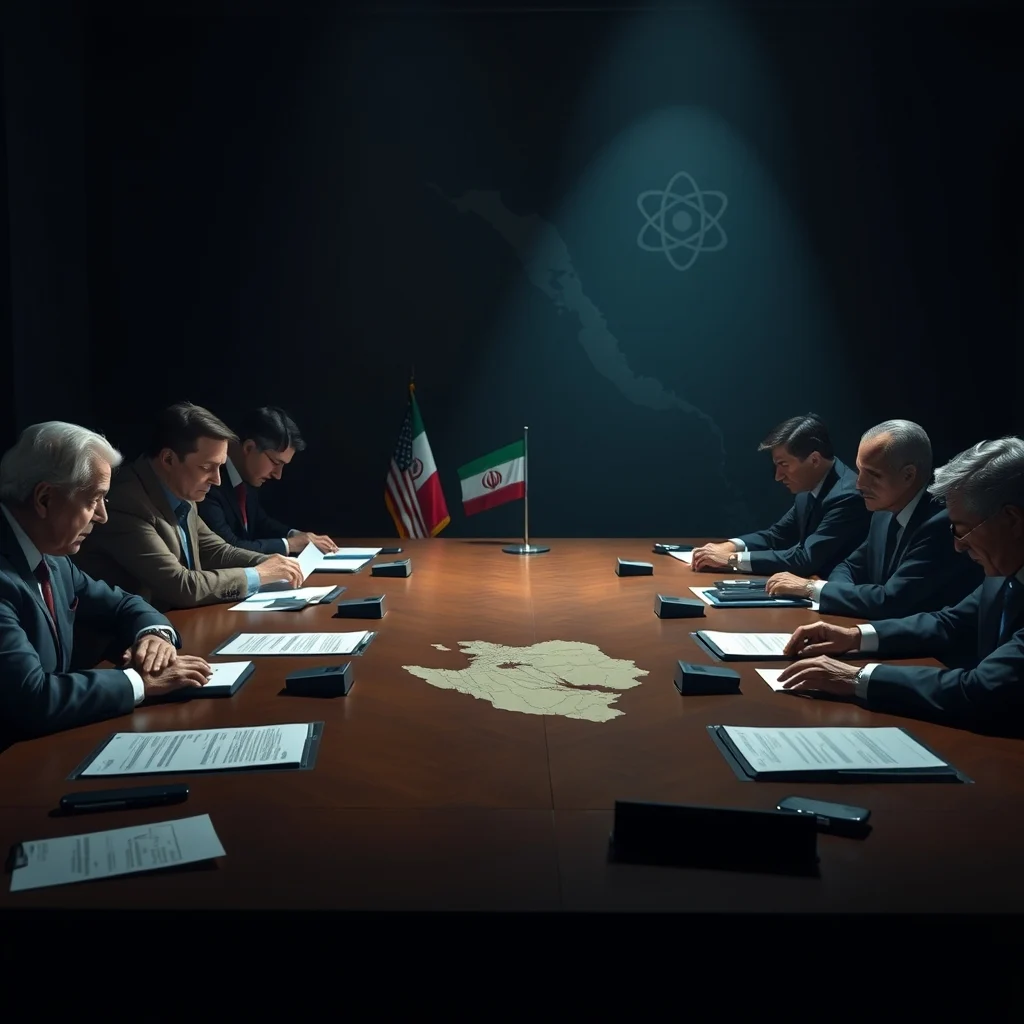
Vice President J.D. Vance stated Thursday that the United States and Iran are “very close” to finalizing an agreement to extend a ceasefire and initiate talks on Iran’s nuclear program, though significant sticking points persist. The potential deal, if approved by President Donald Trump and Iran’s leadership, could bring a temporary halt to hostilities and open a path toward addressing long-standing geopolitical tensions.
Negotiations Reach Critical Stage
Negotiators are reportedly engaged in detailed discussions, with Vice President Vance indicating that the two sides are “going back and forth on a couple of language points.” These points critically include “the question of enrichment,” referring to Iran’s nuclear activities. While Vance expressed optimism, stating the US believes Iran is negotiating in “good faith,” he cautioned that the deal is “not there yet” but that progress is being made.
Earlier reports from US officials suggested a framework agreement had been reached, pending final approvals. However, Iran’s semi-official Tasnim news agency countered that the deal had not been finalized, highlighting the fluid and often contradictory nature of the ongoing diplomatic efforts.
Context of the Conflict and Ceasefire
The current negotiations follow an initial ceasefire that took effect on April 8th. President Trump has consistently signaled progress in these talks, driven by mounting pressure from international allies, domestic political opposition, and concerns from within his own party regarding the protracted conflict.
The potential deal aims to extend the current ceasefire for an additional 60 days. This extension would provide crucial time for deeper, more complex discussions concerning Iran’s nuclear program, particularly its stockpile of highly enriched uranium, which the US views as a proliferation risk.
Key Deal Components and Disputed Reports
Reports emerging from various sources suggest the purported deal could include provisions for unrestricted passage through the Strait of Hormuz, a vital shipping lane. Iran would reportedly have 30 days to clear mines from the waterway, while the US would lift its naval blockade and issue sanction waivers to enable Iran to resume oil sales.
These reports contrast sharply with earlier statements from the White House. Treasury Secretary Scott Bessent, briefing reporters earlier on Thursday, declined to confirm an agreement, emphasizing that any deal would be President Trump’s decision. He also refrained from commenting on potential reconstruction aid for Iran, stating that reaching a deal is the immediate priority.
Adding to the confusion, Iranian state media on Wednesday described an unofficial draft memorandum of understanding. This draft reportedly included the lifting of the US naval blockade, withdrawal of US forces from Iran’s vicinity, and the restoration of non-military traffic through the Strait of Hormuz under the joint management of Iran and Oman. The White House, however, dismissed this draft as a “complete fabrication.”
Strait of Hormuz: A Critical Chokepoint
The Strait of Hormuz remains a critical element in the geopolitical landscape, with approximately one-fifth of the world’s liquefied natural gas and oil typically passing through its narrow channel. Disruptions to this passage have had significant impacts on global fuel trade, underscoring the importance of securing its unimpeded flow.
Ceasefire Violations and Escalation Concerns
Despite the diplomatic overtures, both nations have accused each other of violating the fragile ceasefire in recent days. Iran’s Islamic Revolutionary Guard Corps claimed to have targeted a US base, while US forces reportedly conducted strikes in southern Iran overnight. Reports of Iran downing a US aircraft were officially denied by US Central Command, which confirmed all its air assets remain accounted for.
Implications and Future Outlook
The ongoing, albeit tense, negotiations signal a potential shift in US-Iran relations. The success or failure of these talks will have far-reaching implications for regional stability, global energy markets, and the international non-proliferation regime. The coming days will be critical in determining whether the two nations can bridge their differences on enrichment and other core issues. Observers will be watching closely for any further official statements or verifiable de-escalation measures that could indicate a genuine breakthrough or a return to heightened tensions, with “option B”—a resumption of combat operations—remaining a stark possibility.








Leave a Reply