

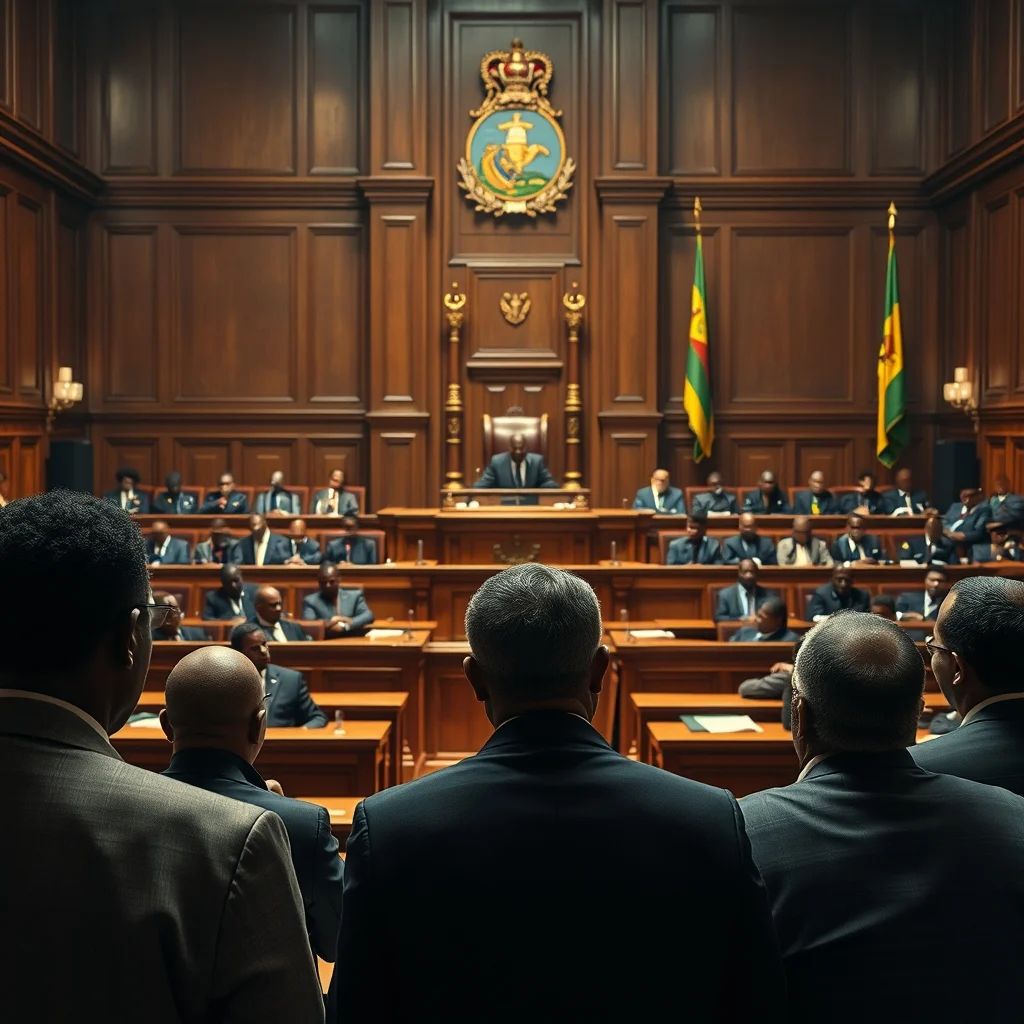
South Africa’s parliament is set to hold its first meeting on Monday to establish an impeachment committee tasked with investigating allegations surrounding President Cyril Ramaphosa’s “Farmgate” scandal. This development, announced by the Democratic Alliance party on Thursday, marks a significant step in the impeachment process that was recently revived by the Constitutional Court, presenting a considerable challenge for the president.
Context of the ‘Farmgate’ Scandal
The “Farmgate” scandal centers on allegations that large sums of cash were stolen from a sofa at President Ramaphosa’s Phala Phala game farm in 2020. The incident has drawn intense scrutiny regarding the source of the funds and the reasons for their concealment. President Ramaphosa has consistently denied any wrongdoing in relation to the theft and the handling of the money.
Impeachment Committee Formation and Initial Steps
The impeachment committee, comprising 31 members, will begin its proceedings by electing a chairperson. George Michalakis, the DA’s parliamentary leader, expressed satisfaction that parliament is advancing the process. However, the DA maintains that the chairperson should not be affiliated with the ruling African National Congress (ANC).
While the Democratic Alliance is a partner in the current coalition government with the ANC, it has maintained a critical stance towards President Ramaphosa, vowing to hold him accountable for any proven misconduct. The ANC, which holds approximately 40% of the seats in the National Assembly, possesses the numbers to block an eventual impeachment vote, which requires a two-thirds majority. Despite this, the ANC’s leadership has publicly stated its full support for the president.
Ramaphosa’s Legal Challenges
In an effort to preempt or delay the impeachment proceedings, President Ramaphosa initiated a legal challenge on Tuesday. This challenge targets an independent panel’s report that found preliminary evidence of his misconduct. Legal analysts suggest this move could potentially stall the parliamentary process.
Furthermore, the president has indicated his intention to seek an urgent court order to halt impeachment proceedings if parliament proceeds while his legal challenge remains under consideration. A spokesperson for the parliament and the president’s office declined to comment on the ongoing developments.
Shifting Political Dynamics within the Committee
A notable aspect of the impeachment committee’s composition is the distribution of seats. The ANC, despite its majority in the National Assembly, holds only 9 out of the 31 seats on the impeachment committee. This smaller representation within the committee itself could create a different political dynamic compared to the broader parliamentary votes.
Broader Implications and Future Outlook
The convening of the impeachment committee signals a critical juncture for President Ramaphosa’s administration. The outcome of the committee’s investigation and any subsequent parliamentary vote will have significant implications for political stability in South Africa. The public will be closely watching the transparency and fairness of the impeachment process, especially given the president’s legal challenges.
The coming weeks will be crucial as the committee navigates its mandate. Key developments to watch include the election of the chairperson, the presentation of evidence, and the president’s response to the ongoing legal and parliamentary scrutiny. The ability of the coalition partners to manage this crisis and maintain governance will be a defining test for the new administration.





Leave a Reply