
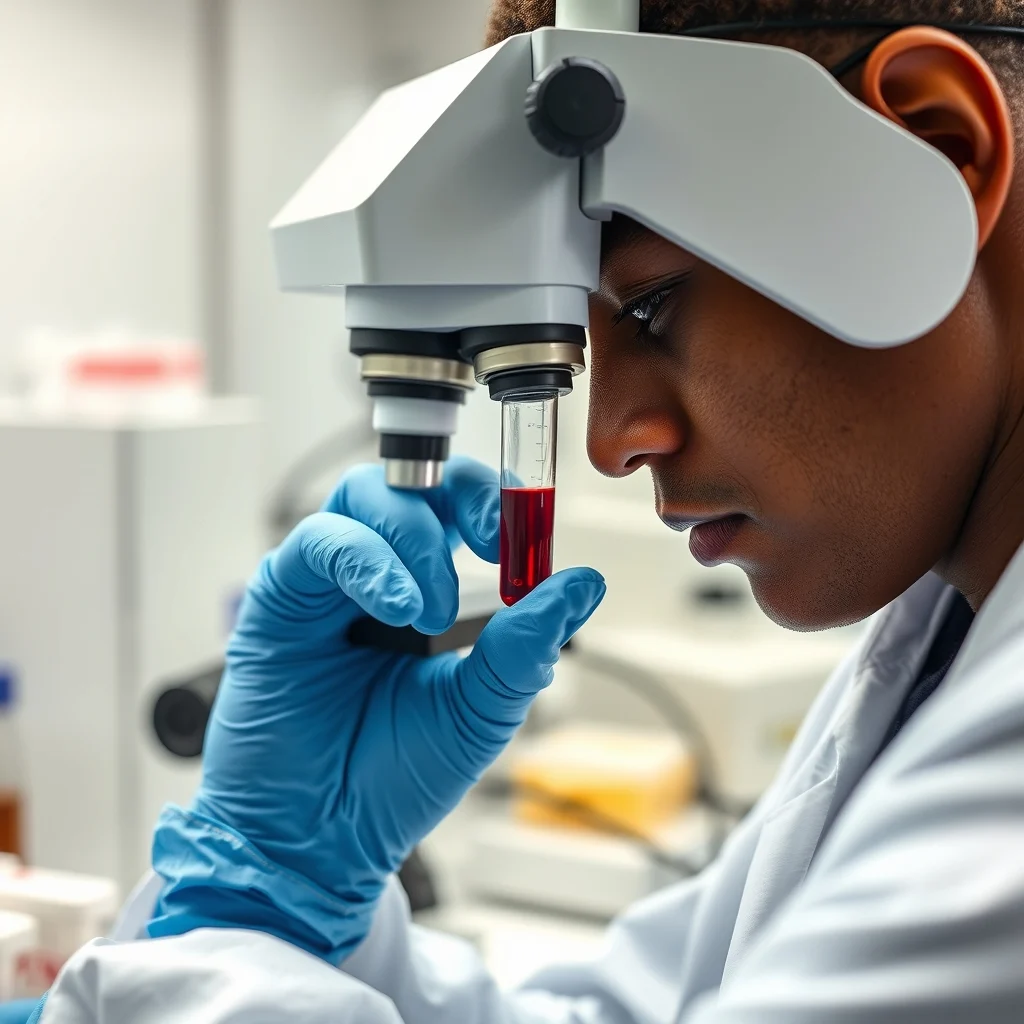
The World Health Organization (WHO) announced on Thursday that it is significantly scaling up Ebola diagnostic capacities in the Democratic Republic of Congo (DRC). This initiative, undertaken in partnership with the DRC’s national medical research organization, aims to enhance the country’s ability to swiftly identify and contain potential Ebola outbreaks.
Strengthening Laboratory Networks
WHO Director-General Tedros Adhanom Ghebreyesus stated via the platform X that the primary goal of this intensified effort is to fortify the nation’s laboratory network. This strengthening is crucial for delivering real-time data, enabling the rapid identification of confirmed Ebola cases, and ultimately, saving lives.
An effective laboratory system is the backbone of any effective disease response. It allows health authorities to distinguish between different infectious diseases, confirm diagnoses accurately, and track the spread of a pathogen. In the context of a highly contagious and potentially deadly virus like Ebola, speed and accuracy in diagnostics are paramount.
Context of Ebola in the DRC
The Democratic Republic of Congo has a history of grappling with Ebola virus disease. The country experienced its first recorded outbreak in 1976 and has since faced numerous subsequent epidemics, most notably in the eastern regions. These recurring outbreaks have often been challenging to control due to factors such as porous borders, population movement, and insecurity in certain areas.
Past experiences have underscored the critical need for robust public health infrastructure, including well-equipped laboratories and trained personnel, capable of responding rapidly to emerging health threats. The WHO’s current action reflects lessons learned from these challenging episodes.
Scaling Up Diagnostic Capacities
The scaling up of diagnostic capacities involves several key components. This includes ensuring laboratories are equipped with the necessary reagents and equipment for reliable Ebola testing, such as reverse transcription polymerase chain reaction (RT-PCR) assays. It also entails training laboratory technicians and healthcare workers on proper sample collection, handling, and transportation protocols to maintain sample integrity.
Furthermore, the initiative focuses on improving the connectivity and data reporting mechanisms within the laboratory network. Real-time data allows epidemiologists and public health officials to monitor the situation closely, identify hotspots, and allocate resources effectively. This rapid feedback loop is essential for making timely public health decisions, such as implementing contact tracing, isolation measures, and public awareness campaigns.
Expert Perspectives and Data
Dr. Matshidiso Moeti, WHO Regional Director for Africa, has previously emphasized the importance of preparedness in combating outbreaks. “Investing in diagnostic capabilities and strengthening our surveillance systems are not just about responding to the next outbreak, but about building resilient health systems that can protect communities long-term,” she noted in a past statement regarding regional health security.
Data from previous Ebola outbreaks in the DRC indicates that delays in diagnosis and confirmation have often contributed to the wider spread of the virus. For instance, during the 2014-2016 West Africa Ebola epidemic, diagnostic challenges were a significant hurdle in the initial containment efforts. The WHO’s proactive measure in the DRC aims to preempt such delays.
Implications for Public Health and Safety
The enhanced diagnostic capacity has direct implications for the safety and well-being of the Congolese population. Faster and more accurate identification of cases means that infected individuals can be isolated more quickly, reducing the risk of transmission to their families and communities. This also allows for prompt initiation of supportive care for patients, which is crucial for improving survival rates.
For the global community, a strengthened response in a high-risk country like the DRC reduces the likelihood of international spread. The WHO’s commitment to bolstering diagnostic infrastructure is therefore a critical component of global health security, helping to prevent a localized outbreak from becoming a wider epidemic.
What to Watch Next
Moving forward, the success of this initiative will depend on sustained investment, effective implementation, and continued collaboration between the WHO, the DRC government, and local health authorities. Key indicators to monitor will include the turnaround time for test results, the geographical reach of diagnostic services, and the ability to rapidly deploy mobile laboratory units to remote or insecure areas. The ongoing efforts to integrate genomic sequencing capabilities into the diagnostic network will also be crucial for understanding viral evolution and transmission patterns, further enhancing the preparedness against future health threats.







Leave a Reply