
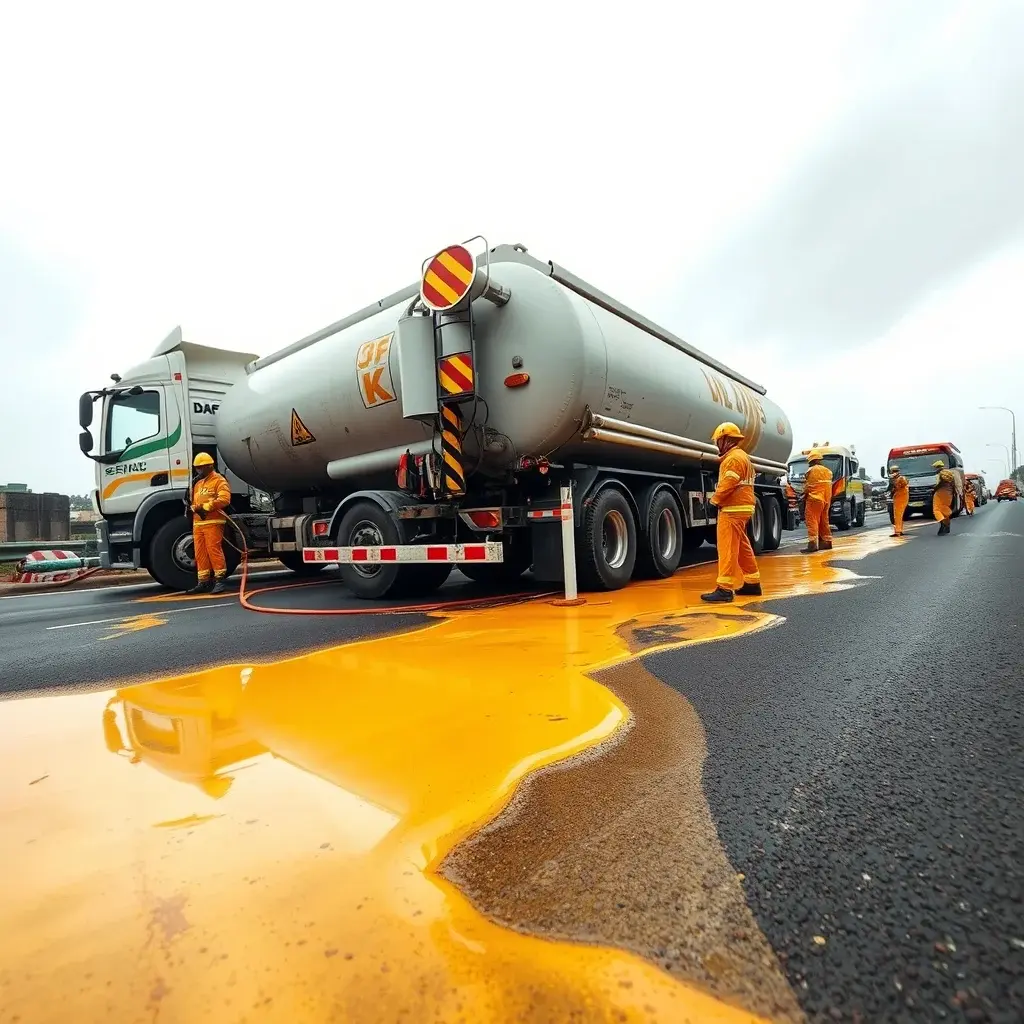
An estimated 50 tons of shea butter oil spilled onto the Accra-Kumasi Highway on Sunday, May 31, after a DAF XF tanker experienced a discharge valve failure at Misa Fuel Station in Ntoaso. The incident created hazardous conditions for motorists and necessitated an emergency response.
Emergency Response and Containment Efforts
The Ghana National Fire Service (GNFS) reported that the tanker was transporting shea butter oil from Tema to Techiman when its discharge valve broke. This failure led to a significant leakage, releasing large quantities of the viscous oil onto sections of the busy highway.
Personnel from the Suhum Municipal Fire Station were swiftly deployed to the scene following reports of the spill. Upon arrival, firefighters assessed the situation and confirmed that no casualties were recorded, despite the substantial volume of the spillage.
The emergency team immediately commenced containment operations. Their primary objective was to prevent the oil from spreading further across the roadway, which could exacerbate the hazard.
Firefighters applied foam concentrate to the affected area. This measure was crucial to secure the scene and mitigate the risk of secondary incidents, such as vehicle accidents caused by the extremely slippery road surface.
Impact on Road Users and Traffic
The spill posed a significant threat to road users on the critical Accra-Kumasi Highway. The thick layer of shea butter oil drastically reduced visibility and traction, making driving perilous.
Motorists faced disruptions as the highway likely experienced traffic slowdowns or temporary closures to allow for cleanup operations. The sheer volume of the spillage indicated that clearing the road would be a complex and time-consuming task.
The incident highlighted the potential dangers associated with transporting bulk liquids, even non-hazardous ones like shea butter oil, which can create severe road safety issues when spilled.
Environmental Considerations
While shea butter oil is generally considered biodegradable, a spill of this magnitude raises environmental concerns. The oil could potentially affect soil and nearby water sources if not properly contained and cleaned.
The GNFS’s rapid response aimed to limit the environmental impact, alongside the immediate safety concerns for drivers. Further cleanup efforts would likely involve specialized equipment to remove the oil residue from the asphalt.
Looking Ahead
The incident serves as a reminder of the importance of regular maintenance for transport vehicles, particularly those carrying large volumes of liquid. The failure of a discharge valve can have immediate and severe consequences for public safety and infrastructure.
Authorities may review protocols for the transport of such materials on major highways. The focus will likely be on preventative measures, including stricter inspections and potentially improved tanker design or safety features to prevent catastrophic valve failures. The long-term effects of the spill on the immediate environment and the efficiency of cleanup operations will also be closely monitored.










Leave a Reply