
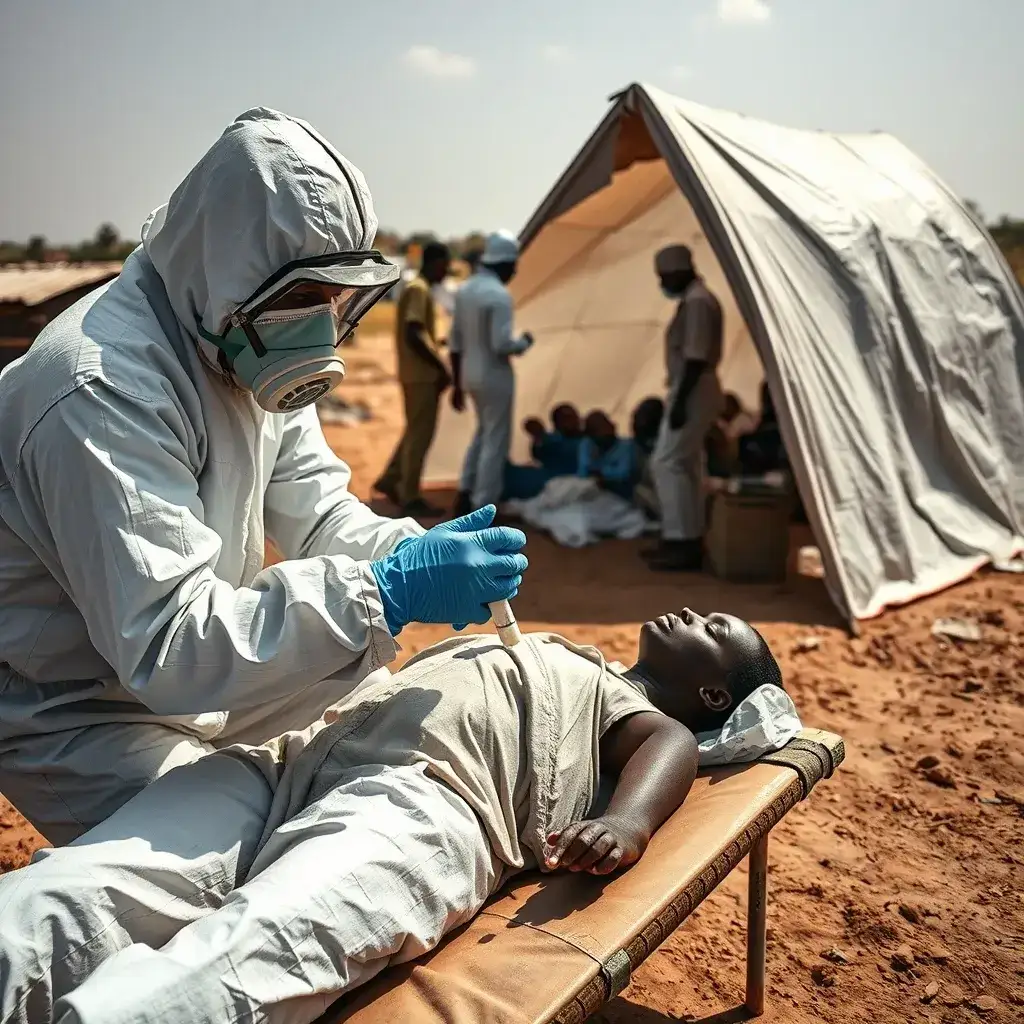
Médecins Sans Frontières (MSF) has declared the current Ebola outbreak in the Democratic Republic of Congo (DR Congo) “deeply alarming,” citing an unprecedented number of early cases. The World Health Organization (WHO) Director-General, Dr. Tedros Adhanom Ghebreyesus, visited the hardest-hit Ituri province on Saturday to assess and bolster containment efforts, as the virus has spread to neighboring Uganda.
Alarming Spread and Unprecedented Case Numbers
Two weeks after the outbreak was officially declared in Ituri Province, MSF deputy director Dr. Alan Gonzales expressed grave concern. He stated that “never before has an Ebola outbreak recorded so many cases so soon after its declaration.” This rapid escalation suggests the response efforts are struggling to keep pace with the virus’s swift transmission.
Dr. Gonzales highlighted the uncertainty surrounding the outbreak’s true scale, with new suspected cases emerging daily and hundreds of samples awaiting testing. This lack of timely data hinders effective response planning and resource allocation.
Challenges Hampering Containment Efforts
Major obstacles are impeding containment and humanitarian aid delivery. MSF noted significant constraints, including border and airport closures, which restrict the movement of essential personnel and supplies. The WHO has consistently pointed to ongoing conflict in the DR Congo as a critical factor exacerbating the situation.
The instability creates a challenging environment for health workers to reach affected populations and implement control measures effectively. Access to remote areas and the safety of medical teams are constant concerns.
WHO’s Visit and Community Engagement
Dr. Tedros Adhanom Ghebreyesus’s visit to Bunia, the capital of Ituri province, aimed to evaluate the response on the ground and identify areas where additional support is needed. He emphasized the crucial role of local communities in combating the epidemic, stating that residents understand the challenges and potential solutions best.
Addressing cultural practices, Dr. Tedros acknowledged the importance of funeral rites but warned against traditions that involve touching the bodies of those deceased from Ebola. Such practices can significantly contribute to the virus’s further spread, creating a tragic cycle of loss.
Public Health Measures and Improved Diagnostics
In Bunia, routine public health measures are in place, including mandatory handwashing stations at the airport and public health advisories broadcast via local media in both local languages and French. Daily life appears to continue with a degree of normalcy, underscoring the delicate balance between public health interventions and maintaining community stability.
A significant development has been the enhanced diagnostic capacity at the National Institute for Biomedical Research laboratory in Bunia. Local health officials report that test results are now available within 24 hours. Previously, samples had to be transported over 1,500 kilometers to Kinshasa, leading to critical delays that health workers feared were costing lives and facilitating transmission.
International Reach and Virus Characteristics
The global reach of potential Ebola transmission was highlighted by a suspected case reported in São Paulo, Brazil. A 37-year-old man, recently returned from the DR Congo, was placed in isolation, prompting heightened vigilance in international health surveillance.
The current outbreak involves a rare strain of Ebola known as Bundibugyo. This strain has a mortality rate of approximately one-third of those infected and currently has no proven vaccine. Ebola viruses typically reside in animals, such as fruit bats, and can spill over to humans through contact with infected animals, often via consumption or handling.
Transmission and Prevention
Ebola spreads through direct contact with the bodily fluids of an infected person, including blood, vomit, diarrhea, saliva, urine, semen, and sweat. Contaminated objects like needles, bedding, or clothing can also serve as transmission vectors. Understanding these transmission routes is fundamental to implementing effective prevention strategies and breaking the chain of infection.
Looking Ahead
The coming weeks will be critical in determining the success of containment efforts. Watch for advancements in rapid diagnostic capabilities, the effectiveness of community engagement strategies, and the impact of ongoing conflict on aid delivery. Continued international cooperation and the swift deployment of resources will be essential to curb the spread of this alarming outbreak.









Leave a Reply