
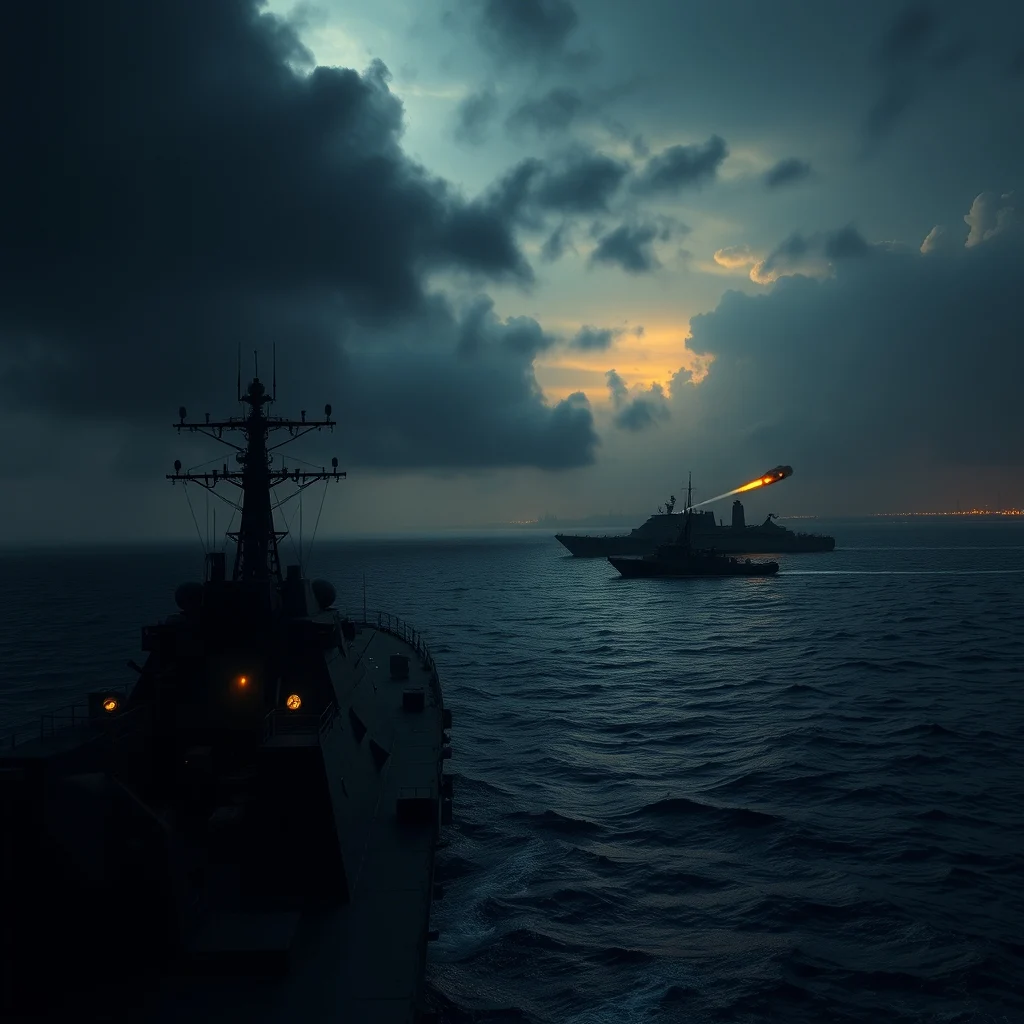
The United States conducted “self-defense strikes” on Iranian radar and drone command sites over the weekend in response to what it termed “aggressive Iranian actions,” including the downing of a U.S. drone. Iran’s Islamic Revolutionary Guard Corps (IRGC) claimed to have targeted a U.S. airbase in retaliation. Simultaneously, Kuwait reported its air defense system was confronting missile and drone attacks, marking a significant escalation in regional hostilities around the Strait of Hormuz.
Context of Escalating Regional Tensions
These exchanges occur against a backdrop of failed negotiations aimed at extending a ceasefire between the U.S. and Iran. Reports indicate that President Trump requested changes to the proposed terms of a deal, reportedly concerning the Strait of Hormuz shipping channel and the removal of highly enriched uranium. Iran’s chief negotiator stated on Sunday that Tehran would not accept any agreement that did not fully secure its rights, underscoring the delicate state of diplomatic efforts.
The Strait of Hormuz is a critical global energy chokepoint, with approximately one-fifth of the world’s oil and liquefied natural gas (LNG) shipments passing through it. Any disruption or threat to this waterway can exert upward pressure on global fuel prices.
U.S. Strikes and Iranian Response
U.S. Central Command (Centcom) confirmed that on Saturday and Sunday, U.S. forces executed “self-defense strikes on Iranian radar and command and control sites for drones.” The targets were located in Goruk, near Iran’s southern coast, and on Qeshm island within the Strait of Hormuz. Centcom stated that these actions struck Iranian military air defenses, a ground control station, and two drones that posed a “clear threat to ships transiting through regional waters.” No American personnel were reported injured.
In response, the IRGC announced it had targeted an airbase utilized by U.S. forces. This airbase, according to the IRGC, was used for an attack on a communications tower on Sirri Island in the Gulf. Iran’s military warned that its response would be “completely different” if such U.S. “aggression” were repeated, as reported by Iran’s semi-official Fars news agency.
Kuwait Reports Hostile Attacks
Adding to the heightened tensions, Kuwait’s military announced on Monday that its air defense system was actively “confronting hostile missile and drone attacks.” While details were scarce, state news agency KUNA reported that air raid sirens were heard across the country. This incident follows a reported Iranian targeting of a Kuwaiti airbase last week, which Iran stated was a response to earlier U.S. airstrikes designed to prevent Iranian boats from laying mines in the shipping channel.
President Trump’s Stance
President Trump addressed the escalating situation on his Truth Social platform, urging critics to “sit back and relax” and expressing confidence that “it would all work out well in the end.” He suggested that Iran “really wants to make a deal, and it will be a good one for the USA.” This statement comes after reports that Trump and senior aides met to finalize terms for extending the ceasefire, but the meeting concluded without a clear path forward, preceding news of his requested changes to the deal’s text.
Implications for Regional Stability and Global Markets
The ongoing military exchanges and the breakdown in diplomatic progress carry significant implications. For regional stability, the direct strikes and retaliatory actions increase the risk of miscalculation and wider conflict. The involvement of Kuwait, a nation hosting U.S. forces, broadens the immediate geographic scope of the confrontations.
Economically, the heightened tensions in the Strait of Hormuz could lead to increased volatility in global oil and gas markets. Any perceived threat to the shipping channel can trigger price spikes, impacting consumers and industries worldwide. The failure to secure a stable deal also leaves the long-term trajectory of Iran’s nuclear program uncertain, a key concern for international security.
Looking Ahead
The coming days will be critical in determining whether these strikes represent a contained exchange or the beginning of a more sustained period of conflict. All eyes will be on further statements from U.S. and Iranian officials, the response from international diplomatic channels, and any additional activity detected in the vital Strait of Hormuz shipping lane. The trajectory of the U.S.-Iran negotiations, particularly regarding the requested changes to the ceasefire extension, will also be closely monitored for signs of potential de-escalation or further deadlock.







Leave a Reply