
Washington D.C. is set to mark America’s 250th birthday with a series of events heavily influenced by former President Donald Trump, who has positioned himself as the central figure amidst musical artist withdrawals and competing celebratory initiatives. Trump, on his Truth Social platform, stated his preference for “happy people, smart people, successful people and people who know how to win” over artists he deemed expensive and unhappy, instructing representatives to explore making him the main attraction of a planned “Great American State Fair” on the National Mall.
This development highlights Trump’s consistent efforts to align significant national events with his own persona and political brand. Since his return to office in January 2025, he has emphasized his second term occurring during major global and national milestones, including the World Cup, the 2028 Los Angeles Olympics, and now, America’s 250th anniversary.
Competing Visions for a Milestone Celebration
The 250th anniversary celebrations have become a point of divergence, with a congressionally established “America 250” commission overseeing more traditional events like art exhibits and block parties.
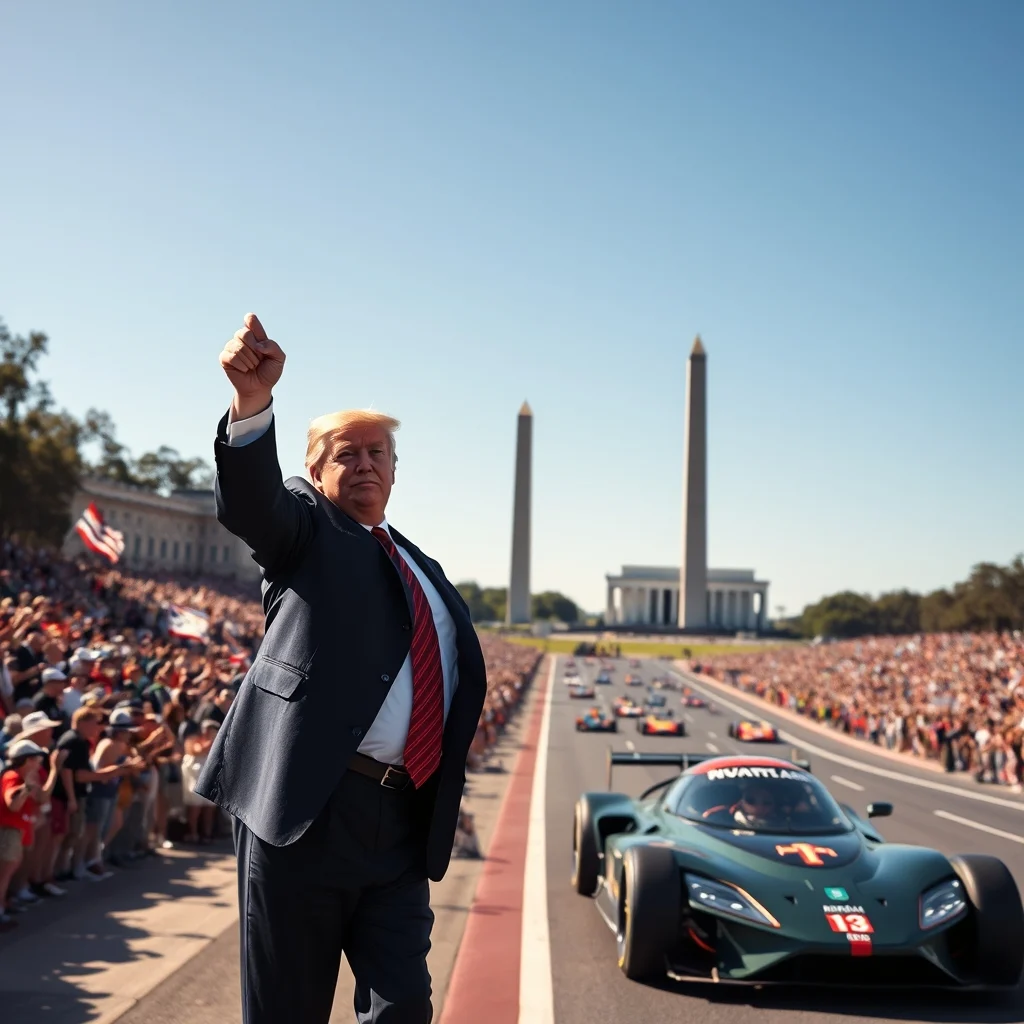
In contrast, Trump-backed groups have organized a privately funded “Freedom 250” initiative. This includes a large state fair on the National Mall, a UFC fight at the White House, a fitness competition in Florida, a Grand Prix race in Washington, and what is being promoted as the world’s largest fireworks display on July 4th.
Trump frequently promotes these events, often sharing AI-generated images depicting him leading the street race or standing by an octagon ring at the White House.
Infrastructure and Symbolism Under Trump’s Influence
Beyond event planning, Trump has focused on “beautification” projects in Washington D.C. in anticipation of the celebrations. Fountains in several parks have been repaired, Lafayette Park is undergoing significant renovations, and the reflecting pool between the Lincoln Memorial and Washington Monument is being resurfaced.
Bronze horse statues near Memorial Bridge are slated for gold leaf coating, and streets and lamp posts in downtown D.C. have been repaved and repainted. Trump, drawing on his background as a real estate developer, has expressed a personal affinity for these construction projects, noting, “DC is looking beautiful.”
Further symbolic gestures include the U.S. Commission of Fine Arts approving a 250-foot triumphal arch across the Potomac, though this project faces further approvals and potential legal challenges.
Commemorative Currency and Political Divisions
The Trump administration has also sought to directly link the president to the festivities through commemorative items. The U.S. Treasury approved a commemorative gold coin featuring Trump at a desk, and discussions are underway for a special $250 note bearing his face, which would require congressional approval to place a living president on currency.
These moves have drawn sharp criticism from Democrats. House Minority Leader Hakeem Jeffries stated on X, “The upcoming July 4th anniversary is not about a wannabe king. It is about celebrating the American journey.”
Trump and his allies dismiss such criticisms as unpatriotic, asserting that their efforts are fitting for a momentous occasion. However, the outcome is a national celebration increasingly perceived not as a unifying event, but as another arena for partisan conflict, with a deeply divided nation under Trump’s leadership.
The participation of major musical acts remains uncertain, with many reportedly withdrawing or never agreeing to perform, amplifying the narrative of a celebration increasingly dominated by political figures rather than a broad spectrum of cultural contributors. As the 250th anniversary approaches, the focus remains on how these competing visions and the prominent role of Donald Trump will shape the public’s experience of this historic milestone.







Leave a Reply