
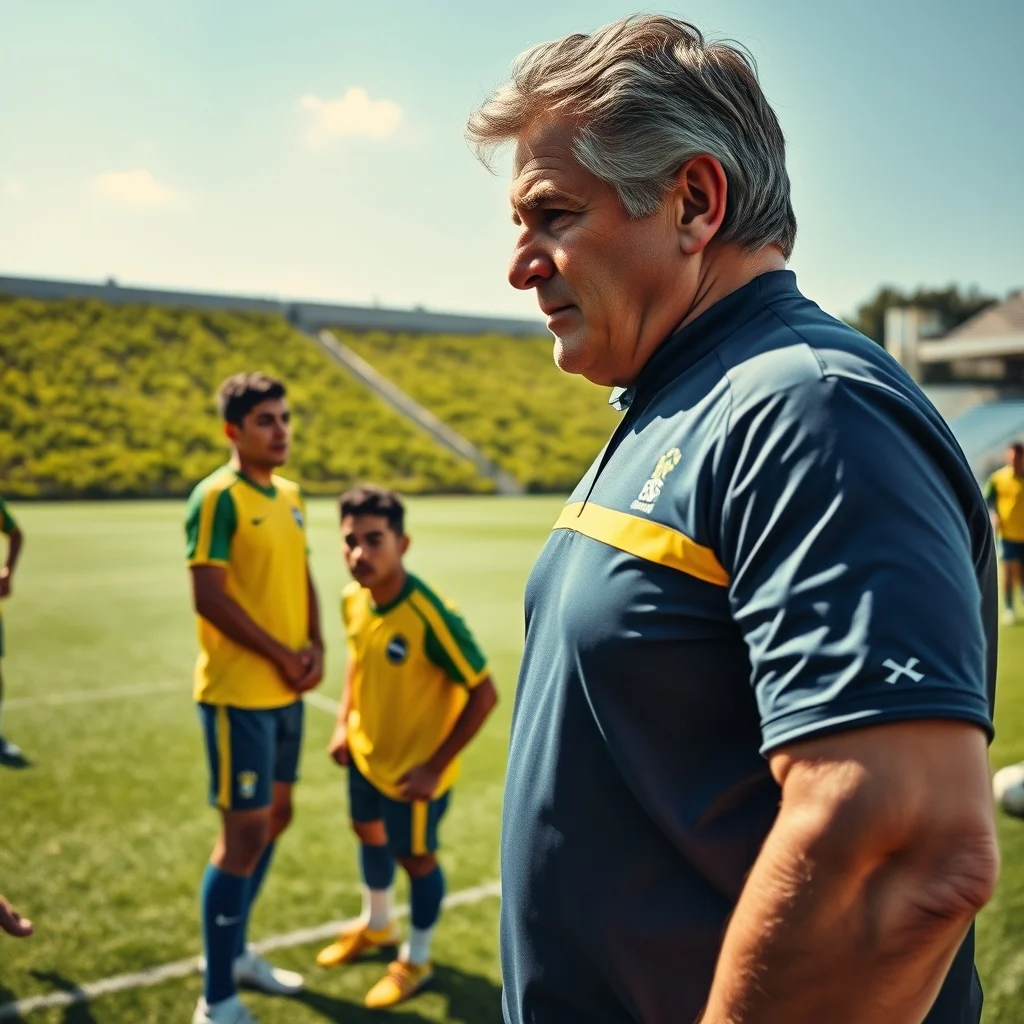
Carlo Ancelotti, the first foreign coach to lead Brazil into a World Cup, is embarking on a monumental task to end the Selecao’s 24-year title drought. Having reached an agreement in May 2025, the Italian manager, despite limited prior experience in Brazil, has prioritized immersing himself in the local culture by dedicating himself to learning Portuguese, attending four lessons weekly. This commitment aims to win over a proud footballing nation and prepare the team for the upcoming World Cup, where Brazil faces the prospect of an unwanted record of six consecutive tournaments without lifting the trophy.
Ancelotti’s arrival in Brazil marked the confrontation of a significant taboo: the national team being managed by a non-Brazilian. Despite his stellar resume, including a record five Champions League titles and trophies in Europe’s top leagues, the appointment initially faced resistance from some prominent figures in Brazilian football. Former World Cup winners like Cafu expressed a preference for a Brazilian coach, and at a coaches’ event, Ancelotti encountered public criticism regarding foreign managers. This tension highlighted the deep-seated pride and perceived self-sufficiency of Brazilian football.
However, Ancelotti has demonstrably worked to bridge this cultural gap. His dedication to learning Portuguese, even scheduling lessons at inconvenient early hours, has impressed those close to him, like his language teacher Roberto Piantino. This effort is seen as crucial for gaining the respect and buy-in of a passionate fanbase and the players. Recent polling data from Quaest indicates that a majority of Brazilians trust Ancelotti’s leadership, with 41% approving of his work compared to 29% who disapprove. This public support has emboldened the Brazilian Football Confederation (CBF), which extended his contract through 2030 before he had even coached Brazil at a World Cup.
Ancelotti’s ability to foster unity extends beyond language. He demonstrated this by delaying the signing of his own contract until three key CBF staff members, instrumental in his adaptation, also had their deals extended. This act of solidarity underscores his reputation as a manager who builds strong relationships and adapts seamlessly to new environments. Leonardo, a former player and executive who worked with Ancelotti, described him as a “chameleon” and a “world champion” at adapting, emphasizing his capacity to create symbiosis with the team and its surroundings.
The path to the World Cup has been tumultuous for Brazil, marked by a change in confederation leadership, four different coaches in four years, and their worst-ever qualifying campaign. Despite these challenges, Ancelotti remains optimistic about securing a sixth World Cup title, citing the presence of “two of the five best players in the world” – Vinicius Jr. and Raphinha. The key challenge now lies in integrating these talents effectively within his ambitious 4-2-4 tactical system, a partnership that has shown flashes of brilliance but is still a work in progress. The recent 6-2 victory over Panama offered encouraging signs, with goals from Rayan, Igor Thiago, Vinicius Jr., Casemiro, Lucas Paqueta, and Danilo.
Beyond tactics, Ancelotti has quickly established authority and respect within the squad. Manchester United midfielder Casemiro recounted an anecdote where Ancelotti calmly diffused a tense halftime situation by suggesting a short break, demonstrating a simple yet effective leadership style that resonated with the players. This approach, characterized by calmness and human connection, is also reflected in his language learning. He eschews a purely imperative style, preferring a more nuanced and personal method of communication, a style that seems to mirror his overall coaching philosophy.
Ancelotti, who served as an assistant coach for Italy when Brazil won the 1994 World Cup, now returns with the Selecao, aiming to guide them back to global supremacy through his unique blend of tactical acumen, adaptability, and profound human connection. The success of his tenure will be closely watched, particularly his ability to harness the immense talent at his disposal and overcome the historical weight of expectation as Brazil seeks to end its longest World Cup drought.










Leave a Reply