
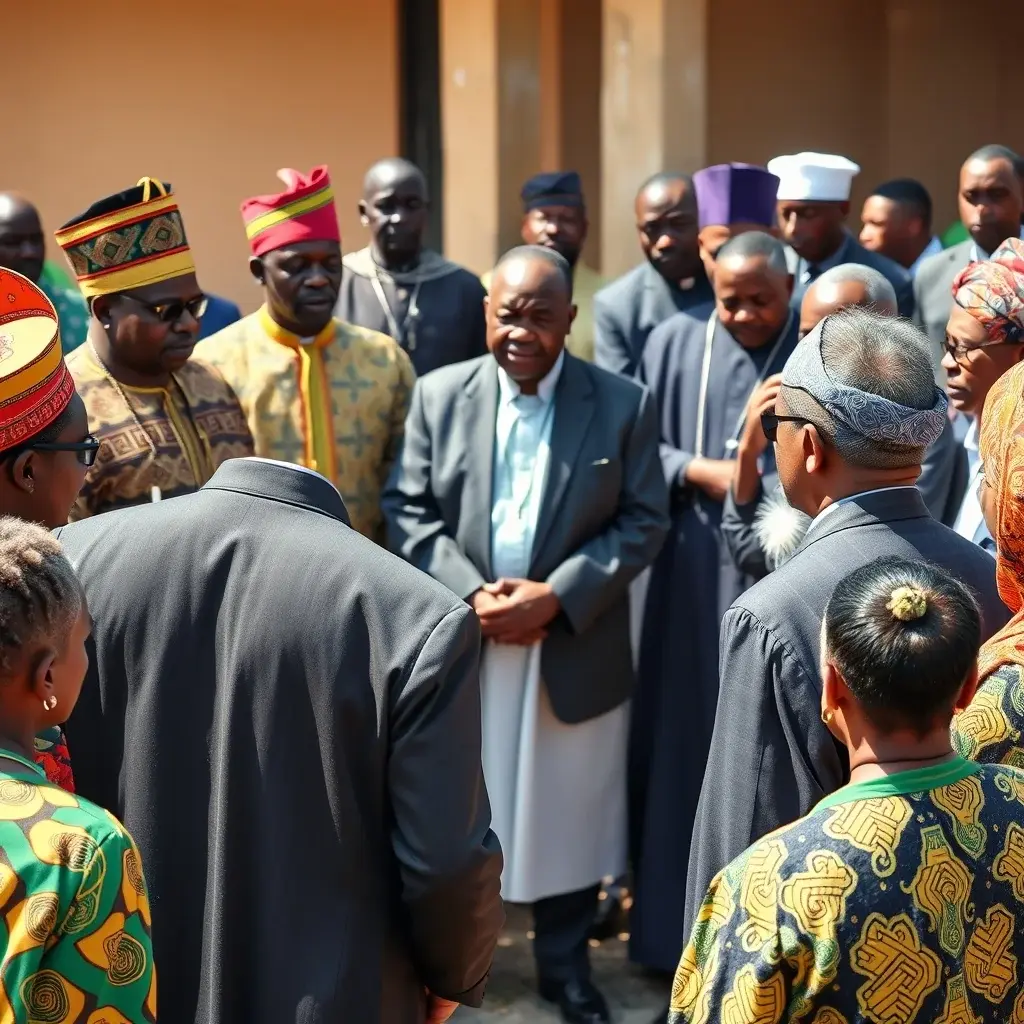
Interior Minister Muntaka Mohammed-Mubarak has appealed to traditional leaders, religious figures, and community stakeholders in the Volta Region to actively support national security initiatives, combat irregular migration, and address emerging security threats. The call came during a two-day working visit to the region, aimed at fostering collaboration between the government and local communities.
Addressing Growing Security Concerns
The Minister highlighted a significant concern regarding the increasing number of individuals entering Ghana without documentation, often utilizing unapproved border crossings. He also noted the troubling involvement of some Ghanaian citizens in facilitating this irregular migration, undermining national security and identification systems.
While affirming Ghana’s commitment to regional hospitality and integration, Minister Muntaka stressed the importance of citizen vigilance. He urged the public to refrain from assisting undocumented migrants in bypassing the country’s established immigration and identification protocols.
Concerns were raised about the potential compromise of Ghana’s national identification system, health insurance scheme, and passport regime. The Minister cited instances where foreign nationals allegedly obtained Ghanaian passports through illicit means, posing substantial security risks to the nation.
Volta Region Identified as Key Migration Corridor
Security agencies have identified 102 unofficial inland crossing points within the Volta Region that are reportedly being exploited by undocumented migrants. This revelation underscores the region’s critical role as a transit point for irregular entries.
Recent investigations into human trafficking and smuggling operations revealed a stark reality: all 740 victims rescued in 2025 had entered Ghana through the Aflao and Akanu border areas in the Volta Region. These individuals entered the country undocumented and outside official monitoring systems, presenting a significant national security challenge.
The Ghana Immigration Service reported rescuing 714 victims of human smuggling in 2025, arresting 103 suspected perpetrators. Of those arrested, 99 were identified as Nigerian nationals, indicating a pattern in the origin of those involved in smuggling operations.
Broader Migration and Repatriation Efforts
Beyond the Volta Region, the Minister shared broader statistics on foreign nationals within Ghana. Over 1,200 foreign beggars have been repatriated from Accra and Kumasi this year, with more than 1,600 repatriated in 2025. These figures point to a larger trend of irregular migration and its impact on urban centers.
The nation’s correctional facilities are currently holding approximately 14,000 inmates, a significant portion of whom, around 1,100, are foreign nationals. Many of these individuals hail from neighboring West African countries, highlighting regional migration dynamics.
Balancing Security and Public Convenience
Minister Muntaka addressed public concerns regarding the necessity and conduct of inland security checkpoints. He emphasized their crucial role in detecting criminals, contraband, drugs, and individuals posing security risks, despite potential inconveniences to travelers.
Acknowledging public complaints about the behavior of some security personnel at these checkpoints, the Minister assured that efforts are underway to enhance efficiency. These improvements will focus on leveraging technology and fostering better customer relations to streamline operations.
Reforms to Citizenship and Digitization Initiatives
In an effort to safeguard the integrity of Ghana’s nationality system, the Ministry of the Interior has revised and increased the fees for acquiring Ghanaian citizenship. This measure aims to deter fraudulent applications and ensure that citizenship is granted through legitimate channels.
Under the new fee structure, applicants from West African countries will pay GH¢15,000, those from other African nations GH¢25,000, and non-African applicants US$25,000. The latter group must also demonstrate a commitment to investing at least US$250,000 in Ghana, linking citizenship to economic contribution.
The Ministry is also actively pursuing the digitization of its services, including criminal background checks and firearm registration. This initiative aims to improve operational efficiency, enhance accessibility for the public, and reduce bureaucratic delays.
Positive Security Trends and Future Outlook
Minister Muntaka reported a significant improvement in Ghana’s security situation since January 2025, evidenced by a reduction in the number of areas under curfew from 11 to just three. This positive trend is attributed to enhanced collaboration among security agencies, traditional authorities, religious leaders, and local communities.
The Minister reiterated that maintaining Ghana’s peace and security is a collective responsibility. He stressed that the continued support and cooperation of chiefs, religious leaders, and all citizens are vital for sustaining the stability the nation cherishes.
Traditional and religious leaders in the Volta Region expressed their appreciation for the Minister’s engagement and pledged their commitment to working with the Ministry and its agencies. They vowed to collaborate in addressing challenges related to irregular migration, drug abuse, crime, and other security issues within the region.
Looking ahead, the success of these collaborative efforts will be closely watched. The Ministry’s continued investment in technology, coupled with sustained community engagement and the implementation of revised citizenship policies, will be critical in fortifying national security and managing migration effectively.




Leave a Reply