
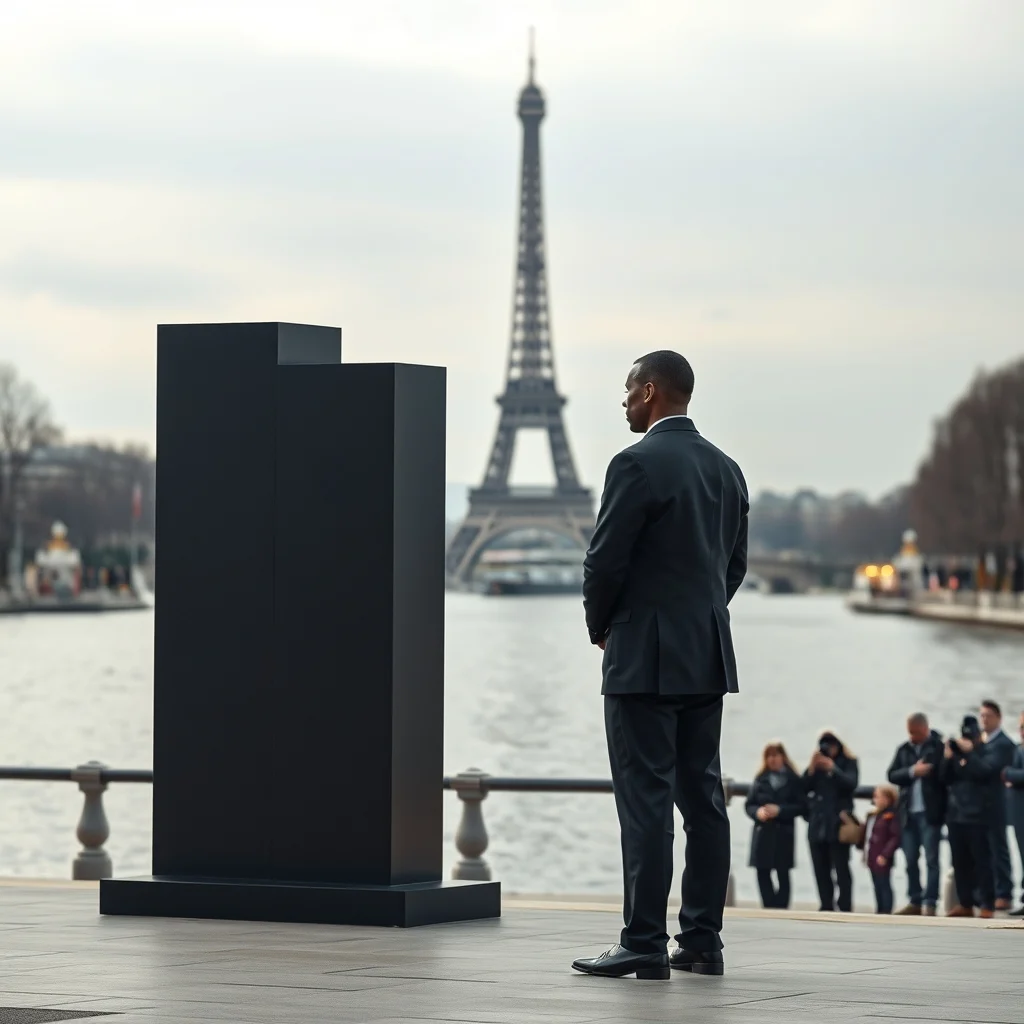
French President Emmanuel Macron and Rwandan President Paul Kagame jointly inaugurated a memorial in Paris on Tuesday dedicated to the victims of the 1994 genocide against the Tutsis in Rwanda. The newly established memorial, named “L’Archive,” is situated on the banks of the Seine River and aims to place the genocide at the center of French history and memory.
A Symbol of Reconciliation and Remembrance
The inauguration marks a significant moment in the complex relationship between France and Rwanda. President Macron described the memorial as the “culmination of a long and painstaking quest for the truth.” He emphasized that by situating the memorial in the heart of the French capital, the genocide of the Tutsis is now embedded within France’s national narrative.
The memorial, designed by Portuguese artist Grada Kilomba, features two black steles engraved with a tribute to the hundreds of thousands of men, women, and children who were massacred between April and July 1994. This act of remembrance is seen by many as a crucial step towards acknowledging past responsibilities and fostering deeper reconciliation.
France’s Acknowledged Role
This event follows President Macron’s 2021 visit to Rwanda, where he acknowledged France’s responsibility in the genocide. While he stopped short of issuing a formal apology, he expressed hope for forgiveness, signaling a desire to reset bilateral relations after years of strained ties.
His statements were influenced by a commission established under his presidency. This commission concluded in March 2021 that France bore a “serious and overwhelming” responsibility due to its colonial mindset, which blinded it to the escalating events leading up to the genocide. The report highlighted France’s failure to foresee the impending slaughter.
For years, Rwanda has accused France of complicity in the 1994 slaughter, which claimed the lives of an estimated 800,000 people, predominantly ethnic Tutsis. The inauguration of “L’Archive” is viewed as a tangible outcome of Macron’s efforts to confront France’s historical role.
Broader Implications for International Relations and Memory
The establishment of this memorial in Paris holds significant implications beyond Franco-Rwandan relations. It underscores a growing global trend of nations confronting difficult historical legacies and acknowledging past wrongdoings.
For victims and survivors of the genocide, the memorial offers a place of solace and recognition, ensuring that their suffering is not forgotten. It also serves as an educational tool for future generations, promoting understanding and preventing similar atrocities from occurring.
The joint presence of Presidents Macron and Kagame at the inauguration signals a positive shift in diplomatic ties. This renewed engagement could pave the way for increased cooperation in various sectors, including security, development, and cultural exchange.
What to Watch Next
The inauguration of “L’Archive” is a significant symbolic gesture, but the true measure of its impact will be seen in the sustained commitment to dialogue and accountability between France and Rwanda. Observers will be watching to see if this leads to further concrete actions, such as enhanced support for justice mechanisms or educational initiatives related to the genocide.
Furthermore, the memorial’s presence in Paris could inspire other nations grappling with historical injustices to establish similar sites of remembrance and engage in more open discussions about their past. The ongoing evolution of Franco-Rwandan relations and the global approach to historical memory will be key areas to monitor in the coming years.




Leave a Reply