
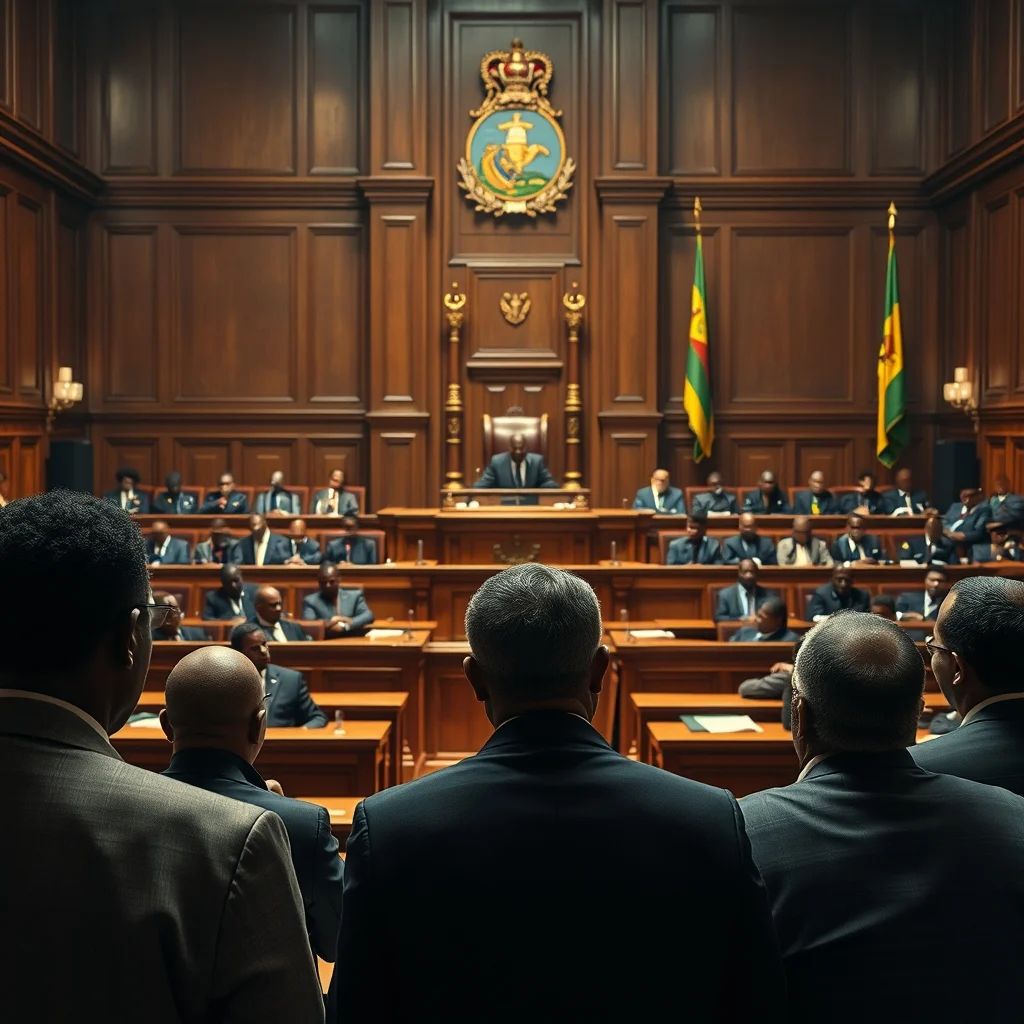
Zimbabwe’s government introduced a bill in parliament on Tuesday that seeks to extend President Emmerson Mnangagwa’s term by two years, pushing his potential exit from 2028 to 2030. The proposed legislation, which also suggests changing presidential elections from popular vote to parliamentary selection, faces opposition from a divided opposition and some liberation war veterans, but is widely expected to pass due to the ruling ZANU-PF party’s strong parliamentary majority.
Context of the Proposed Legislation
President Emmerson Mnangagwa, currently 83, is nearing the end of his second five-year term, which, under the current constitution, would require him to step down in 2028. However, supporters within the ruling ZANU-PF party are advocating for a constitutional amendment to extend presidential terms from five to seven years.
Furthermore, the draft legislation proposes a significant shift in how the president is elected. Instead of a direct popular vote, the bill suggests that the president would be elected by parliament. This change could alter the dynamics of presidential succession and potentially consolidate power within the legislative body.
Parliamentary Debate and Expected Outcome
Justice Minister Ziyambi Ziyambi presented the bill to the lower house of parliament on Tuesday, with a second reading scheduled for Wednesday. Political analysts anticipate that the bill will easily navigate the legislative process.
The ZANU-PF party holds a two-thirds majority in the lower house. This dominance extends to the upper house, which is largely controlled by traditional leaders and other proxies who typically align with the ruling party. This substantial majority provides ZANU-PF with the necessary numbers to amend the constitution.
Minister Ziyambi has previously indicated that the legislative process is expected to conclude within approximately one month, suggesting a swift passage for the bill.
Historical Background and Opposition Voices
ZANU-PF has been the ruling party in Zimbabwe since the country gained independence from Britain in 1980. The party first governed under the long tenure of Robert Mugabe, followed by Mnangagwa, who assumed leadership after a military intervention in 2017.
Despite the anticipated smooth passage, the bill has drawn criticism. On Tuesday, a group comprising retired generals and former civil servants publicly expressed their opposition to the proposed extension of Mnangagwa’s time in office.
Sources indicate that this group met with President Mnangagwa last month to convey their concerns. The President reportedly responded by stating, “whoever wins, wins,” in reference to the potential passage of the bill.
Legal Challenges and Future Implications
Further opposition has emerged from some war veterans and activists who have lodged a challenge against the bill in the Constitutional Court. The court has reserved its judgment, indicating that it is currently deliberating on the arguments presented.
The potential implications of this bill are significant for Zimbabwe’s political landscape. If passed, it would extend Mnangagwa’s rule and alter the fundamental mechanism of presidential election. This move could further entrench ZANU-PF’s long-standing control over the nation’s governance.
What to Watch Next
The upcoming parliamentary debate and vote will be closely monitored. The Constitutional Court’s decision on the legal challenge will also be a critical factor. Observers will be watching to see how the opposition, war veterans, and civil society groups respond if the bill successfully passes through parliament and withstands judicial scrutiny, and what this means for the country’s democratic trajectory and future elections.








Leave a Reply