
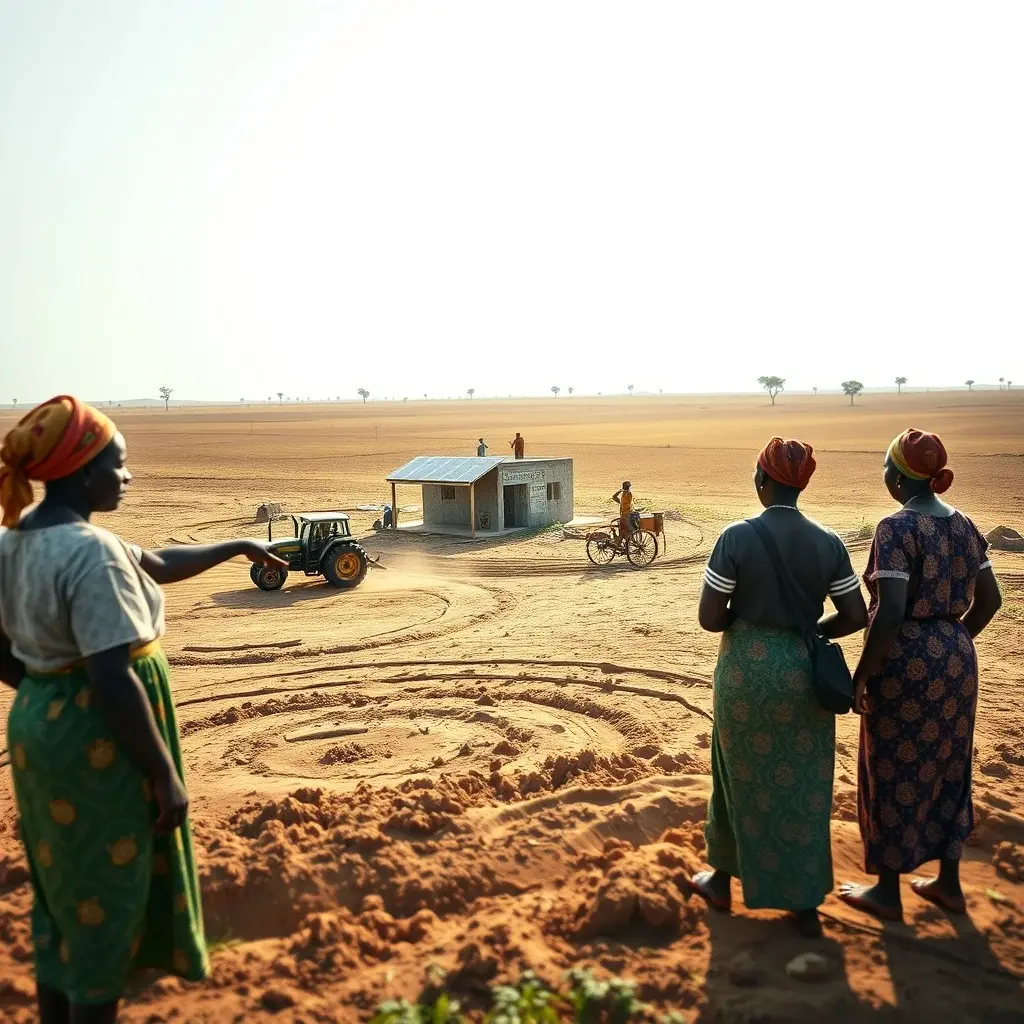
Farmers in Ghana’s Upper West Region are expressing hope that the government’s proposed Farmer Service Centres will alleviate critical challenges in accessing farm mechanization, thereby boosting agricultural production, enhancing food security, and improving livelihoods. The initiative aims to address the current scarcity of essential farming equipment like tractors, which has led to delayed land preparation, reduced crop yields, and financial hardship.
Mechanization Gap Hinders Productivity
The lack of readily available tractors and modern farming equipment is a significant impediment to agricultural success in the region. Mr. Daubile Alhassan Ibrahim, Assembly Member for the Jonga Electoral Area in the Wa Municipality, highlighted how the limited number of tractors makes farming operations difficult, particularly for women.
Women smallholder farmers are often at a disadvantage, as the few available tractors are typically secured by men first. This disparity exacerbates existing inequalities within the agricultural sector.
Madam Kende Aziz, a farmer in Jonga, described the situation as discouraging. She explained that the scarcity and high cost of tractor services force many women to cultivate smaller plots than they are capable of managing, despite their willingness and potential to farm larger areas.
Similarly, Madam Salima Osman noted that women frequently face multi-day waiting periods for tractor services due to men being prioritized. This delay can be critical for timely planting and optimal crop development.
The challenges extend beyond land preparation. Madam Iddrisu Arashidatu pointed out the absence of combine harvesters, which contributes to substantial post-harvest losses. Crops are often lost to fire, pests, or simply due to delays in harvesting.
Broader Rural Development Concerns
In Daffiama, within the Daffiama-Bussie-Issa District, farmers like Mr. Edward Ziema Kpieonoma, a Unit Committee Member, shared similar struggles. Farmers sometimes spend entire days searching for tractor services without success, disrupting their cultivation schedules.
The shift away from traditional bullock farming, necessitated by increased cattle theft, has intensified the reliance on tractors. Manual farming methods using hoes and cutlasses are prohibitively labor-intensive for many.
Madam Agnes Bara, a farmer from Daffiama, emphasized that women bear a disproportionate burden from the tractor shortage, with some abandoning farming altogether due to these persistent challenges.
Furthermore, the agricultural sector’s difficulties are contributing to a concerning trend of young men migrating from farming to illegal small-scale mining. The lack of accessible mechanization services is cited as a key factor driving this exodus.
Madam Esther Bongamwine highlighted the compounding issue of high farm input costs. Many women farmers struggle to afford essential inputs like fertilizers, which are crucial for yield improvement, in addition to the cost of mechanization services.
For instance, ploughing an acre of land can cost between GH¢350.00 and GH¢400.00, while a bag of fertilizer ranges from GH¢400.00 to GH¢500.00. These costs represent a significant barrier for smallholder farmers.
In Serekpere, Nadowli-Kaleo District, Madam Cedonia Kantayen stated that while farming helps households save on food expenses, financial constraints related to tractor services, labor, and other inputs continue to suppress overall production.
Farmer Service Centres: A Beacon of Hope
In response to these widespread issues, farmers are urging the government to expedite the establishment of Farmer Service Centres. They believe this initiative will significantly ease access to crucial mechanization services, including ploughing and harvesting, thereby reducing the operational burden.
Women farmers, in particular, have called for dedicated tractor services to circumvent the current competition with men for limited equipment, ensuring more equitable access.
The National Democratic Congress (NDC) has pledged to establish Farmer Service Centres across the country as part of its strategy to modernize Ghana’s agricultural sector, ahead of the 2024 general election.
Reports indicate that the Wa East and Daffiama-Bussie-Issa Districts are among the initial 50 districts selected to benefit from this program, signaling a potential turning point for agricultural development in the Upper West Region.
Looking Ahead
The successful and timely implementation of these Farmer Service Centres will be crucial. Attention will be on how the centers will be managed to ensure equitable access for all farmers, especially women, and whether they can effectively reduce the cost of mechanization and inputs. The impact on reducing post-harvest losses and retaining youth in agriculture will also be key indicators to monitor as the program rolls out.








Leave a Reply