
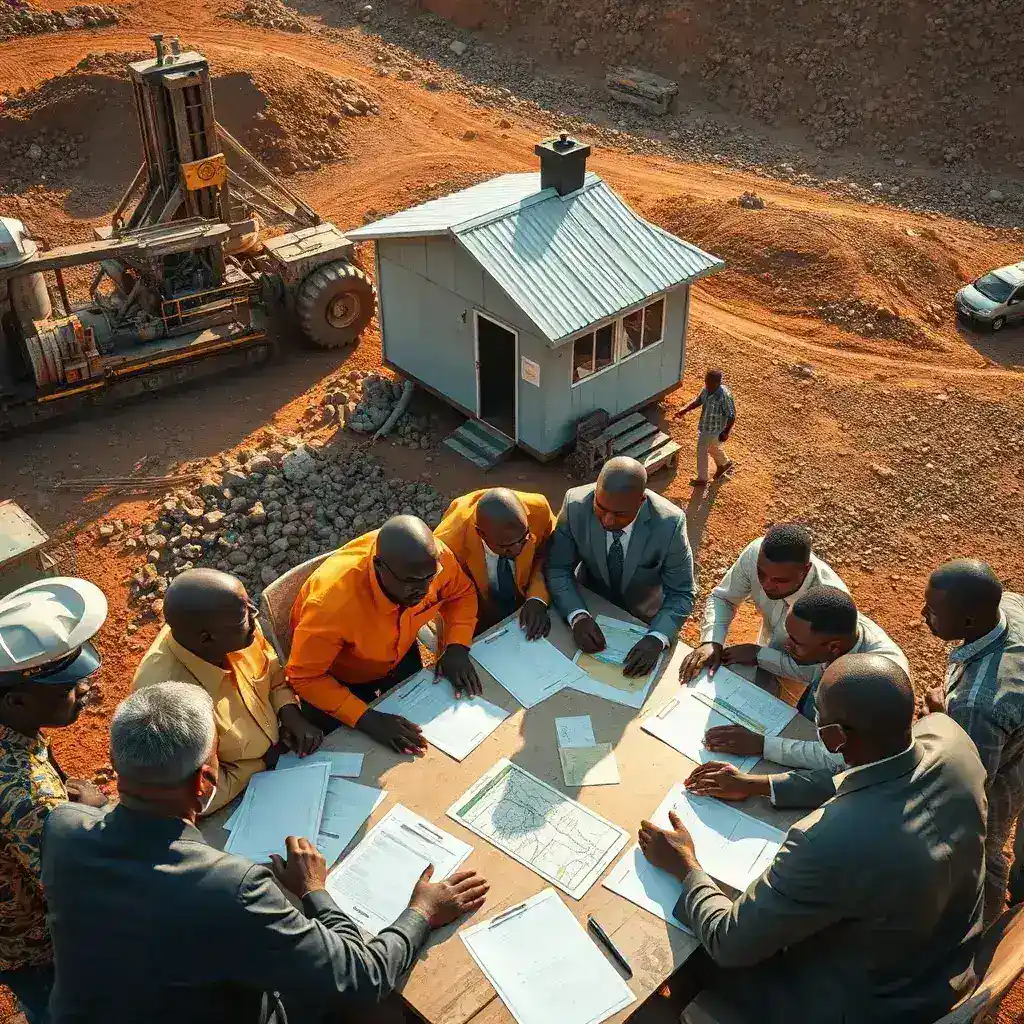
Ghana’s Finance Minister, Dr. Cassiel Ato Forson, has declared a more stringent approach to the renewal of mining leases, indicating the government will scrutinize instances where companies seek lease extensions primarily to facilitate lucrative asset sales shortly thereafter. The remarks, made in an interview with Bloomberg, highlight a policy shift driven by recent transactions that appear to exploit lease renewals for immediate financial gain rather than continued operational investment.
Policy Concerns Over Lease Renewals
Dr. Forson pointed to a recent transaction involving Newmont, where a mining lease was reportedly renewed and subsequently sold within a month for approximately one billion dollars. While the state collected capital gains tax from this sale, the Minister questioned whether such quick turnarounds align with the original intent of lease renewals.
“We renewed it; the following month, they sold it for a billion dollars and only paid capital gains after the state,” Dr. Forson stated, emphasizing the government’s expectation that lease renewals should primarily support ongoing mining operations and further investment in the sector.
“You can’t just renew your lease and sell it the following month. The intention out there was for us to renew the lease for them to continue in business,” he added, underscoring the perceived misuse of lease extension provisions.
Focus on Tarkwa Mine Lease
These policy concerns come at a critical juncture as discussions intensify around the future of the Tarkwa Mine, one of Ghana’s most significant mining assets. The mine’s current lease is nearing expiration, and its future is a subject of intense government deliberation.
Originally state-owned, the Tarkwa Mine was leased to a foreign operator for a 30-year term and is slated to revert to the state upon the agreement’s conclusion. Dr. Forson revealed that the government is actively considering whether the concession should be returned to the State Mining Company or if the current operator should be granted an extension.
A final decision on the Tarkwa Mine’s lease is anticipated before the end of the year. “There is a conversation around whether we revert it back to the State Mining Company or allow the company to extend the lease,” Dr. Forson noted. “As I said, we have up to April next year, almost one year. And our intention is to have that conversation to the end of the year. And so before 2026, we’ll have some agreement.”
Defense of Mining Sector Reforms
In the same interview, Dr. Forson defended recent reforms implemented within Ghana’s mining sector. These include the introduction of a sliding-scale royalty system designed to enhance state revenues, particularly during periods of elevated gold prices.
He explained that this reform mechanism allows Ghana to benefit more equitably from windfall gains derived from fluctuating commodity prices. “We introduced the sliding scale to be able to capture the economic rent,” the Minister stated.
Dr. Forson asserted that these reforms were developed through extensive consultation with industry stakeholders. He emphasized that they are part of a broader strategy to ensure Ghana maximizes long-term value from its natural resources while simultaneously maintaining an investment-conducive environment for mining companies.
Implications for the Mining Industry
The Finance Minister’s firm stance suggests that mining companies seeking lease renewals in Ghana may face increased scrutiny regarding their long-term operational plans and investment commitments. The government’s focus appears to be shifting towards ensuring that lease extensions directly contribute to sustained mining activity and economic development, rather than serving as a prelude to profitable asset divestments.
The upcoming decision on the Tarkwa Mine will be a significant indicator of the government’s direction. It will signal whether Ghana is prioritizing state control and direct operational involvement or continuing with foreign partnerships under stricter terms. Stakeholders will be watching closely to see how these policy adjustments impact investment decisions and the overall landscape of Ghana’s vital mining sector.




Leave a Reply